Shijiazhuang Topstar
International Trading Co., Ltd.


Get In Touch
The barbed wire machine continuously produces barbed wire with protective functions by coordinating wire feeding, spiral forming of the main wire, cutting and bending of the barbed wire, and embedding and fixing.
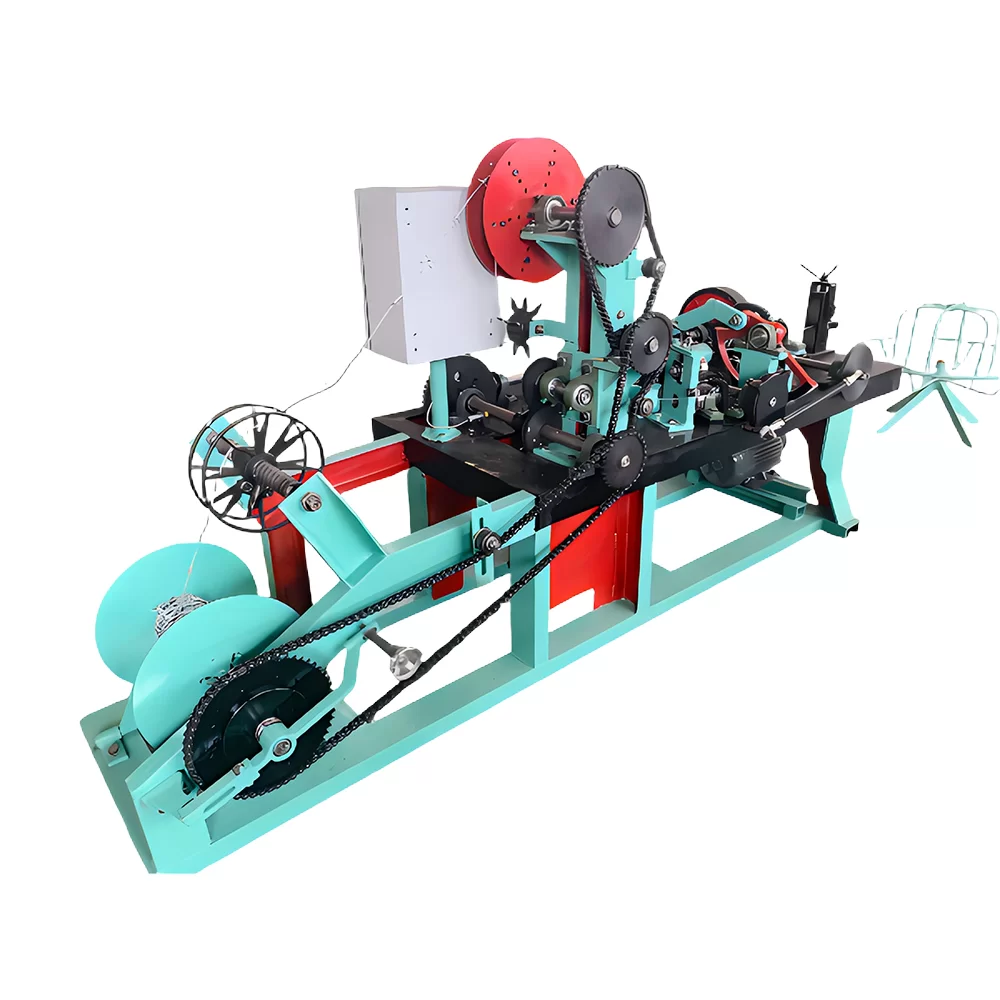
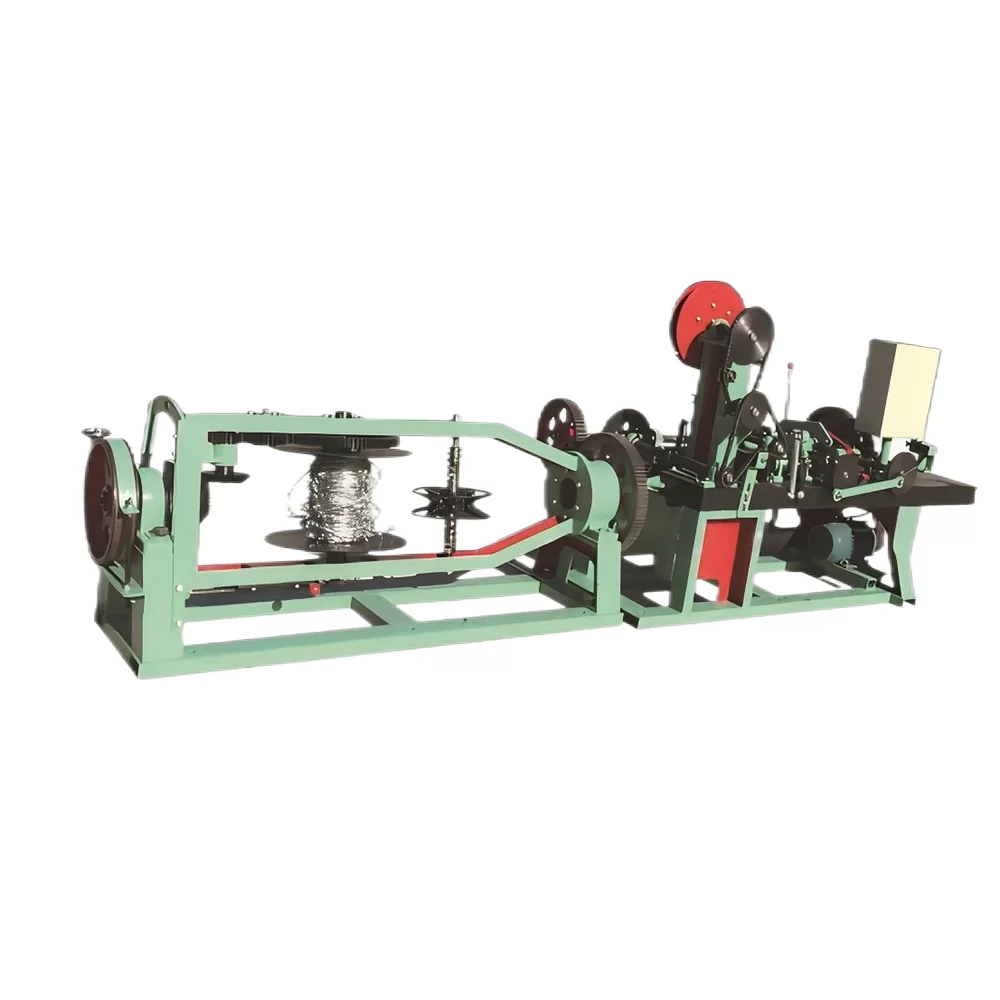
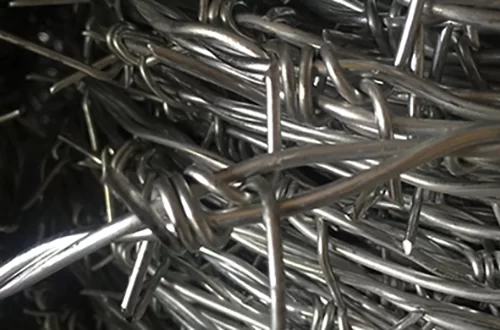
Barbed wire machines are specialized machines used to produce barbed wire, a type of metal protective mesh with sharp thorns. Barbed wire is widely used for security protection in prisons, military bases, border posts, warehouses, orchards, farms, and other places. They play an important role in the field of security protection.
1.It can process barbed wire continuously and stably, greatly increasing the output compared with manual production, and is suitable for mass production needs.
2.After simple training, operators can get started quickly, reducing the high requirements for professional skills.
3.Through mechanical standardized operations, parameters such as the barb distance and winding tightness of the barbed wire are more uniform, reducing errors in manual operation.
4.Barbed wires of various specifications (such as single-strand, double-strand, etc.) can be processed to meet the needs of different scenarios (such as protection, isolation).
5.Long-term use can reduce labor costs, and the equipment maintenance is relatively simple, and the overall cost-effectiveness has certain advantages.
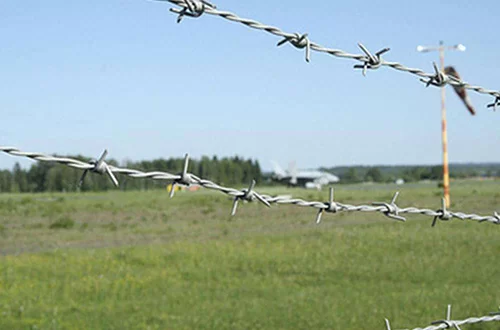
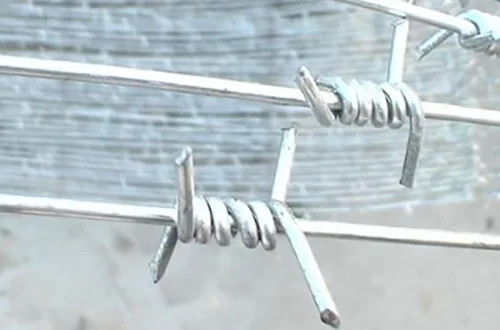
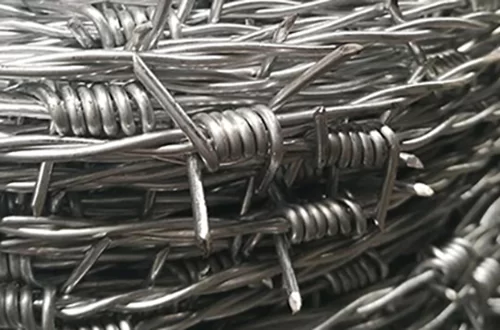
Barbed wire is a metal rope net with a sharp thorn-like structure. Its core function is to use the physical deterrent and obstruction effect of the thorn-like structure to achieve regional protection and isolation. It is low-cost and easy to install, and is widely used in various scenarios that require basic safety protection.
Power | 2.2KW |
Main drive shaft speed | 600r/min |
Unit wire diameter(mm) | 1.6-3.0mm |
Barbed wire diameter(mm) | 1.6-2.8mm |
Barbed distance | 3”/4”/5”or4”/5”/6” |
Twist number(PCS) | 3.5 |
Machine Speed | 1 ton/8 hours |
Machine weight | 1000KG |
Machine size | 1950*950*1300mm |
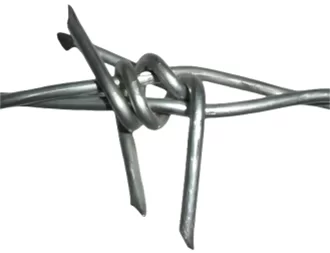
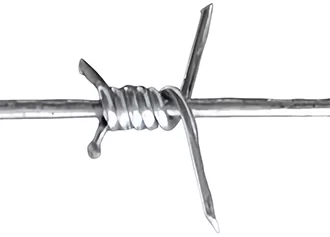
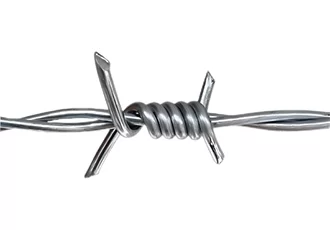
The transformation of raw metal wire into a formidable security barrier is a marvel of mechanical synchronization. A barbed wire making machine is designed to take high-tensile galvanized or PVC-coated wire and process it through a series of rapid, automated steps. This process is an exercise in precision timing, where multiple wires are fed, twisted, and knotted to create the classic deterrent known for its effectiveness in rural and high-security zones.
The process begins with the wire payoff system. Large coils of wire—usually two for the main strands and one or two for the barbs—are placed on stands. The barbed wire machine pulls the wire through a series of straightening rollers. This is a critical stage because any kinks in the raw material can lead to jams in the twisting mechanism or uneven barb spacing. The main line wires are kept under constant tension to ensure the finished fence remains taut once installed.
While the main wires move forward, a separate feed system introduces the barb wire perpendicularly. The machine's barbing unit performs a rapid-fire sequence: it cuts a short length of wire, sharpens the ends through a specialized shearing angle, and then wraps it tightly around the main strand. In a double-strand machine, the barb is usually wrapped around one wire before the two main wires are twisted together, which "locks" the barb in place.
Once the barbs are attached, the two main wires are twisted around each other. This spiral forming gives the barbed wire its strength and elasticity. Without this twist, the wire would be susceptible to stretching under thermal expansion or physical force. The barbed wire fencing machine uses a rotating twisting head that spins at a synchronized speed relative to the wire's forward motion. This synchronization ensures that the barb distance remains perfectly uniform.
The final stage is the automatic winding of the finished product onto a spool. As the wire reaches the end of the machine, it is wound into tight, manageable coils, usually 100 to 300 meters long. The machine includes a counter to ensure each roll is the exact same length. This continuous production makes barbed wire manufacturing highly efficient, allowing a single machine to produce miles of fencing per day.
When looking at the barbed wire making machine price, it is easy to focus solely on the initial investment. However, evaluating performance requires a deeper look at output quality, mechanical stability, and long-term cost-effectiveness. A high-performance machine must be consistent, producing wire that meets international safety standards.
The primary indicator of a high-quality barbed wire machine is the uniformity of its output. Evaluate the machine's ability to maintain a constant barb pitch (the distance between thorns). A performance-oriented machine will have precision-engineered gears that do not slip, ensuring the barb distance is exact. Furthermore, the winding tightness must be checked; barbs should be immobile on the main wire to prevent them from being moved or tampered with.
Mass production needs dictate that speed is a major performance metric. An industrial-grade wire mesh making machine should be capable of producing several hundred meters of wire per hour. However, speed must not come at the expense of stability. Evaluate the motor's heat dissipation and the machine's vibration levels. A stable machine will have a heavy-duty reinforced steel frame to dampen vibrations, which prevents components from shaking loose and reduces maintenance frequency.
A top-tier machine should be a versatile mesh wire making machine capable of handling various wire gauges. Whether you are using 2.0mm galvanized wire for an orchard or 3.0mm high-tensile wire for a military post, the machine should be easy to adjust. High-performance models feature components that allow operators to switch between single-strand and double-strand configurations without a complete mechanical overhaul.
For large-scale fencing distributors, partnering with a barbed wire machine manufacturer for OEM (Original Equipment Manufacturing) services is a strategic way to scale. An OEM partnership allows a factory to receive equipment tailored to local wire specifications, voltage requirements, and safety standards.
Different regions have different preferences for barbed wire, such as the 4-point "IOWA" type versus 2-point barbs. An OEM barbed wire machine can be built with specific die-sets to produce these regional variations. Furthermore, a global manufacturer can customize the control interface to the local language, making it easier for workers to get started after simple training. This reduces the need for highly specialized professional skills.
When you work with professional barbed wire machine suppliers, you secure a supply chain for spare parts and technical expertise. An OEM supplier ensures that every component—from the braiding wheels to the cutting blades—is made of wear-resistant materials. This is crucial for controlling overall production costs. When a machine operates with standardized parts, daily maintenance becomes simple cleaning and lubrication.
The long-term cost-effectiveness of an OEM machine is found in its durability and energy efficiency. By specifying high-efficiency motors during the design phase, a factory can significantly reduce operational costs. While the barbed wire making machine price for a custom unit might be higher than a generic model, the reduction in labor costs, material waste, and downtime ensures a much faster return on investment. For a factory looking to become a regional leader, an OEM machine provides the core technology needed to produce high-quality, reliable physical protection barriers.