


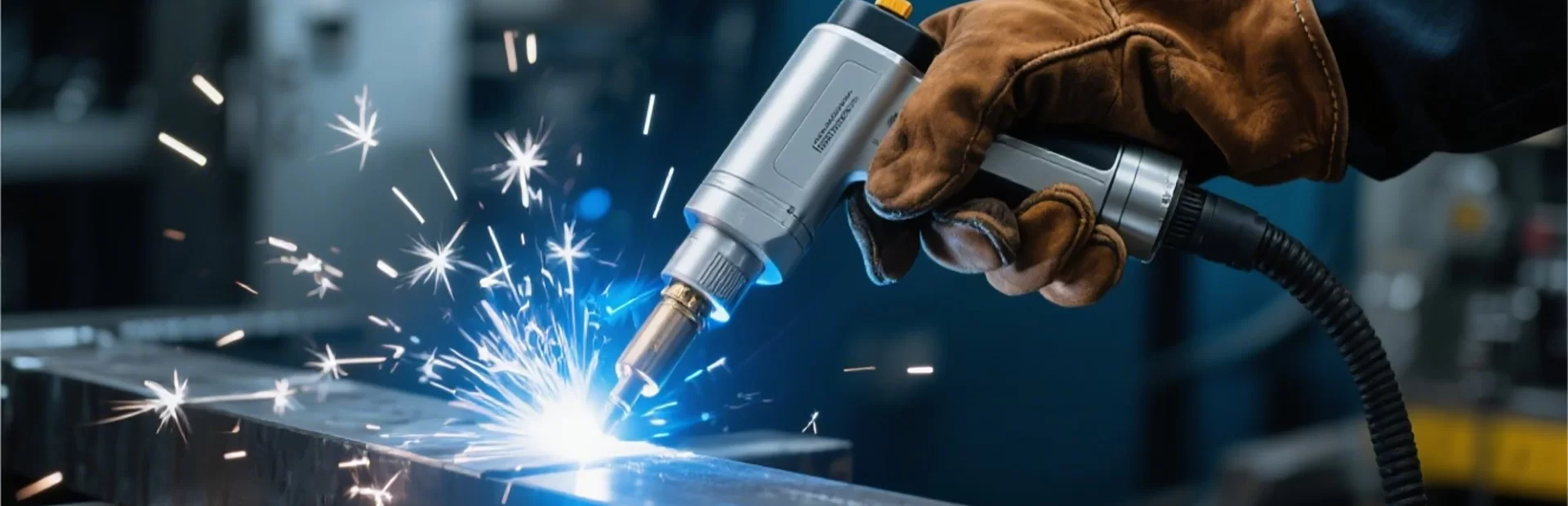

Selecting the right metal processing equipment requires a balance between mobility, technical precision, and budget. For many B2B procurement officers, understanding the portable welding machine price involves more than just comparing initial stickers; it requires an analysis of the technology—such as laser versus traditional arc—and how it integrates into specific production lines.
In the modern manufacturing landscape, the shift toward handheld laser welding has redefined productivity. These systems offer a combination of high speed and minimal thermal deformation, making them essential for sectors ranging from automotive assembly to custom metal fabrication. However, the investment varies significantly based on power output, cooling requirements, and the level of automation integrated into the unit.
This guide provides a comprehensive framework for evaluating portable welding solutions. Readers will learn how to identify the primary cost drivers, assess technical specifications against industrial needs, and evaluate supplier reliability to ensure a high return on investment for their operational challenges.
Analyzing the Value of Portable Welding Equipment
Portable welding technology has evolved from simple handheld electrodes to sophisticated fiber laser systems. The core value of these machines lies in their ability to provide "precision on the move," reducing the need to transport heavy workpieces to fixed welding stations. From a technical perspective, the adoption of handheld laser welders allows for deeper penetration and narrower weld beads compared to MIG or TIG welding, which significantly reduces the amount of post-weld grinding and finishing required. This efficiency gain directly impacts the overall cost of production by reducing labor hours. When analyzing the market, buyers must distinguish between entry-level hobbyist tools and industrial-grade equipment designed for continuous duty cycles. The latter incorporates advanced thermal management and stable power delivery systems, ensuring consistency across thousands of welds. Understanding this distinction is critical for maintaining quality standards in high-precision industries such as aerospace or medical device manufacturing.
Procurement Guide for Industrial Welding Solutions
Procuring industrial equipment is a strategic decision that affects long-term operational stability. To avoid common procurement mistakes, engineers and project managers should evaluate the following seven dimensions to determine the total cost of ownership and technical fit.
Cost Drivers in Equipment Acquisition
The cost of portable welding systems is primarily driven by the laser source power and the sophistication of the control system. Higher wattage allows for the welding of thicker materials and faster travel speeds, but increases the initial investment. Additionally, the inclusion of safety features, such as integrated sensors and protective eyewear, adds to the value. Buyers should look beyond the base price to consider installation costs and operator training requirements.
| Cost Factor | Impact Level | Key Consideration | Buyer's Question |
|---|---|---|---|
| Laser Source Power | High | Determines penetration depth | Is 1.5kW sufficient for my thickest parts? |
| Cooling System | Medium | Affects duty cycle and uptime | Air-cooled or water-cooled for my environment? |
| Control Interface | Medium | Impacts ease of use and precision | Does it support preset parameters for different metals? |
| Safety Certifications | High | Compliance with regional laws | Does it meet ISO or CE safety standards? |
| Support Package | Medium | Long-term maintenance cost | What is the cost of consumables per year? |
| Customization | Low | Tailored for specific applications | Are specialized nozzles available for tight corners? |
Technical Specifications and Power Output
The effectiveness of a portable welder is measured by its power stability and beam quality. In fiber laser systems, the power output determines the maximum material thickness that can be welded in a single pass. For instance, a system designed for thin-sheet automotive panels requires different focal lengths and power modulation than one intended for heavy industrial frames. Precision is not just about the weld, but the ability to maintain a consistent dew point or temperature in the surrounding environment if auxiliary equipment like air dryers are used in the pneumatic support systems.
Evaluating Material Compatibility
Not all portable welders are suited for all metals. While stainless steel and aluminum are common, the reflective nature of aluminum requires specific laser wavelengths or higher power thresholds to avoid back-reflection damage to the machine. Procurement teams must map their material inventory against the machine's capabilities. A versatile system should allow for quick adjustments in parameters to switch between carbon steel and galvanized alloys without compromising the structural integrity of the joint.
Portability vs. Industrial Duty Cycles
There is often a trade-off between the weight of the unit and its ability to run continuously. True industrial portability means the handheld head is lightweight and ergonomic, while the power source remains stable and well-ventilated. Systems that claim extreme portability may sacrifice the robustness of the cooling system, leading to frequent overheating during peak production. It is essential to verify the "Duty Cycle" percentage to ensure the machine can handle the daily workload without excessive downtime.
Operational Efficiency and Energy Use
Energy efficiency is a growing concern in B2B operations. Modern laser welders are significantly more energy-efficient per weld than traditional plasma or arc systems. By focusing energy into a tight beam, they reduce heat-affected zones (HAZ), which means less energy is wasted heating the surrounding metal. When integrating these into a factory, evaluating the power draw and the requirement for stabilized electricity is key to preventing operational surges.
Maintenance and Lifecycle Value
The long-term value of a welding system is determined by its maintainability. Modular designs—similar to the modular structure found in high-end air dryers—allow for rapid replacement of wear parts like nozzles and protective lenses. A buyer should evaluate the availability of spare parts and the ease of calibration. A machine that is easy to service reduces the risk of prolonged production halts, thereby increasing the overall return on the initial investment.
Supplier Capabilities and Support
The supplier's role extends beyond the sale. A professional trading and manufacturing partner, such as Shijiazhuang Topstar International Trading Co., Ltd., bridges the gap between high-quality Chinese manufacturing and global industrial needs. Critical support includes technical guidance on handheld laser welder operation, quality inspection during sourcing, and reliable after-sales logistics. The ability of a supplier to provide a comprehensive solution—from the welder to the supporting pneumatic systems—ensures a seamless integration into the client's workflow.
FAQ
What factors most influence the cost of a portable laser welder?
The primary factors are the power of the laser source (measured in kW), the type of cooling system (air vs. water), and the precision of the control software. Additionally, the quality of the optical components and the inclusion of safety features like laser-protective sensors significantly impact the final pricing.
Can portable laser welders handle thick industrial plates?
Yes, but it depends on the wattage. While lower-power units are ideal for thin sheets, high-power portable systems (typically 2kW and above) can penetrate thicker materials. For extremely thick plates, a combination of beveling the joint and using a high-power source is recommended for structural integrity.
How does a portable laser welder differ from traditional MIG welding?
Laser welding offers much higher speeds, a smaller heat-affected zone, and deeper penetration with less distortion. Unlike MIG, it doesn't always require extensive filler material for thin joints, resulting in a cleaner finish and significantly reduced post-processing time.
What maintenance is required for these machines?
Regular maintenance includes cleaning and replacing the protective lenses, checking the cooling system for leaks or debris, and ensuring the laser source is properly ventilated. Modular systems make these tasks faster, reducing the risk of unplanned production downtime.
Is specialized training necessary for operators?
Yes. While handheld laser welders are often easier to learn than TIG welding, safety training is mandatory due to the nature of Class 4 lasers. Operators must be trained in the use of protective gear and the correct handling of the laser head to ensure both worker safety and weld quality.
How do I evaluate a supplier for industrial welding equipment?
Evaluate the supplier based on their technical expertise, their ability to provide quality inspection reports, and their after-sales support infrastructure. A reliable partner should offer a comprehensive solution, including technical specifications that match your specific material and thickness requirements.
References and further reading
- Industrial Laser Processing Standards - ISO 11553 series on weld quality.
- Comparative Analysis of Fiber Laser and Arc Welding Efficiency in Automotive Manufacturing.
- Guide to Occupational Safety for High-Power Laser Equipment.


