Shijiazhuang Topstar
International Trading Co., Ltd.


Get In Touch
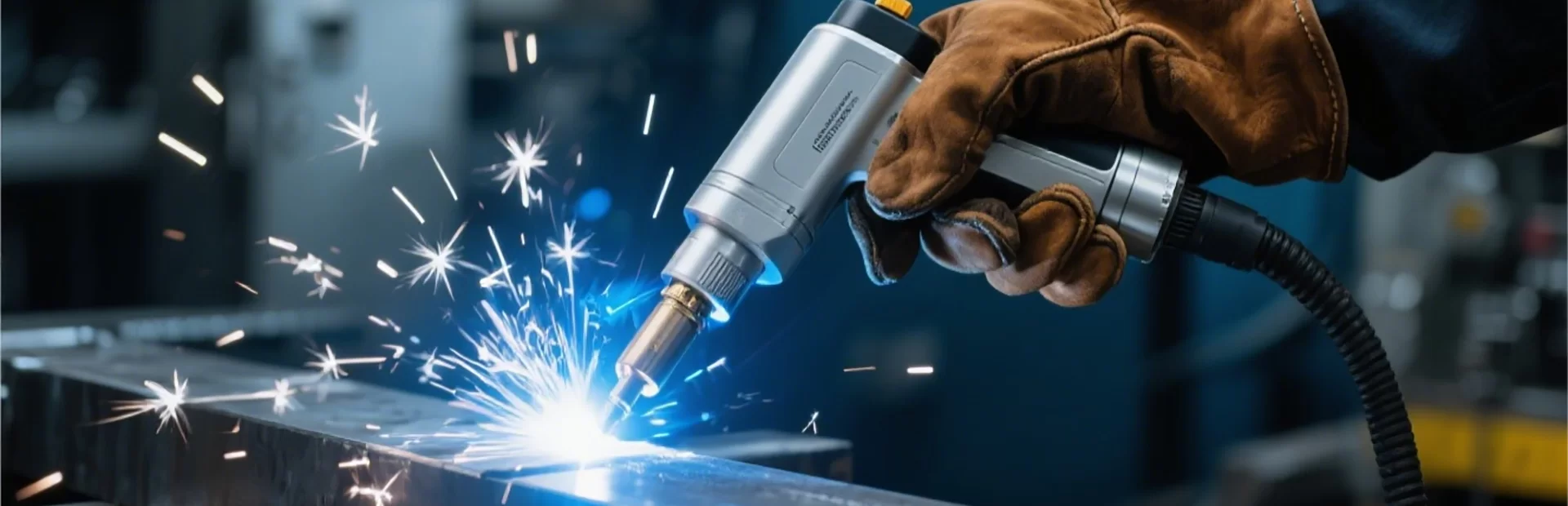
The robot arm welding machine is a highly automated welding system. Its core is a multi-jointed industrial robotic arm with a welding tool (welding gun) mounted on the end of the arm. This system, controlled by computer programming, can automatically perform precise, repetitive welding tasks, making it suitable for large-scale, high-quality production environments.
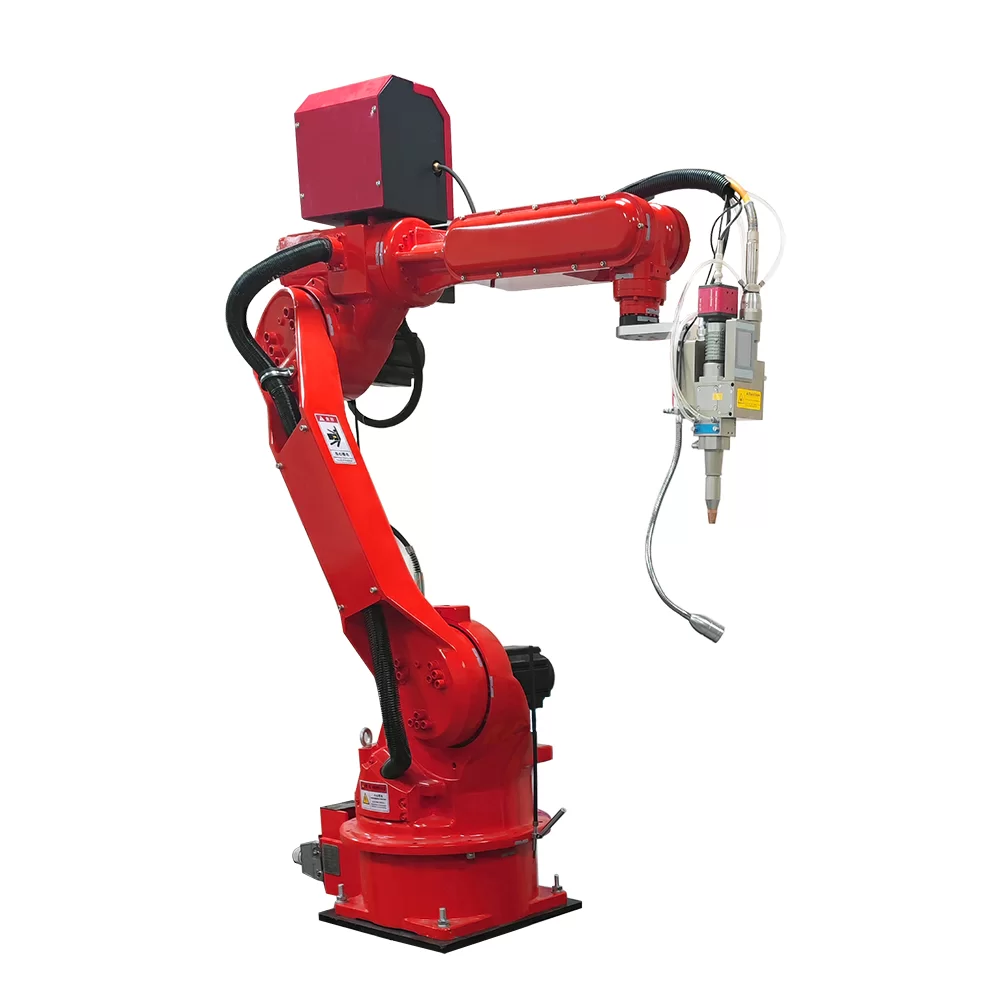
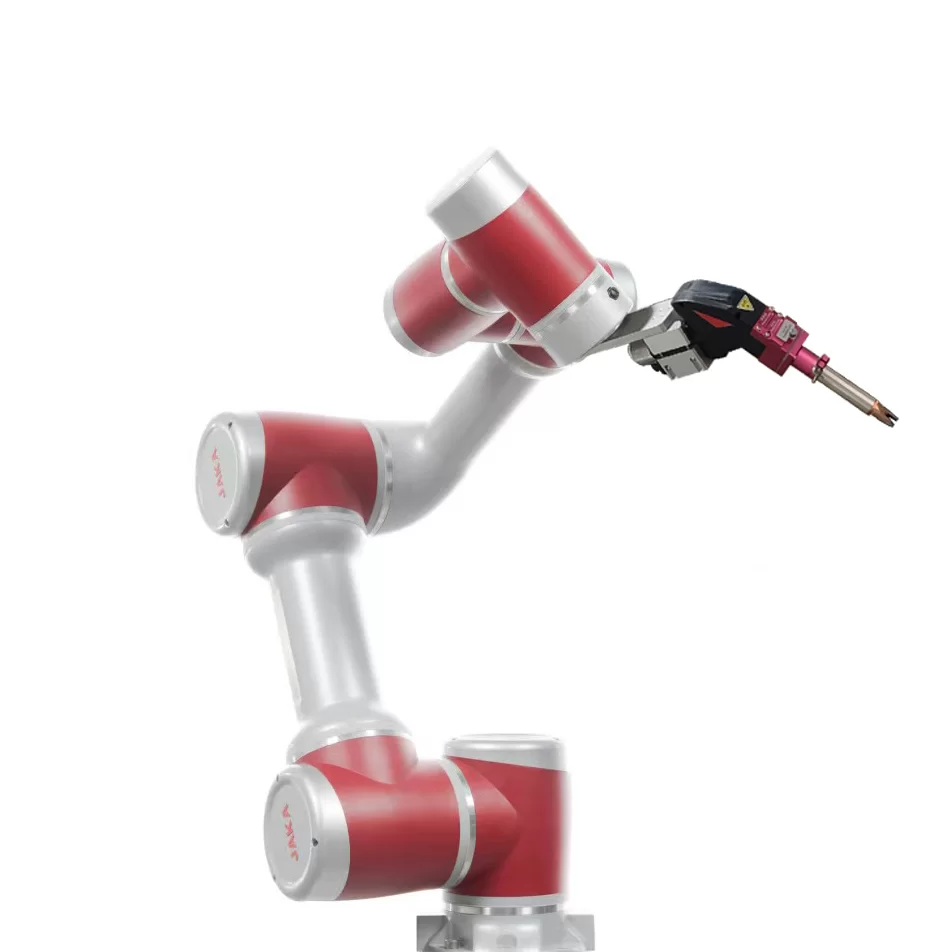
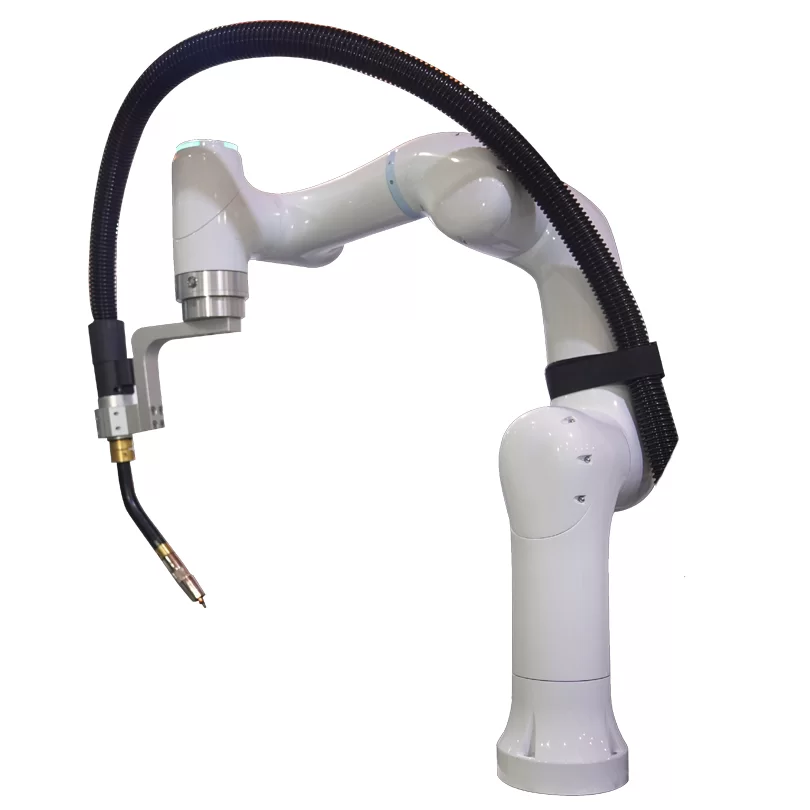
The robot arm welding machine use flexible arms to complete welding of complex three-dimensional paths at fixed workstations. They are indispensable core equipment for industries that require welding complex three-dimensional structures and pursue high output and high consistency.
1. Extremely High Production Efficiency and Stability
(1) Able to operate 24/7, the welding speed remains stable, far exceeding manual welding, significantly increasing productivity.
(2) Without human interference, the production cycle remains constant, simplifying overall line management.
2. Excellent and Consistent Welding Quality
(1)The robot's precise and repetitive movements eliminate the impact of manual skill fluctuations, fatigue, and emotion, ensuring uniform, beautiful, and high-quality welds on every product.
3. Unparalleled Flexibility and Versatility
(1) By replacing fixtures and reprogramming, the same robotic welding line can quickly adapt to the production of different products, making it ideal for flexible manufacturing models requiring high-mix, low-volume production.
4. Reduced Long-Term Costs
(1) Although the initial investment is high, the long-term cost reduction significantly reduces the need for skilled welders, lowering labor and management costs.
(2) Reduced rework and scrap rates reduce material costs.
5. Improved Working Environment
(1) Workers are freed from hazardous welding fumes, strong light, and high temperatures, freeing them to engage in higher-value tasks such as equipment monitoring and maintenance, fulfilling their corporate social responsibility.
1.Automotive Manufacturing
The largest user. Used for welding nearly all components, including the body, chassis, suspension, and exhaust pipes. The body-in-white production line exemplifies high automation.
2.Construction Machinery
Welding of large structural components, such as excavators, cranes, and loaders, requires high strength.
3.Rail Transportation
Welding of the frames and skins of high-speed rail and subway cars.
4.Aerospace
Welding of engine components and aircraft structures, which require extremely high quality and reliability.
5.Metal Furniture
Mass production of steel office furniture and household items.
6.Home Appliance Industry
Washing machine drums, refrigerator brackets, air conditioning compressors, etc.
Shipbuilding Industry
Although automation is challenging, it is gradually being applied to segmented welding.
Model | CBR5 |
Payload | 5kg |
Working radius | 919mm |
Weight | About 16.5kg |
Number of axis | 6 |
MTBF | >80000h |
Power supply | 48VDC |
Programming | Drag teaching, graphical interface |
Power consumption | 225w |
Safety | More than 21 adjustable safety features including collision detection,virtual well, collaboration mode,etc |
Repeatability | ±0.03 mm |
Maximum speed of the tool end | <2.0m> |
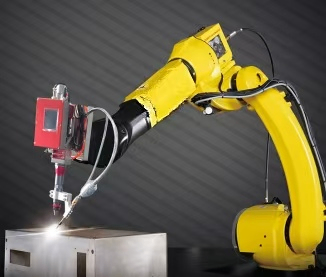
The operational foundation of a robot arm welding machine is a sophisticated blend of mechanical engineering, advanced computer science, and high-precision sensor technology. At its most basic level, the working principle revolves around a multi-axis robotic manipulator that mimics the range of motion of a human arm but with far superior consistency, strength, and spatial accuracy. To understand how these systems function in a modern industrial setting, we must examine the synergy between the hardware components and the software logic that drives them.
The Mechanical Architecture: Multi-Axis Kinematics
The core of a robotic arm for welding is typically an articulated robot with six axes of motion. These axes are referred to as ""degrees of freedom"" (DOF). Each axis is powered by a high-torque servo motor equipped with an absolute encoder.
The Base and Lower Arm: These provide the primary reach and rotation, allowing the robot to access the workpiece from various angles.
The Wrist (The End Effector): The final three axes are located at the wrist, which allows for complex orientation. This is where the welding torch is mounted. The ability to rotate and tilt the torch with sub-millimeter precision is what allows the robot to handle complex three-dimensional paths.
The kinematics involve complex mathematical algorithms—often processed in real-time by the robot controller—that translate simple Cartesian coordinates into specific rotational degrees for each of the six motors.
The Welding Power Source and System Integration
A robot arm welding machine does not act in isolation. It is integrated with a specialized welding power source, usually a high-end MIG, TIG, or Laser welder. The ""brain"" of the robot (the controller) communicates with the ""muscle"" of the system (the power source) via high-speed industrial protocols.
During the welding process, the controller manages several variables simultaneously:
Travel Speed: The velocity at which the arm moves along the seam.
Wire Feed Speed: Controlled precisely to match the travel speed and material thickness.
Voltage and Amperage: Dynamically adjusted to maintain arc stability.
Gas Flow: Initiated before the arc starts (pre-flow) and maintained after it stops (post-flow) to protect the molten pool from oxidation.
The automotive sector stands as the primary driver for the development of robotic technology, with robotic welding used in nearly every stage of vehicle assembly. From the initial stamping of body panels to the final assembly of the chassis, robotic arms provide the speed and structural reliability that manual labor cannot match. In an industry where a vehicle rolls off the assembly line every 60 seconds, stability and consistency are the metrics that define success.
Body-in-White (BIW) Production
The ""Body-in-White"" stage is perhaps the most iconic application of robotic arm technology. During this phase, the various stamped steel or aluminum panels are joined to form the structural frame of the car.
Spot Welding: Robotic arms equipped with heavy spot-welding guns apply thousands of localized welds to join the inner and outer shells of the vehicle. These robots are often coordinated in ""cells"" where multiple arms work on a single car body simultaneously.
Laser Welding: For high-end vehicles, laser welding is used to join the roof to the side panels, resulting in a seam that is so smooth it requires no decorative trim to hide it. This enhances the vehicle's structural rigidity and aerodynamic profile.
Chassis and Suspension Components
Beyond the visible body, the ""under-the-skin"" components like the chassis, suspension subframes, and axle housings require high-strength arc welding. These parts are critical for passenger safety and must withstand immense stress over the vehicle's lifetime. A robotic arm for welding in the automotive market is usually rated for high duty cycles, meaning it can operate 24/7 without thermal degradation. The robot ensures that every inch of the weld bead has consistent penetration, eliminating the ""human factor"" of fatigue or emotion that could lead to structural failure.
Exhaust System and Engine Components
Exhaust systems involve thin-walled stainless steel tubes and complex three-dimensional curves. Welding these manually is slow and prone to leaks. Robotic arms utilize advanced reorientation capabilities to rotate the exhaust manifold while welding, ensuring a continuous bead around the circumference of the pipe. Similarly, for engine mounts and fuel rails, the precision of a robot ensures that parts fit together perfectly during final assembly, reducing rework and scrap rates.
In the furniture industry, the focus shifts from extreme structural requirements to a balance of aesthetic beauty, high-volume throughput, and cost-efficiency. The use of a robot arm welding machine in metal furniture production has revolutionized the way office chairs, desks, shelving units, and bed frames are manufactured.
Precision for Aesthetic Finishes
For office furniture and home items, the ""beauty"" of the weld is a primary selling point. Customers do not want to see messy weld spatter or uneven beads on their chair frames. A robotic welding arm for sale can be tuned to produce ultra-clean welds with minimal spatter. Because the robot moves at a perfectly constant speed and maintains a consistent arc length, the resulting weld seam is uniform and smooth. This significantly reduces the time workers spend on secondary grinding and polishing, which is often the most labor-intensive part of furniture making.
High-Mix, Low-Volume Flexibility
The furniture market is heavily influenced by design trends, requiring manufacturers to produce a wide variety of styles in relatively small batches. The unparalleled flexibility of a robotic system is vital here. By utilizing modular fixtures and interchangeable clamps, a single robot arm welding station can switch from welding a batch of bar stools to welding a batch of filing cabinet frames in a matter of minutes. The operator simply loads the new program and changes the jig, allowing the factory to remain agile in a competitive market.
Improving the Human Element
Beyond the mechanical advantages, robotic systems fulfill a corporate social responsibility by removing workers from hazardous welding fumes, strong light, and high temperatures. In traditional furniture factories, workers often spent 8 to 10 hours a day in cramped positions. With a robot arm welding machine, these employees are transitioned into roles as system monitors or maintenance technicians. This not only improves their health and safety but also allows them to engage in higher-value tasks, increasing overall job satisfaction and reducing employee turnover.