Shijiazhuang Topstar
International Trading Co., Ltd.


Get In Touch
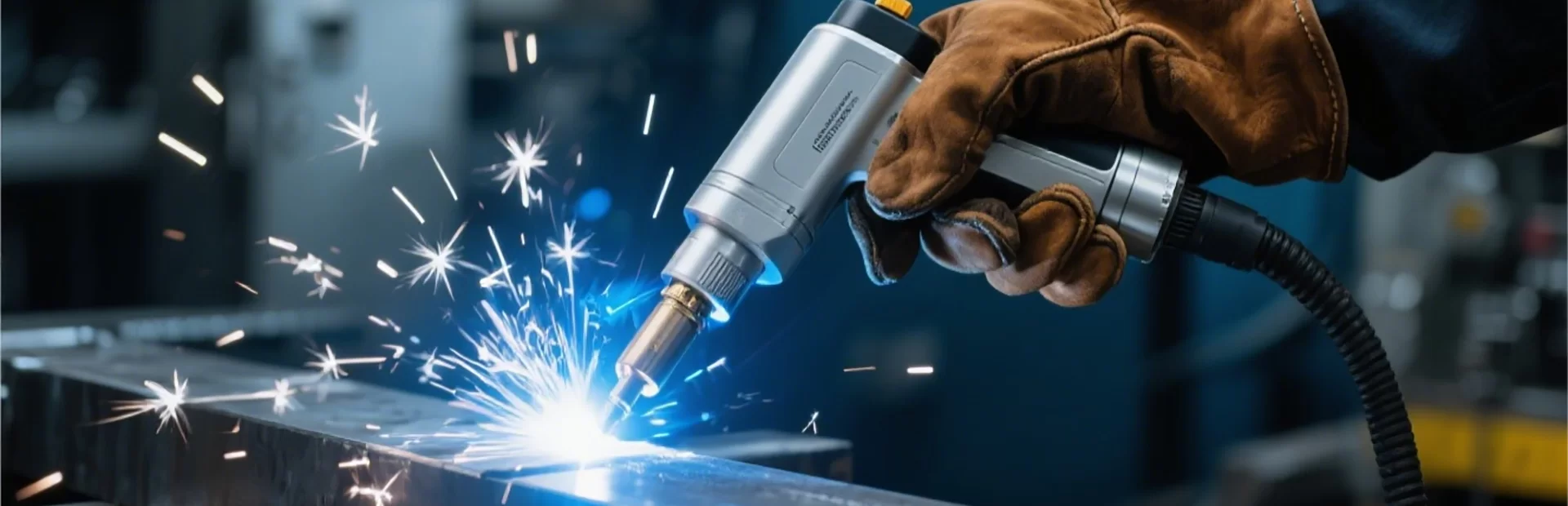
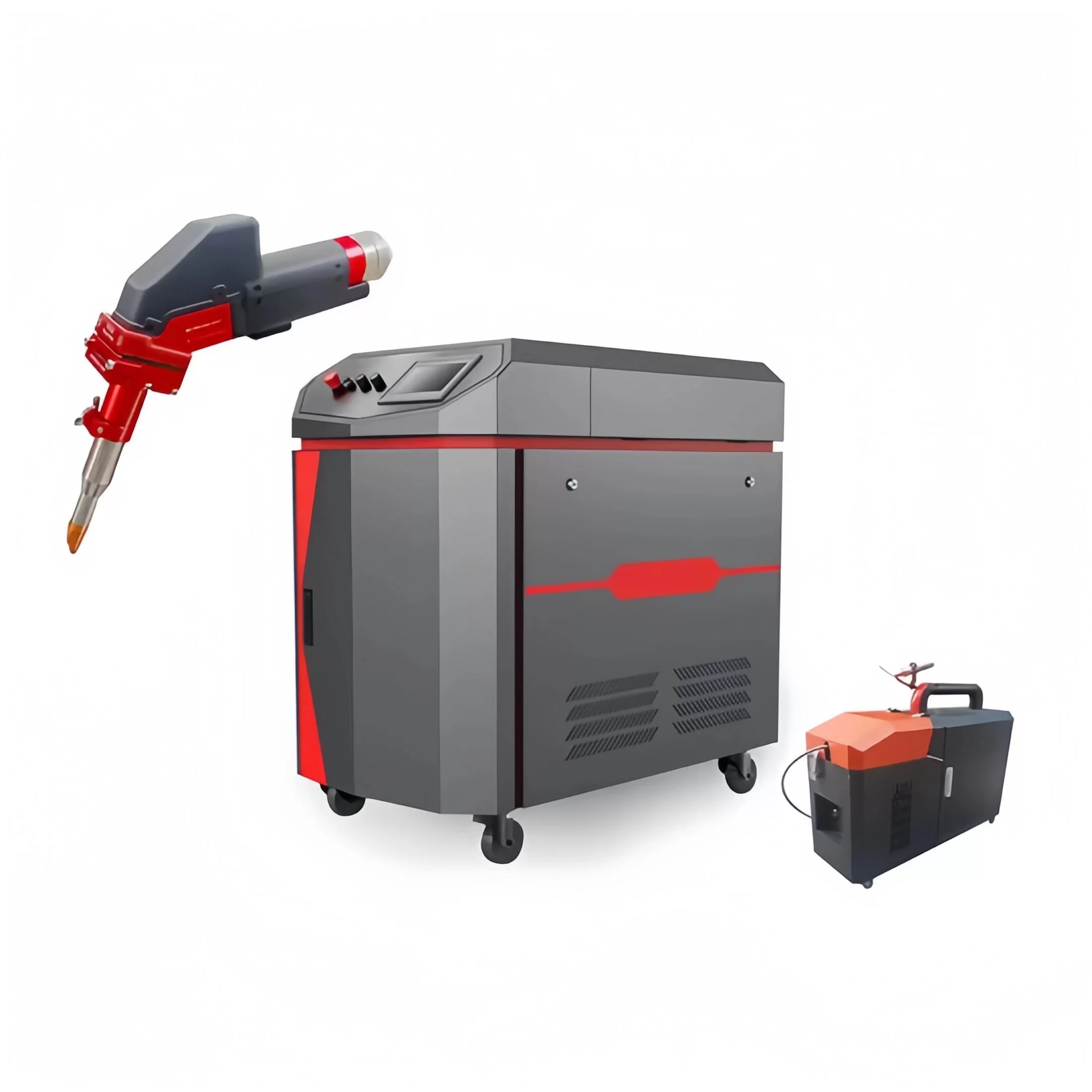
The handheld welding machine is a simple and efficient welding equipment with small size, easy operation and fast welding speed.
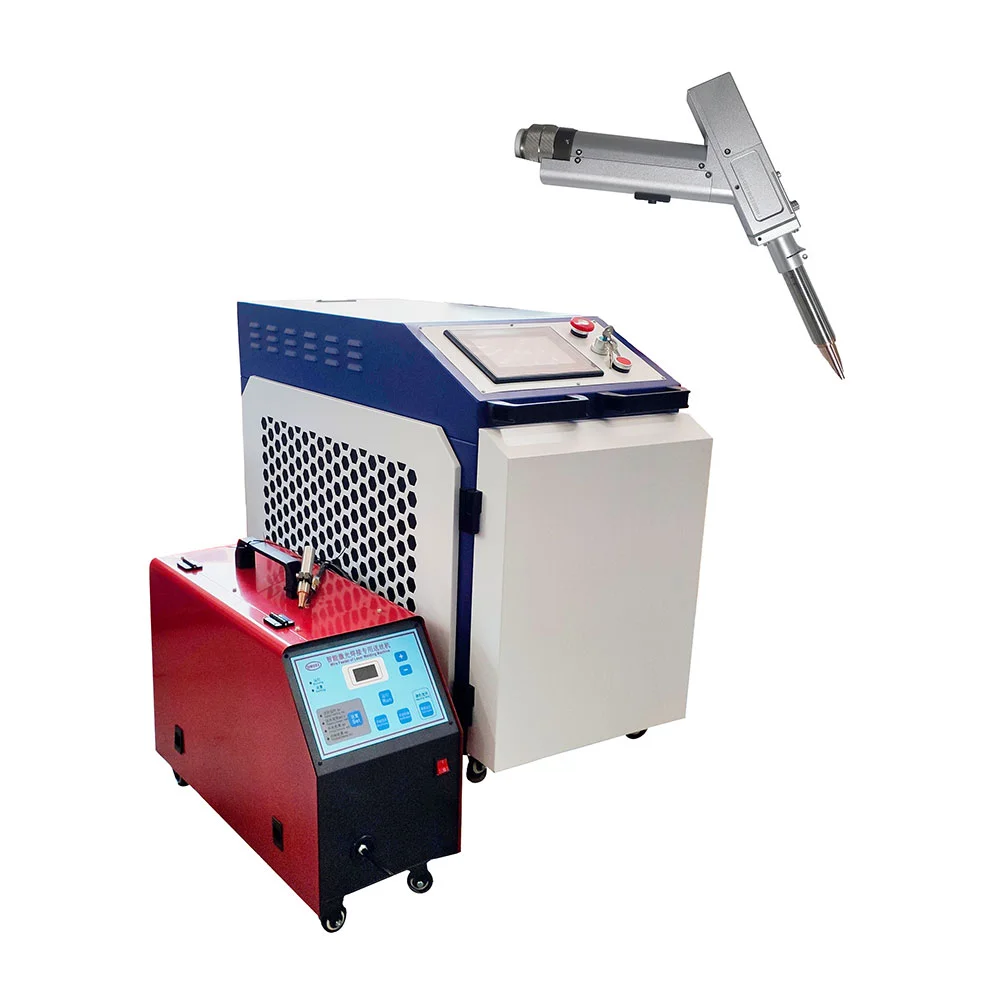
The handheld laser welder is a new generation of portable laser welding equipment. It uses a high-energy laser beam to precisely melt metal, achieving industrial-grade precision welding without the need for specialized welding skills. The flexible movement of the main unit combined with the handheld welding torch completely solves the on-site welding challenges of large work pieces and complex structures!
1. High welding speed, approximately 2-10 times faster than traditional welding, and eye-friendly.
2. The welding machine is easy to learn and operate, requiring no certification. Even novice welders can easily create beautiful welds.
3. A single pull creates a smooth, beautiful weld seam, with minimal additional polishing required, saving time and labor costs.
4. The high-precision laser welding head overcomes the disadvantage of a small laser welding spot, expanding the tolerance range of the processed component and thweld width for optimal weld formation.
5. The welded work piece remains stable, leaving no weld scars and maintaining a secure weld.
Laser welding can be used in welding stainless steel,aluminum alloy,carbon steel,galvanized and so on.
1500w
Description | Grade | MHJ-1500E |
Handheld welding machine (1500w) | Power | 1500W |
Laser | BWT | |
Cooling | Water-cooling | |
Laser wavelength | 1080+10 nm | |
Working mode | Continuous / Modulated | |
Power adjustment range | 10~100% | |
Fiber core diameter | 25 or 50 | |
Targeting and positioning | Red Light | |
Fiber length | 12mm | |
Welding speed | 0~120 mm/s | |
Applicable thickness | <3.5mm> | |
Wire feeder | Standard Wire feeding speed 38~600mm/min | |
Wire feeding diameter | 0.8/1.0/1.2/1.6/2.0mm | |
Working Environment | 10-40°C,humidity 10-85%, no condensation | |
Operating Voltage | 220±20V,AC,PE,50/60Hz | |
Power Rating | 4.5KW | |
Dimension | 140*54*83cm | |
Net weight | 108kg |
2000w
Description | Grade | MHJ-2000E |
Handheld welding machine (2000w) | Power | 2000W |
Laser | BWT | |
Cooling | Water-cooling | |
Laser wavelength | 1080+10 nm | |
Working mode | Continuous / Modulated | |
Power adjustment range | 10~100% | |
Fiber core diameter | 25 or 50 | |
Targeting and positioning | Red Light | |
Fiber length | 12mm | |
Welding speed | 0~120 mm/s | |
Applicable thickness | <3.5mm> | |
Wire feeder | Standard Wire feeding speed 38~600mm/min | |
Wire feeding diameter | 0.8/1.0/1.2/1.6/2.0mm | |
Working Environment | 10-40°C,humidity 10-85%, no condensation | |
Operating Voltage | 220±20V,AC,PE,50/60Hz | |
Power Rating | 6KW | |
Dimension | 140*54*83cm | |
Net weight | 108kg |
3000w
Description | Grade | MHJ-3000K |
Handheld welding machine (3000w) | Power | 3000W |
Laser | BWT | |
Cooling | Water-cooling | |
Laser wavelength | 1080+10 nm | |
Working mode | Continuous / Modulated | |
Power adjustment range | 10~100% | |
Fiber core diameter | 50 (25,100,200 optional) | |
Targeting and positioning | Red Light | |
Fiber length | 10mm | |
Welding speed | 0~120 mm/s | |
Applicable thickness | <<>6mm (depending on the material) | |
Wire feeder | Standard Wire feeding speed 38~600mm/min | |
Wire feeding diameter | 0.8/1.0/1.2/1.6/2.0mm | |
Working Environment | 10-40°C,humidity 10-85%, no condensation | |
Operating Voltage | 380V、50/60Hz | |
Power Rating | 8KW | |
Dimension | 106*50.5*112cm | |
Net weight | 250kg |
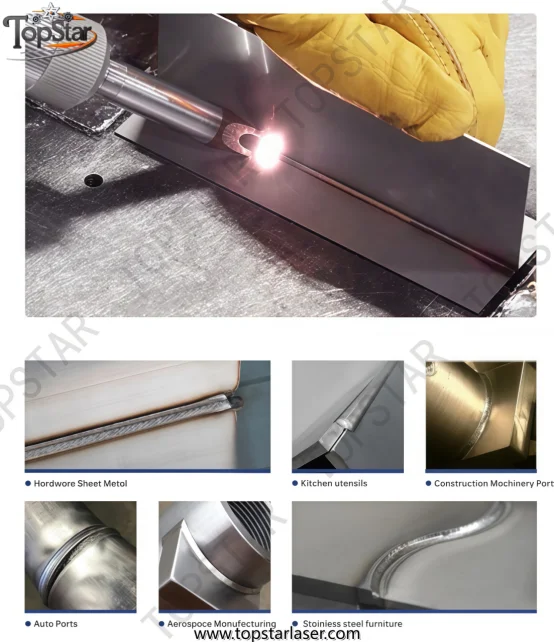
Welding Samples
Accessories
Description | Specification | QTY |
Protective lenses | D18T2 | 5 pcs |
Nozzles | AS-12 | 1pcs |
BS-16 | 1pcs | |
CS-12 | 1pcs | |
ES-12 | 1pcs | |
C | 1pcs | |
Cut nozzle | Single layer 1.5mm | 1pcs |
Double wire feeder copper nozzle | AS-20D | 1pcs |
Nozzles packaging box | / | 1pcs |
Wire feeder | 1.2/1.6 | 1pcs/per each |
Thread feeder | 0.8/1.2/1.6 | 1pcs/per each |
Hex wrench | 2.5mm,4mm | 1set/per each |
Double-ended open-end wrench | 12/14,14/17 | 1pcs/per each |
safety goggles | / | 1pcs |
Hex socket | / | 1set |
Tracheal tube | / | 2m |
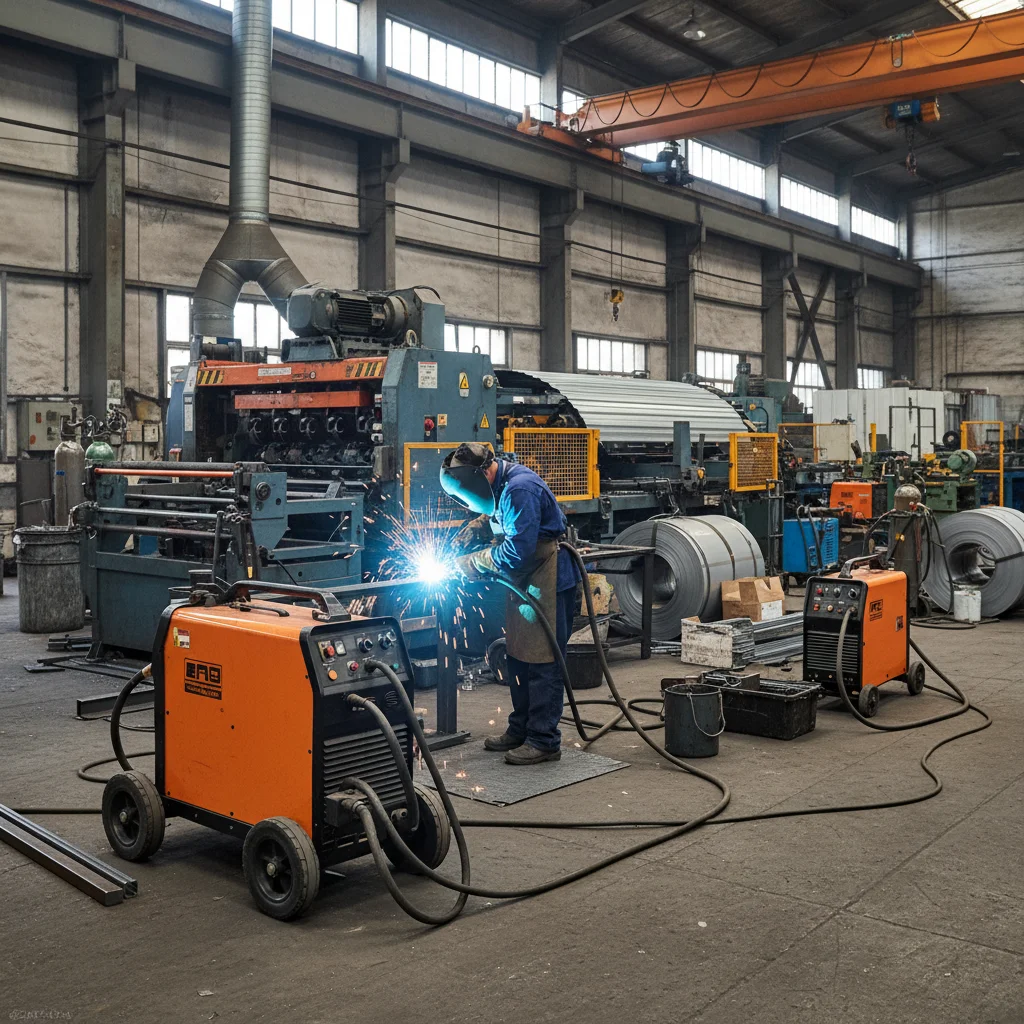
The industrial manufacturing sector is currently experiencing a technological transition as the portable handheld laser welder begins to supersede conventional methods like Tungsten Inert Gas (TIG) and Metal Inert Gas (MIG) welding. This shift is driven by a necessity for higher volumetric throughput, lower operational overhead, and a level of aesthetic precision that was previously difficult to achieve on a mass scale. To understand the impact of this technology, one must analyze the technical and economic disparities between laser systems and traditional arc-based processes.
Processing Speed and Thermal Efficiency
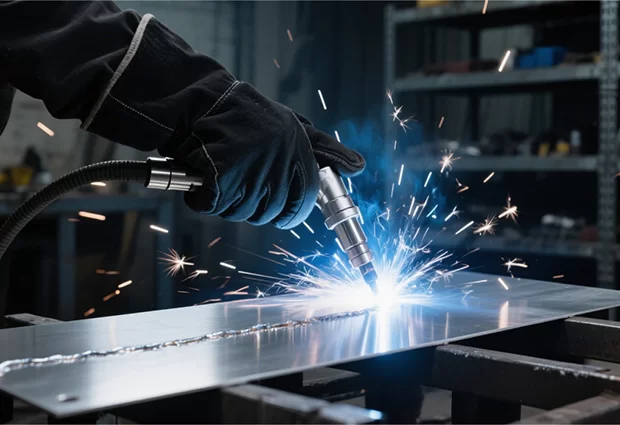
The most immediate advantage of laser technology is its staggering processing speed. Traditional arc welding relies on an electric arc to generate heat, a process that is relatively slow because the thermal energy must conduct through the metal to create a sufficiently deep melt pool. In contrast, a laser uses a concentrated, high-energy light beam that penetrates the material almost instantaneously. This allows for welding speeds that are typically 2 to 10 times faster than TIG welding.
This speed is coupled with exceptional thermal efficiency. In traditional welding, the Heat Affected Zone (HAZ) is quite large because the arc spreads heat into the surrounding material for a longer duration. This often results in ""oil-canning"" or significant warping, especially on thin-gauge sheets. The laser's precision ensures that the energy is localized, melting only the metal at the specific joint. Consequently, the workpiece remains stable, maintaining its structural integrity and dimensional accuracy without the distortion common in arc welding.
Skill Accessibility and Labor Economics
A primary challenge facing global fabrication today is the acute shortage of highly skilled welders. Achieving a high-quality, ""beautiful weld"" with TIG requires years of practice and deep knowledge of metallurgy. This creates a bottleneck in production and drives up labor costs as companies compete for a limited pool of certified veterans.
The handheld laser welding gun addresses this by being remarkably intuitive. Since the machine utilizes intelligent control systems to manage the laser output and pulse frequency, even a novice can produce industrial-grade, smooth weld seams after minimal training. Because no specialized certification is often required for basic operation, manufacturers can deploy their workforce more flexibly, reducing the reliance on highly specialized technicians and lowering the overall cost per part.
For any modern workshop, the longevity of high-tech equipment is a key factor in calculating long-term profitability. While the technology is advanced, its functional lifespan is highly dependent on consistent maintenance and environmental control. A high-quality fiber laser system can have a functional lifespan exceeding 100,000 hours of operation.
Component Longevity: The Fiber Source
The heart of the system is the fiber laser source. Modern fiber sources are solid-state, meaning they have no moving parts and do not require the gas refills associated with older CO2 laser technologies. Under optimal conditions—where the machine is kept within a stable temperature range and protected from excessive vibration—the laser source can operate for over a decade in a standard multi-shift production environment.
However, the lifespan of auxiliary components varies. The fiber optic delivery cable is robust but sensitive to extreme bending or kinking. Proper cable management is essential to prevent ""micro-fractures"" in the glass fiber, which could lead to power loss or catastrophic failure of the delivery system.
Routine Maintenance for Optimal Performance
To ensure the machine continues to deliver industrial-grade precision, a strict maintenance schedule is required:
Protective Lens Inspection: The most common maintenance task involves the protective lens in the welding head. This lens protects the expensive internal optics from metal spatter. It must be checked daily and cleaned with high-purity alcohol. A dirty lens can absorb laser energy, overheat, and crack, potentially leading to internal damage.
Cooling System Care: Most high-power laser welders are water-cooled. The water must be distilled or deionized to prevent mineral buildup in the laser’s narrow cooling channels. The water should be changed regularly, and the filters must be cleaned to ensure the laser source stays within its rated operating temperature.
Dust and Airflow: Since these machines are often used in metal shops, dust is a constant threat. The air filters on the main unit should be cleaned weekly to prevent metallic dust from entering the power electronics or the laser source chamber, which could cause short circuits or overheating.
Stainless steel is a cornerstone of the modern economy, found in everything from medical instruments to kitchen appliances and industrial tanks. However, stainless steel presents unique challenges, specifically its tendency to warp under heat and its requirement for a clean finish to maintain corrosion resistance. The laser welder is specifically engineered to overcome these hurdles.
Precision and Aesthetic Integrity
In stainless steel fabrication, the appearance of the weld is often as important as its strength. In the food and pharmaceutical industries, welds must be perfectly smooth to prevent bacterial growth in crevices. The laser achieves this by precisely melting the metal edges without the heavy oxidation or ""burning"" seen in arc welding. The result is a secure weld that maintains the material's original metallurgical properties.
Because the laser spot is so concentrated, the heat is applied for a fraction of the time compared to TIG. This prevents the formation of ""heat tints"" or heavy discoloration that would otherwise require chemical pickling or mechanical grinding to remove. For thin-gauge stainless steel (0.5mm to 3mm), a handheld laser welding machine for stainless steel is the only tool that can provide a structural joint without causing the panel to buckle or lose its mirror-like finish.
Versatility in Complex Structures
Fabricating stainless steel often involves complex geometries such as internal corners, narrow channels, and intricate decorative lattices. Traditional welding torches are often too bulky to reach these areas effectively. The flexible movement of the main unit combined with the lightweight, ergonomic welding torch allows operators to weld at difficult angles with ease.
This flexibility is further enhanced when welding alloys or galvanized sheets, where the laser's ability to overcome the disadvantage of a small laser welding spot ensures a consistent bond even if the parts aren't perfectly aligned. The ""wobble"" function in the welding head oscillates the laser beam, creating a wider weld width that fills gaps effectively, making it a highly effective handheld laser welder for aluminum and various stainless alloys alike.
Enhancing Structural Strength
While the aesthetic benefits are clear, the structural integrity of a laser weld on stainless steel is equally impressive. The deep penetration and narrow weld profile result in a joint that is often stronger than the surrounding base metal. In pressure vessel fabrication or architectural framing, this means thinner materials can be used to achieve the same structural rating, leading to weight savings and lower material costs. By providing a secure weld with minimal additional polishing, the handheld laser welder has become the gold standard for high-end stainless steel fabrication shops globally.