Shijiazhuang Topstar
International Trading Co., Ltd.


Get In Touch
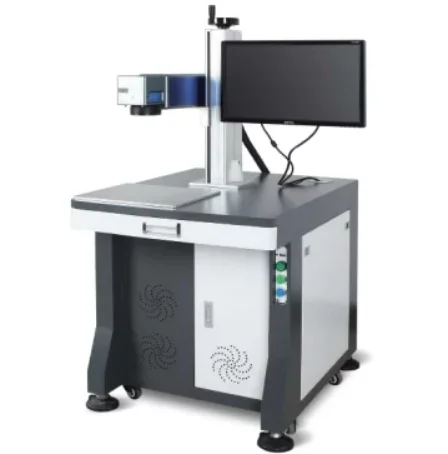
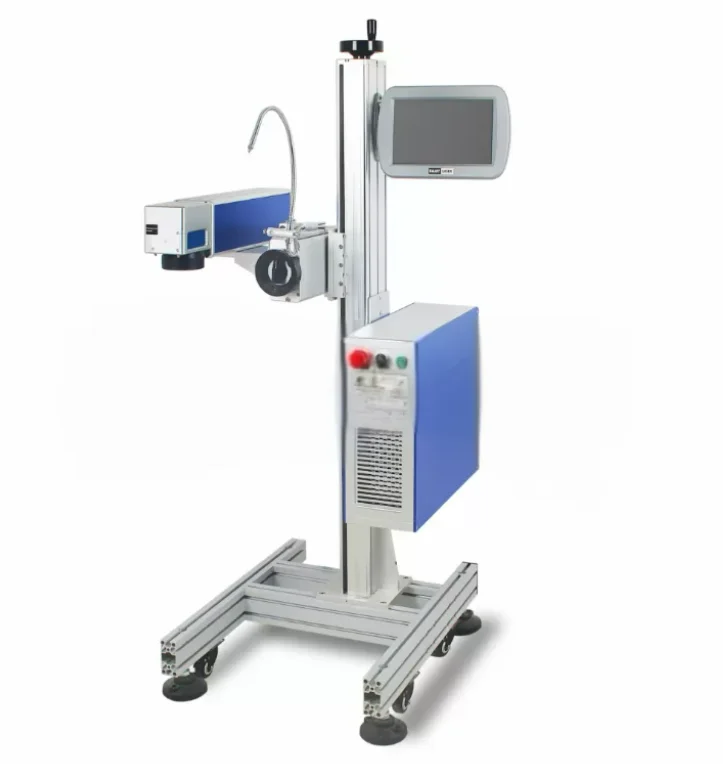
The UV laser marking machine is a high-end cold-process marking device that uses a UV laser. Its core principle is photochemical rather than photo thermal. Because UV photons are extremely energetic, they can directly destroy chemical bonds on the surface of materials (especially polymers), causing chemical changes rather than melting or vaporization. This achieves ultra-fine, "cold" marking effects. This process leaves a minimal heat-affected zone, hence the name "cold processing."
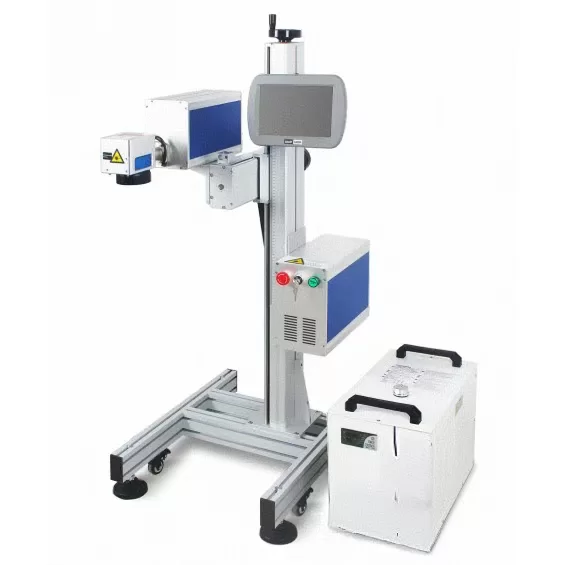
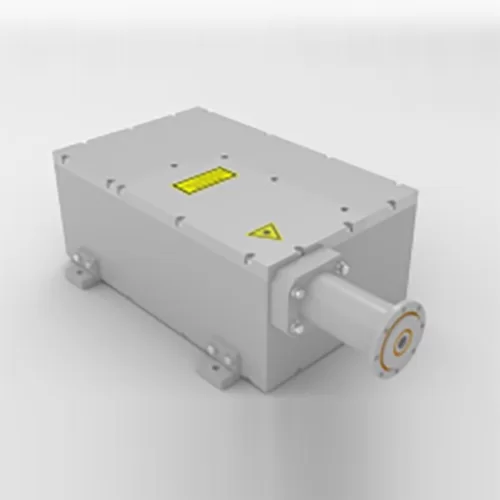
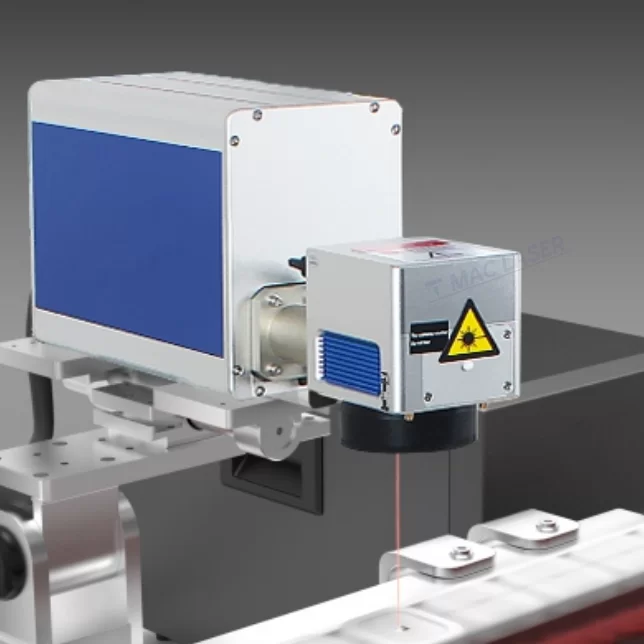
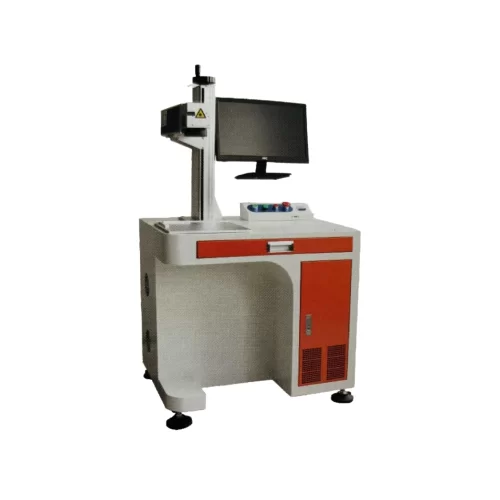
The UV laser marking machine is a high-end cold-process marking device that uses a UV laser. The key factors in choosing a UV laser marking machine are:
Material Type: If you are processing heat-sensitive non-metallic materials (such as plastics, PCBs, and glass) or metal products requiring ultra-fine marking, UV is the preferred choice.
Precision Requirements: If you require extremely high precision and aesthetics in your markings, a UV laser is a must.
Budget Considerations: If a fiber laser can achieve the desired results, provided the process requirements are met, it offers a more cost-effective solution. UV equipment is a solution for specific, high-end needs.
1."Cold Processing" Feature
This is its core advantage. The processing generates virtually no heat, avoiding thermal stress, thermal deformation, slag, and micro cracks in the material, achieving true "cold" marking.
2.Extremely High Processing Precision
The ultraviolet wavelength is extremely short, allowing it to be focused into an ultra-small spot diameter of less than 10 microns, enabling ultra-fine marking that is impossible with fiber and CO2 lasers.
3.Wide Material Compatibility (Particularly for non-metals)
It can process many heat-sensitive materials, a shortcoming of traditional fiber lasers.
4.Excellent Marking Results
Marking edges are crisp and clear, without any burrs or burns. A variety of effects can be produced on the material surface, including shallow and deep engraving, and surface color changes (such as white and gray), with high contrast and excellent aesthetics.
5.Consumables and Maintenance
While there are no consumables, UV lasers typically have a shorter lifespan than fiber lasers (approximately 15,000-20,000 hours), and the water cooling system requires maintenance, resulting in relatively high operating costs.
1. Electronics and Semiconductor Industry (largest application area)
(1)IC Chips: Marking tiny letters and logos on wafers and chips without thermal stress or damage.
(2)FPC/PCB: Marking QR codes and text on flexible printed circuits and PCBs with high precision and without damaging the substrate.
(3)Electronic Components: Fine coding on resistors, capacitors
2. Plastics and Polymer Materials:
(1)Plastic Buttons: Marking characters on mobile phones and remote control buttons with clear and wear-resistant markings.
(2)Medical Devices: Labeling on medical catheters, plastic reagent bottles, and packaging materials with excellent biocompatibility and no chemical contamination.
(3)Food Packaging: Marking production dates and batch numbers on packaging for safety and hygiene.
3. Glass and Ceramics Industry:
(1)Glass: Surface engraving with fine patterns and micro-perforations to achieve a "glass engraving" effect without cracking.
(2)Ceramics: Fine marking on ceramic substrates and electronic ceramic components.
4..Luxury Goods and Cosmetics Packaging:
Ultra-fine logos and patterns on surfaces such as perfume bottles, lipstick tubes, and mobile phone cases enhance product quality.
5.Other Specialty Materials:
Shallow marking of paper packaging, leather, and wood (for special effects rather than depth).
Model | UV300F | UV500F | UV300 | UV301 | UV500 | UV1000 | ||
Laser parameters | Laser source model | LARK-355-3A | LARK-355-5A | SEAL-355-3E | SEAL-355-C | SEAL-355-C | SEAL-355-10S | |
Output power | 3w | 5w | 3w | 3w | 5w | 10w | ||
Beam quality m² | ≤1.2 | |||||||
Pulse repetition frequency | 20-150 kHz | 20-200 kHz | 40-300 kHz | |||||
Laser wavelength | 355nm | |||||||
0utput power stability | 3% | |||||||
Working life | About 200,000 working hours | |||||||
0pticalproperties | Marking range | 100-300mm (range optional) | ||||||
Engraving depth | ≤1mm (depending on power and time) | |||||||
Engraving speed | ≤10000mm/s | |||||||
Repeat accuracy | ±0.002 | |||||||
Minimum marking line width | 0.1mm | |||||||
Minimum character height | 0.15mm | |||||||
Use environment | Cooling way | Builtin air cooling | Extemal water cooling | |||||
System power supply | 500W/220V / 50Hz (110V can be connected) | |||||||
Temperature humidity | 0~40°, 30% RH 85%, air conditioner should be installed when used outside the range | |||||||
Oil mist condensation | Not allowed | |||||||
Other parameters | Operating system | Fly control system | ||||||
File form at | The software supports text, QR code, bar code, serial number, graphics and other marking content | |||||||
Dimensions | 660X510X1460 mm | |||||||
Packing size | Host: 850X510X280mm Water tank: 680X430X57mm Column:1350X350X280mm | |||||||
Total weight | Including cooling water tank about 89kg | |||||||
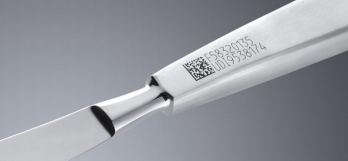
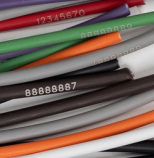

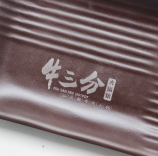
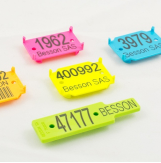
In the high-precision world of industrial identification, the uv laser marking machine stands as the definitive leader for applications where micron-level accuracy and absolute repeatability are non-negotiable. While fiber and CO2 lasers rely on thermal energy to melt or vaporize material, the UV laser operates on a fundamentally different principle: ""cold processing."" This shift from thermal to photochemical interaction is the cornerstone of its superior accuracy.
The Science of Cold Processing Accuracy
The accuracy of a uv laser marking machine is primarily derived from its extremely short wavelength, typically 355nm. In physics, the shorter the wavelength, the smaller the theoretical diffraction limit, which determines how small a laser beam can be focused. While a fiber laser might focus to a spot diameter of 30-50 microns, a UV laser can be focused to an ultra-small spot diameter of less than 10 microns.
This ultra-fine spot allows for the creation of intricate patterns, high-density QR codes, and microscopic text that remain crisp and legible under magnification. Because the UV photons possess high energy, they can directly break the molecular bonds of the material—a process known as photoablation. Since the material is not being ""melted"" by heat, there is no liquid metal or plastic flow, which in traditional lasers often causes ""blurring"" at the edges of a mark. Without the slag or thermal deformation common in other processes, the edges of a UV mark are perfectly sharp, contributing to its unparalleled aesthetic and functional accuracy.
Accuracy in Three-Dimensional Contexts
Repeatability also extends to the Z-axis. In industries like luxury goods or semiconductor packaging, surfaces are not always perfectly flat. Advanced uv laser marking machine settings allow for 3D focal adjustment, where the laser adjusts its focus in real-time to match the contour of the object. This ensures that the marking accuracy remains consistent even on curved surfaces like a perfume bottle or a convex electronic component housing.
A uv laser marking machine is a sophisticated optical-electronic system. While it offers the highest precision in the market, it also requires more diligent maintenance than its fiber-based counterparts. Because UV light is high-energy, it can eventually degrade the very optics that guide it, and the internal components of the laser source are more sensitive to environmental factors. Following a strict maintenance protocol is essential to protecting your investment and ensuring a long operational life.
Optical Component Care
The optics are the most vulnerable part of a UV system. Over time, even microscopic dust particles on a lens can absorb UV energy, heat up, and ""burn"" into the optical coating.
Cleaning the Field Lens: The F-theta lens should be inspected daily. Use only high-purity anhydrous alcohol and lint-free optical wipes. Always wipe in a single direction to avoid scratching the coating.
Protecting the Output Window: The laser's exit window must be kept pristine. Any contamination here can cause the beam to distort before it even reaches the scanning head, leading to a loss of marking clarity.
Environmental Sealing: Ensure that the cabinet is well-sealed. A uv laser marking machine manufacturer will usually recommend operating in a dust-free or low-dust environment to prevent contaminants from settling on the internal mirrors.
Cooling System Management
Unlike many fiber lasers that are air-cooled, most high-power UV lasers require a water cooling system (chiller) to maintain the stability of the crystal and the frequency-tripling modules.
Water Quality: Use only distilled or deionized water. Tap water contains minerals that can create scale inside the laser's narrow cooling channels, leading to hotspots and potential laser source failure.
Power Monitoring: Periodically check the actual output power using a laser power meter. You may need to adjust your uv laser marking machine settings—increasing the power percentage or slowing the marking speed—to compensate for the natural aging of the laser crystal.
Software Backups: Regularly backup your marking templates and parameter files. In the event of a PC or PLC failure, having the exact frequency and pulse width settings for your different materials will save days of recalibration.
The electronics and semiconductor industry is the largest and most demanding application area for UV technology. As components shrink and the density of information required on each part grows, traditional marking methods have become obsolete. The uv laser marking machine has become the industry standard for everything from microchips to flexible printed circuits (FPC), providing a solution that balances ""cold"" processing with extreme legibility.
Marking of IC Chips and Wafers
In semiconductor manufacturing, the silicon wafer and the final IC chip are incredibly fragile. Any thermal stress can cause micro-cracks that destroy the functionality of the chip. Because the UV laser uses photochemical ""cold processing,"" it can mark tiny serial numbers, brand logos, and batch codes directly on the surface of the chip or the wafer with virtually no heat-affected zone. This ensures that the internal circuitry remains untouched and the structural integrity of the component is preserved. The high contrast achieved by UV lasers—often appearing as a crisp white or gray mark on black molding compound—is essential for automated vision systems used in quality control.
Electronic Components and Connectors
Small components like resistors, capacitors, and tiny surface-mount devices (SMD) require marking that is wear-resistant and legible even at sizes below 1mm.
High Contrast: UV lasers produce a high-contrast mark on the colorful plastics used in connectors and housings.
Non-Contact: Because it is a non-contact process, there is no risk of mechanical damage to the delicate leads of the components.
Speed: In a high-volume assembly line, a uv laser marking machine manufacturer's system can mark thousands of components per hour, keeping pace with the fastest pick-and-place machines.