
Shijiazhuang Topstar
International Trading Co., Ltd.


Get In Touch
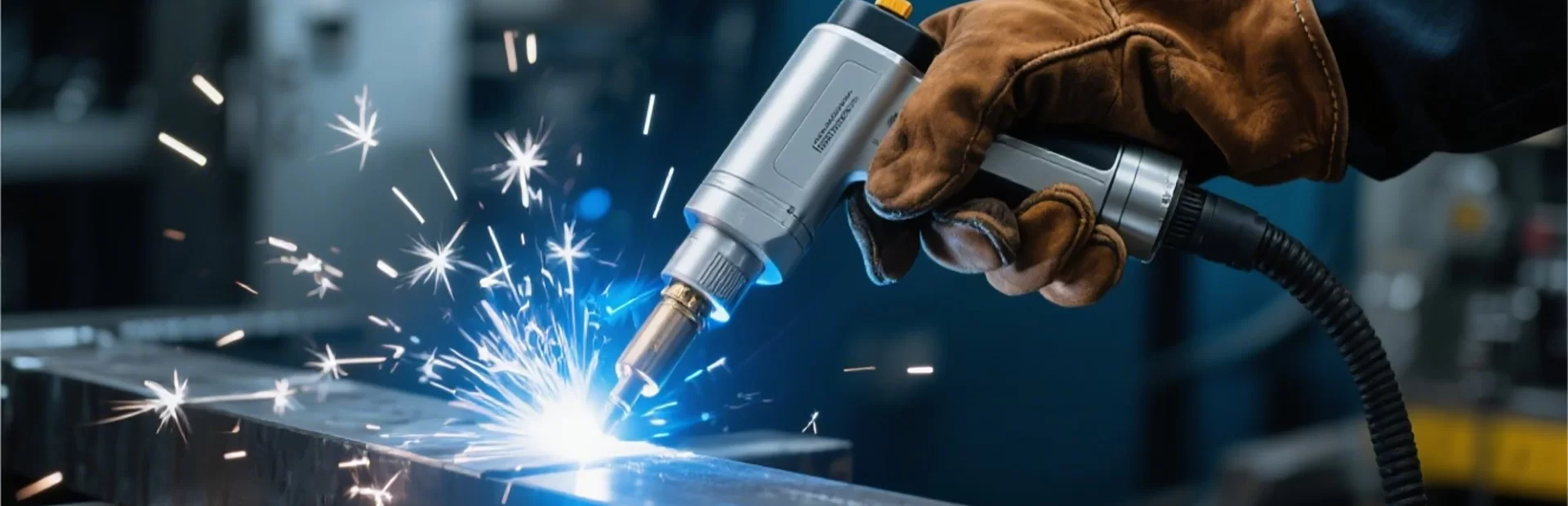
In the modern industrial landscape, the demand for precision and speed has never been higher. Utilizing a high-performance laser for steel cutting has revolutionized how manufacturers approach fabrication, offering unmatched accuracy compared to traditional mechanical cutting methods. Whether you are dealing with carbon steel, stainless steel, or specialized alloys, laser technology provides a clean edge, minimal material waste, and an accelerated production cycle. In this comprehensive guide, we will explore the technical nuances of laser cutting for steel and how to select the ideal system to optimize your operational efficiency.

The process of using a laser for steel cutting involves focusing a high-power laser beam onto the surface of the metal. This concentrated energy melts or vaporizes the material almost instantaneously. To ensure a clean cut, an assist gas—such as oxygen or nitrogen—is blown through the nozzle to clear away the molten metal. Oxygen is typically used for carbon steel to increase cutting speed through an exothermic reaction, while nitrogen is preferred for stainless steel to prevent oxidation and maintain a bright, clean edge.
Pro Tip: Choosing the correct assist gas not only affects the edge quality but also impacts the long-term cost of consumables and post-processing requirements.
When searching for the best laser for steel cutting, the primary debate usually centers on Fiber vs. CO2 technology. Fiber lasers have largely taken the lead in steel fabrication due to their superior energy efficiency and ability to cut thinner materials at blistering speeds. CO2 lasers, while still useful for certain thick materials or non-metals, require more maintenance and consume significantly more electricity. For most steel-centric businesses, fiber technology offers a lower cost-per-part and higher reliability.
Achieving the perfect cut requires more than just a powerful machine; it requires the optimization of several variables. Cutting speed must be balanced with power output to avoid slag build-up on the bottom of the steel sheet. Furthermore, the focus position of the laser beam—whether it is focused on the surface, inside, or below the material—can drastically change the taper and smoothness of the edge. By fine-tuning these parameters, operators can maximize the throughput of their laser for steel cutting and reduce the need for secondary grinding operations.

When comparing different models of a laser for steel cutting, technical specifications are the most reliable indicator of performance. The laser source brand (such as IPG or Raycus) determines the stability of the beam, while the cutting head dictates the precision of the focus. Below is a typical specification table for industrial-grade fiber laser systems designed for steel fabrication.
The versatility of a laser for steel cutting makes it indispensable across multiple sectors. In the automotive industry, it is used for creating intricate chassis components and brackets with high repeatability. The aerospace sector relies on it for lightweight, high-strength alloy parts where tolerances are microscopic. Additionally, the construction and architectural fields use laser cutting for custom facades and heavy-duty structural supports, ensuring that every piece fits perfectly during assembly.
The future of the laser for steel cutting is leaning heavily toward automation and AI integration. Smart nesting software is now capable of calculating the most efficient way to arrange parts on a sheet, reducing material waste to an absolute minimum. Furthermore, the development of "Beam Shaping" technology allows the laser to adjust its profile in real-time, enabling cleaner cuts on thicker steel plates and further reducing the reliance on post-cut cleaning. As power levels continue to rise, we are seeing the ability to cut through steel that was previously only manageable via plasma or oxy-fuel.
Investing in a professional laser for steel cutting is more than just a hardware upgrade; it is a strategic move to increase competitiveness in a demanding market. By prioritizing precision, efficiency, and the right technology—such as high-power fiber lasers—businesses can drastically reduce lead times and improve product quality. Whether you are starting a new fabrication shop or upgrading an existing line, focusing on the technical synergy between power, gas, and software is the key to long-term success.
The maximum thickness depends heavily on the laser's power. A 1kW to 3kW laser is typically ideal for thin to medium sheets (up to 10-12mm). However, high-power systems ranging from 12kW to 30kW can cut carbon steel up to 30mm or more with high quality. For thicknesses beyond this, oxy-fuel or plasma cutting might be considered, although high-power fiber lasers are rapidly closing this gap.
Laser cutting creates a very narrow Heat Affected Zone (HAZ), which significantly reduces the risk of warping compared to plasma cutting. However, on very thin sheets, rapid cutting of complex shapes can still create some thermal tension. This can be mitigated by optimizing the cutting sequence (jumping between different areas of the part) and using the correct assist gas to cool the material effectively.
For stainless steel, Nitrogen is almost always the better choice. Nitrogen acts as a shield, preventing the molten metal from reacting with oxygen, which results in a clean, silver-colored edge. Oxygen can be used for thicker stainless steel to increase speed, but it causes oxidation (a dark, scaled edge) that usually requires manual cleaning or pickling before the part can be painted or polished.
Daily checks are recommended for the protective lens and nozzle, as dust and slag can accumulate and affect beam quality. A full calibration and check of the optics should be performed monthly. The lifespan of a fiber laser source is very long—often exceeding 100,000 hours—but keeping the chiller clean and the air filtration system running is critical to maintaining that longevity. Visit TopStar Laser for detailed maintenance guides.


