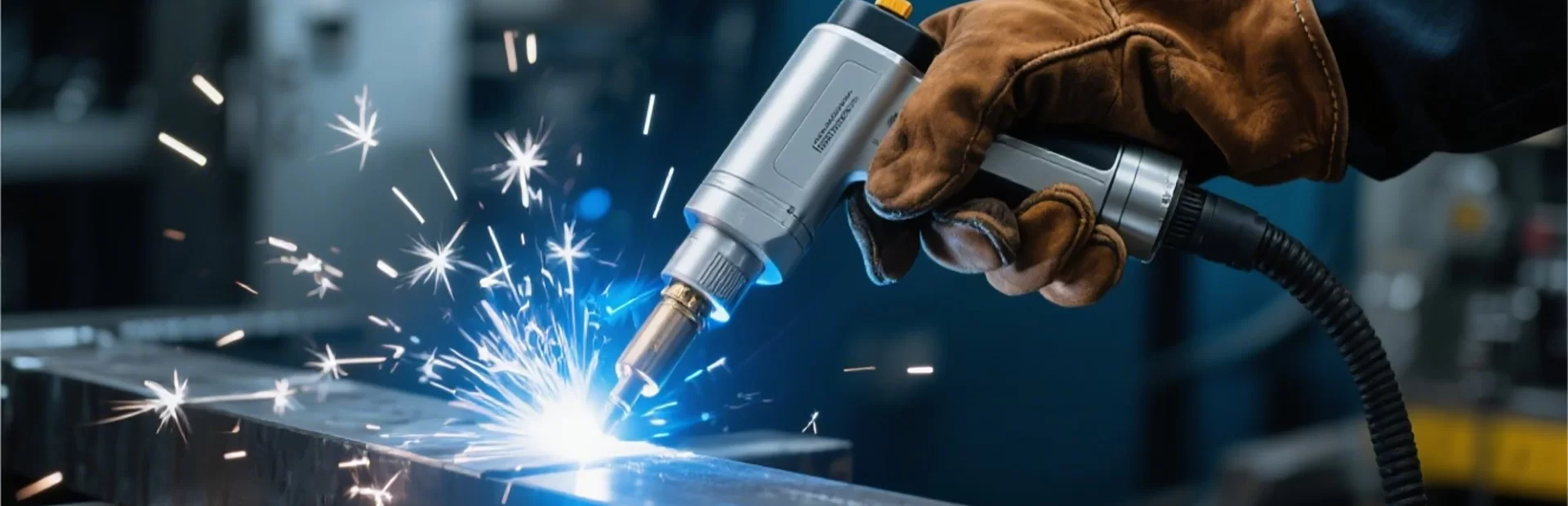
The evolution of metal fabrication has reached a pivotal turning point with the integration of high-precision laser technology. In an era where industrial demands for speed and accuracy are paramount, the ability to transition from heavy, stationary equipment to flexible solutions is a game-changer. Understanding the dynamics of modern cutting and joining systems is essential for any manufacturer looking to maintain a competitive edge in the global market.
Across the globe, the shift toward automation and precision-driven workflows is evident in sectors ranging from automotive to aerospace. The challenge has always been balancing the extreme power required for industrial cutting with the need for operational flexibility. As industries strive to reduce material waste and eliminate costly post-processing, the demand for versatile, CNC-driven systems that can handle everything from carbon steel to aluminum has surged.
While many operators are searching for a handheld portable welding machine to handle assembly, the foundation of any high-efficiency workshop begins with a precision Industrial Laser Cutting Machine. By combining the raw power of a 6000W laser source with microscopic CNC accuracy, manufacturers can now achieve tolerances as tight as 0.05mm, ensuring that every component is ready for assembly without the need for secondary grinding.

The Technological Core of Precision Laser Fabrication
At the heart of modern fabrication lies the high-intensity focused beam of thermal energy. Unlike traditional mechanical shearing, which relies on physical force and dies, the industrial laser cutting system utilizes a high-power source—up to 6000W—to vaporize material with surgical precision. This allows for the creation of complex geometries that were previously impossible or prohibitively expensive to produce.
The integration of CNC digital control ensures that every movement along the X, Y, and Z axes is executed with microscopic accuracy. By utilizing a combination of Leadshine servo motors and high-performance guides from Taiwan or Germany, the system achieves an ultra-narrow kerf. This technical synergy ensures that the material integrity is maintained, preventing the deformation often seen in traditional punching processes.
Global Industrial Relevance and Market Demand
The global manufacturing landscape is currently undergoing a massive shift toward "Industry 4.0," where digital CAD designs are translated directly into physical parts. From the aerospace hubs in North America to the automotive giants in Asia, the need for rapid prototyping and low-waste production has made laser systems indispensable. The ability to switch between carbon steel, stainless steel, and aluminum on a single machine significantly reduces the capital expenditure required for multiple specialized tools.
Standardization through ISO and other international quality benchmarks has pushed manufacturers to seek tolerances that mechanical cutting simply cannot meet. The demand is no longer just about "cutting metal," but about achieving an edge quality that requires zero post-processing. This shift is particularly evident in medical electronics and high-end hardware, where a burr-free finish is a safety and functional requirement.
As companies scale their operations, the bottleneck often shifts from the cutting phase to the assembly phase. While a high-power laser cuts the parts, the integration of a handheld portable welding machine allows for the agile joining of these precision-cut components. Together, these technologies create a seamless workflow that minimizes downtime and maximizes throughput.
Key Performance Factors in Laser Systems
One of the most critical factors in laser performance is the assist gas system. Depending on the material, the machine utilizes Oxygen, Nitrogen, or Air to ensure a clean cut. For instance, using high-pressure Nitrogen for stainless steel prevents oxidation, maintaining a shiny, anti-corrosive finish. This eliminates the need for secondary polishing, which is a significant cost-saver in large-scale production.
Efficiency is further enhanced by advanced nesting software, which allows parts to be placed closer together on the sheet. This optimizes material yield and drastically reduces scrap. When paired with a handheld portable welding machine for final assembly, the entire production chain becomes a model of lean manufacturing, reducing both material waste and labor hours.
Durability and stability are ensured through high-performance thermal management. A 6.0kW water cooler keeps the laser source stable during 24/7 continuous operations, while an auto-oil injection system maintains the longevity of the precision gear racks. These components ensure that the machine maintains its 0.05mm tolerance over thousands of hours of operation.
Operational Efficiency and Investment Return
When comparing traditional mechanical cutting to modern laser systems, the return on investment (ROI) becomes clear through the lens of operational speed and tool maintenance. Traditional methods require frequent blade replacements and expensive custom dies for every new design. In contrast, a laser system offers zero tooling costs, as changes are made digitally via CAD/CAM integration with software like Solidworks or UG.
The long-term value is also found in the lifespan of the equipment. With a laser source rated for up to 100,000 hours of operation, the cost per part drops significantly over time. By reducing labor through CNC automation and eliminating the need for grinding and polishing, manufacturers can redirect their workforce toward more complex value-added tasks.
Efficiency Comparison: Traditional vs Laser Fabrication
Versatile Applications Across Metal Sectors
The versatility of the 6000W laser system allows it to penetrate deeply into various industries. In the automotive sector, it is used for chassis components and intricate brackets, where lightweighting requires precise holes and cuts. In the medical field, the non-contact nature of the laser ensures that fragile, high-grade stainless steel sheets are not contaminated or deformed during the cutting process.
Beyond heavy industry, the ability to handle thinner sheets with rapid moving speeds of 100m/min makes it ideal for architectural metalwork and signage. Once these pieces are cut to perfection, the use of a handheld portable welding machine allows technicians to perform on-site assembly and repairs with the same level of precision that was established during the initial cutting phase.
Overcoming Traditional Fabrication Challenges
One of the primary challenges in metal fabrication has always been the "material deformation" caused by mechanical pressure. Traditional punching and shearing exert immense force on the metal, often leaving scratches or warping the edges of thin sheets. The industrial laser system solves this through non-contact processing, ensuring the integrity of the material from the first cut to the last.
Another persistent issue is the high cost of tooling for complex designs. In a traditional setup, every geometric change requires a new die, leading to long lead times and high costs. By shifting to a CNC-driven digital workflow, designers can update a CAD file in Solidworks and have the machine execute the new design immediately, reducing the product development cycle from weeks to hours.
Finally, the issue of "burrs" and rough edges has historically required a dedicated workforce for grinding and polishing. The combination of high-intensity thermal energy and optimized assist gas ensures that edges are smooth and ready for assembly. This streamlining not only reduces labor costs but also increases the safety and quality of the final product.
Future Trends in Automated Metal Processing
The future of fabrication is moving toward complete ecosystem integration. We are seeing a trend where the laser cutting machine, the folding machine, and the welding station are all linked via a single digital thread. This means that a part is cut, tracked via RFID, and then joined using a handheld portable welding machine, with all data logged for quality assurance and traceability.
Sustainability is also becoming a core driver. New laser sources are becoming more energy-efficient, and advanced nesting algorithms are pushing material utilization to its absolute limit. The goal is a "zero-waste" factory where every square centimeter of carbon steel or aluminum is used effectively, reducing the environmental footprint of the manufacturing process.
Furthermore, the integration of AI-driven optimization will allow machines to automatically adjust cutting parameters in real-time based on the material's thermal response. This will further reduce the need for manual trial-and-error, ensuring that the first piece cut is as perfect as the thousandth.
Comparative Analysis of Laser Cutting Performance by Material
| Material Type |
Max Cutting Thickness |
Recommended Assist Gas |
Edge Quality Score (1-10) |
| Carbon Steel |
25mm |
Oxygen (O2) |
8 |
| Stainless Steel |
18mm |
Nitrogen (N2) |
10 |
| Aluminum |
15mm |
Air/Nitrogen |
9 |
| Galvanized Steel |
20mm |
Air |
8 |
| Titanium Alloy |
12mm |
Nitrogen (N2) |
9 |
| Copper Plate |
10mm |
Nitrogen (N2) |
7 |
FAQS
For stainless steel, high-pressure Nitrogen is highly recommended. This "fusion cutting" method prevents oxidation on the cut edge, preserving the shiny, anti-corrosive finish of the metal. This is critical for industries like medical or food processing where surface aesthetics and corrosion resistance are mandatory, effectively eliminating the need for secondary polishing.
Modern fiber laser sources are engineered for extreme reliability and long-term stability. Most high-quality sources are rated for up to 100,000 hours of operation. This longevity significantly reduces the total cost of ownership, as the core power source rarely needs replacement during the primary operational life of the machine, provided the water cooling system is properly maintained.
Yes, absolutely. Because the system is CNC-driven and fully compatible with industrial CAD formats like Solidworks, UG, and PRO/E, it can execute highly intricate patterns with microscopic accuracy. Designs that would be impossible or too expensive to create using traditional stamping dies can be produced effortlessly with a laser system.
Cost reduction occurs in three main areas: first, through advanced nesting which minimizes material waste; second, by creating burr-free edges that eliminate secondary grinding and polishing labor; and third, by removing the need for expensive, custom-made mechanical dies, allowing for instant design iterations without additional tooling costs.
The primary difference lies in the chemical reaction during cutting. Carbon steel is typically cut using Oxygen to trigger an exothermic reaction that helps the laser penetrate the metal. Stainless steel, however, uses Nitrogen to shield the cut area from oxygen, preventing oxidation and ensuring the edge remains bright and corrosion-resistant.
The machine integrates with professional software such as Raytools Guide, which translates digital designs into precise axis movements. Additionally, it supports standard industrial graphic formats including PRO/E and UG, ensuring a seamless transition from the designer's computer to the production floor without the need for manual reprogramming.
Conclusion
The transition from traditional mechanical fabrication to high-precision laser systems represents a fundamental upgrade in industrial capacity. By integrating 6000W laser power, CNC automation, and advanced thermal management, manufacturers can achieve unprecedented precision, eliminate costly post-processing, and significantly reduce material waste. When these cutting capabilities are paired with agile joining tools like a handheld portable welding machine, the result is a streamlined, highly efficient production cycle that meets the rigorous demands of modern aerospace, automotive, and medical sectors.
Looking forward, the integration of AI-driven optimization and sustainable "zero-waste" nesting will further redefine the limits of metal fabrication. For businesses seeking to increase their throughput while maintaining microscopic tolerances, investing in fiber laser technology is no longer an option but a necessity. We invite you to explore how these innovations can transform your production line. Visit our website: www.topstarlaser.com