Shijiazhuang Topstar
International Trading Co., Ltd.


Get In Touch
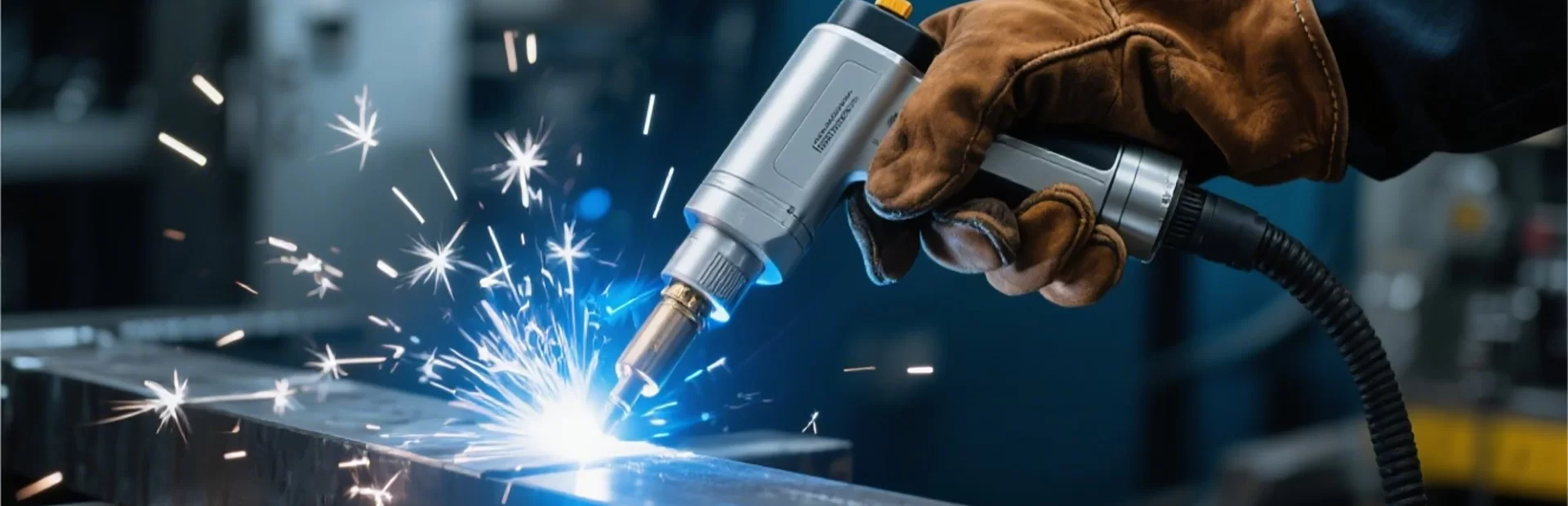
In the current landscape of metal fabrication, the procurement of electrical equipment often hinges on the balance between power accessibility and capital expenditure. For many small-to-medium workshops, searching for a competitive single phase welding machine price is not merely about finding the lowest cost, but about understanding the trade-off between residential power constraints and industrial-grade output.
The primary technical challenge lies in the current limitation of single-phase power supplies, which often struggle to maintain arc stability during high-amperage demands. As the industry shifts toward more efficient inverter-based technologies, the cost structure of these machines has evolved, making high-precision welding more accessible to boutique manufacturers and repair shops that lack three-phase industrial wiring.
This analysis examines the factors influencing the pricing of single-phase welding systems, the engineering implications of power limitations, and how integrating high-precision preparation equipment, such as single phase welding machine price related wire processing tools, can optimize the overall production workflow for metalworking enterprises.


The pricing of single-phase welding equipment is primarily driven by the internal power conversion architecture. Traditional transformer-based units are generally cheaper but suffer from massive weight and low energy efficiency. In contrast, modern inverter units use high-frequency switching to optimize current delivery, which increases the initial single phase welding machine price but reduces long-term operational costs.
Beyond the core circuitry, the quality of the capacitors and the thermal management system (cooling fans and heat sinks) significantly impact the final cost. Heavy-duty components allow the machine to run longer without overheating, which is a critical factor for professional users compared to hobbyist-grade equipment.
When analyzing the value of a welding machine, the nominal amperage is often a misleading metric. A machine rated at 200A may only be able to maintain that current for a 10% duty cycle, meaning it must cool down for 9 minutes after 1 minute of welding. This limitation is inherent to single-phase power, where the available current from the wall socket limits the machine's ability to dissipate heat and replenish energy.
Professional buyers must examine the duty cycle at specific amperage levels. For instance, a machine that offers 120A at a 60% duty cycle is far more valuable for production environments than one offering 200A at 10%. The engineering trade-off here is between peak power and sustained productivity, which directly influences the pricing tiers seen in the market.
Furthermore, the input voltage stability is a key consideration. High-quality single-phase machines include voltage compensation circuits that prevent arc flickering when other equipment on the same circuit is activated. These protective circuits add to the cost but are essential for achieving weld penetration consistency and reducing waste in high-precision automotive or hardware components.
The transition from SCR (Silicon Controlled Rectifier) technology to IGBT (Insulated Gate Bipolar Transistor) has fundamentally altered the single-phase welding market. By converting input power to a high frequency, inverters can produce a more stable and controllable arc with significantly lower energy consumption.
From a procurement perspective, this shift means that the single phase welding machine price is now more closely tied to the sophistication of the control software and the quality of the semiconductor components rather than the raw weight of the copper transformer.
To objectively compare different classes of single-phase equipment, engineers often use a normalized rating system. This assessment evaluates how well a machine maintains arc stability under fluctuating input voltages and how effectively it manages thermal loads during continuous operation.
The following data represents a relative engineering assessment across five common configuration profiles, highlighting the relationship between the technology employed and its operational stability.
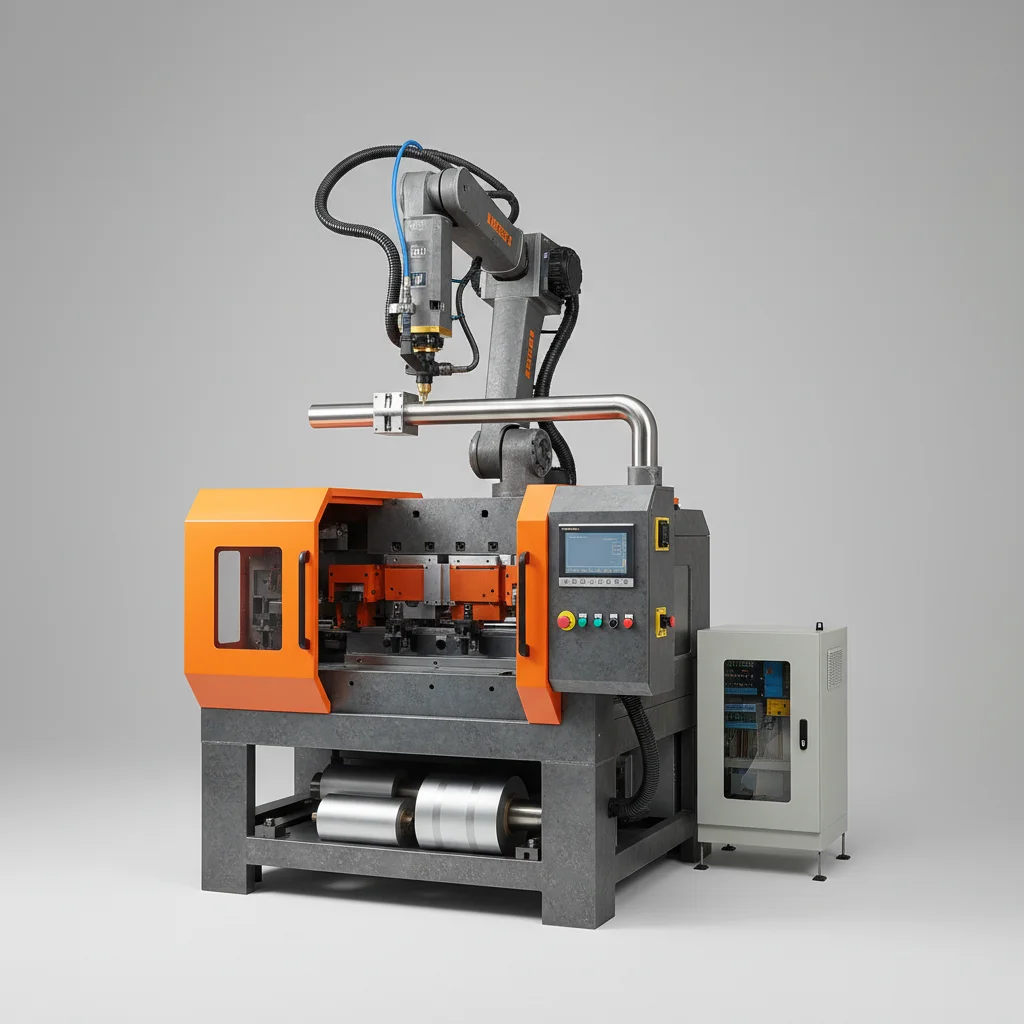
Maximum efficiency in a welding shop is not achieved by the welder alone, but through the integration of upstream preparation. For factories producing fasteners or automotive brackets, the quality of the weld is dependent on the straightness and precision of the input wire. This is where automated preparation equipment becomes critical to the ROI of the entire production line.
Integrating high-speed automatic wire straightening and cutting machines ensures that materials enter the welding stage with zero curvature and exact lengths. By reducing manual fitting and alignment time, these systems allow a single operator to manage both the material preparation and the welding process, effectively lowering the operational cost per unit regardless of the single phase welding machine price invested in.
The industry is moving toward "Smart Power" management, where welding machines can communicate with the facility's electrical panel to avoid tripping breakers. This is being achieved through advanced soft-start circuits and AI-driven current modulation, which optimize the power draw based on the material thickness and welding speed.
Another emerging trend is the convergence of traditional arc welding with laser-hybrid technologies. While full-scale industrial lasers require three-phase power, the development of handheld, low-power laser welding units is creating a new mid-tier market that challenges the dominance of traditional single-phase arc welders in light-duty applications.
Environmental regulations are also pushing manufacturers toward higher energy efficiency. The adoption of GaN (Gallium Nitride) semiconductors is expected to further reduce the size and heat dissipation of inverter units, potentially lowering the single phase welding machine price over time as these components scale, while simultaneously increasing the duty cycle.
Selecting the right equipment requires a detailed comparison of technical capabilities against the intended application. A hobbyist focusing on home repair has entirely different requirements than a precision hardware manufacturer.
The following matrix provides a framework for evaluating different configuration profiles. It emphasizes the relationship between the electrical architecture, the expected duty cycle, and the ideal use case to help buyers avoid over-investing in unnecessary capacity or under-investing in productivity.
Ultimately, the decision should be based on the total cost of ownership, including energy efficiency and the reduction of weld defects, rather than the initial sticker price alone.
| Configuration Type | Core Technology | Duty Cycle Rating | Recommended Use Case |
|---|---|---|---|
| Basic Configuration | Transformer | Low (10-20%) | Light Home Repair |
| Standard Configuration | Basic Inverter | Moderate (30-40%) | Small Workshop/DIY |
| Precision Configuration | IGBT Digital | High (60%) | Automotive Components |
| High-Duty Configuration | Advanced IGBT | Industrial (60%+) | Batch Hardware Production |
| Automated Profile | CNC-Integrated | Continuous | Integrated Production Lines |
| Industry Baseline | Hybrid/Mixed | Variable | General Maintenance |
The price variance is primarily driven by the internal power conversion technology. Transformer machines are cheapest but inefficient. Inverter machines using IGBT technology are more expensive because they utilize complex semiconductors and control boards to create a stable arc from a single-phase source. Additionally, the quality of thermal management components and the inclusion of digital features like adjustable arc force and hot start significantly influence the final cost.
While possible, it depends entirely on the duty cycle. A single-phase machine is limited by the available input current from a standard wall outlet. For heavy workloads, you must select a machine with a high duty cycle (above 60% at your required amperage) and a robust cooling system. However, for continuous 24/7 production, three-phase power is generally recommended to avoid overheating and excessive electrical stress on the facility's wiring.
Duty cycle determines the operational uptime. If a machine has a 20% duty cycle at 200A, it can weld for 2 minutes out of every 10. In a production environment, this leads to significant downtime. High-duty cycle machines allow for longer continuous welds and shorter cooling periods, which is essential for maintaining the rhythm of a production line and reducing the overall labor cost per part.
IGBT technology allows the machine to operate at much higher frequencies, which reduces the size of the transformer and increases electrical efficiency. This results in a more stable, "smoother" arc that is easier to control, leading to fewer weld defects and spatter. Furthermore, IGBT machines are significantly lighter and more portable, which is a major advantage in large workshops where equipment must be moved frequently.
The most efficient workflow involves a sequential integration: raw wire coils are fed into an automatic straightening and cutting machine, and the resulting straight, precisely measured blanks are then passed to the welding station. This eliminates the need for manual straightening and measuring, which are common sources of error and time waste. Ensuring that the cutting tolerance is tight (e.g., ±0.2mm) ensures that welds are consistent across thousands of units.
Check the maximum input amperage (A) and the required voltage stability. Ensure your circuit breaker is rated for the peak draw of the machine. Many high-end single-phase machines include a "soft-start" feature that prevents the initial current spike from tripping the breaker. Using a dedicated circuit for the welder, separate from other high-power tools, is the best engineering practice to ensure operational stability.
The evaluation of a single phase welding machine price must shift from a simple cost-per-unit analysis to a comprehensive productivity assessment. By prioritizing duty cycle, inverter stability, and thermal management, businesses can overcome the inherent limitations of single-phase power and achieve industrial-grade results in smaller environments.
For those seeking to maximize their operational ROI, the synergy between high-efficiency welding and automated material preparation is the key. Integrating precise wire straightening and cutting technology ensures that the welding process is the final, efficient step in a streamlined production chain, transforming potential operational bottlenecks into scalable growth opportunities.