


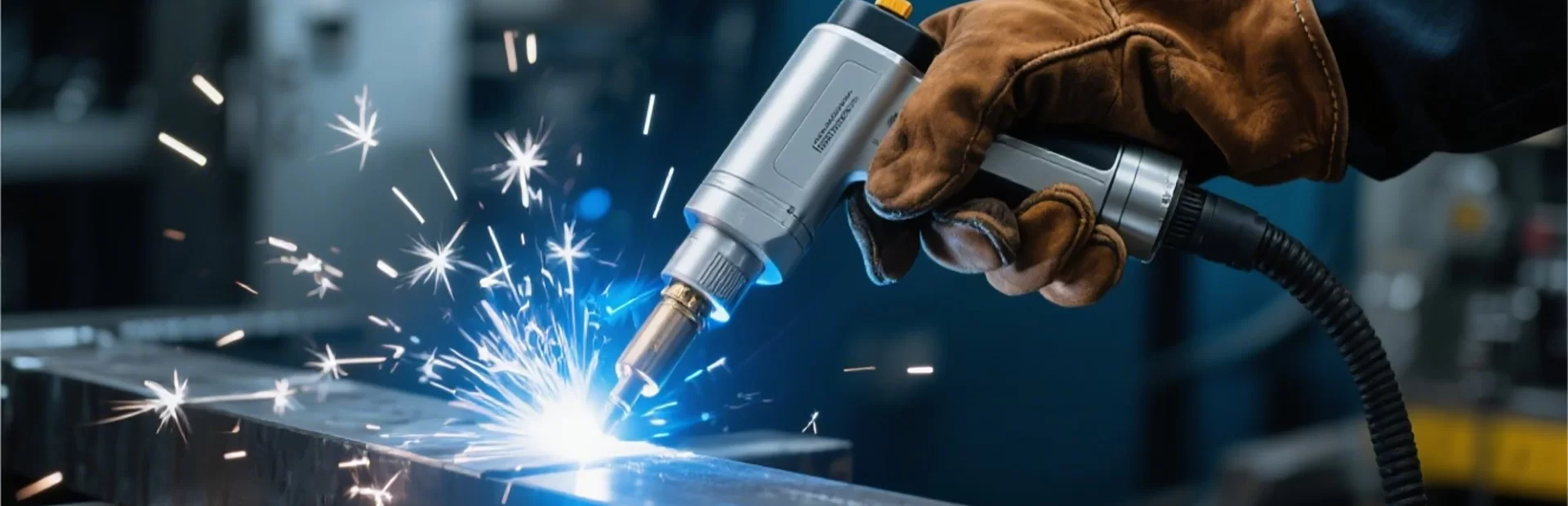

Selecting an industrial-grade MIG welder requires a balance between raw power and precision. A 400 amp system is typically the threshold for heavy-duty manufacturing, enabling the welding of thick steel plates and high-production cycles. This article examines the technical drivers that influence the mig welding machine 400 amp price and how buyers can distinguish between entry-level industrial units and professional-grade equipment.
In the B2B sector, the cost of welding equipment is not merely a purchase price but an investment in operational uptime. Factors such as the duty cycle, power stability, and the quality of the inverter technology directly impact the cost per weld. For enterprises in the gas compression machinery or general equipment manufacturing sectors, choosing a machine that matches the specific thermal requirements of their materials is critical to avoiding structural failures.
Readers will gain insights into the core specifications that justify price variances, including the difference between transformer and inverter-based 400A systems. We will also provide a framework for evaluating suppliers, focusing on technical support and the ability to customize equipment to specific industrial challenges, ensuring that the chosen hardware boosts overall productivity.
Analyzing the Industrial Demand for High-Amperage Welding
The requirement for 400 amp welding capacity usually stems from the need to penetrate thicker base metals without multiple passes, which significantly reduces labor time and consumable usage. In heavy industrial environments—such as the production of air compressors or large-scale mesh equipment—the structural integrity of the weld depends on maintaining a stable arc at high currents. Unlike lightweight 200 amp machines, 400A systems are designed for continuous operation, meaning they can handle the heat load of prolonged welding sequences without triggering thermal shutdown. This capability is essential for maintaining a seamless production line where downtime translates directly to financial loss. Furthermore, the shift toward synergistic controls in high-amp machines allows operators to adjust parameters more intuitively, reducing the risk of weld defects and improving the consistency of high-strength joints across diverse metal alloys.
Evaluating Value Factors in 400 Amp MIG Systems
When analyzing the commercial value of a high-power MIG welder, the focus must shift from the initial sticker price to the technical specifications that drive long-term ROI. The following dimensions outline the critical factors that determine whether a machine is a cost-effective asset or a liability.
Duty Cycle and Operational Capacity
The duty cycle indicates the percentage of a ten-minute period that a welder can operate at its rated output. A 400A machine with a 60% duty cycle is vastly more valuable than one with a 30% duty cycle, as it allows for significantly more "arc-on" time. This is the primary driver of productivity in heavy-gauge fabrication.
| Duty Cycle % | Production Impact | Typical Application | Evaluation Metric |
|---|---|---|---|
| 30% - 40% | Intermittent | Light Structural/Repair | Low Throughput |
| 50% - 60% | Moderate | General Manufacturing | Balanced Utility |
| 70% - 100% | Continuous | Heavy Industrial/Automated | Maximum ROI |
| Variable | Adaptive | Customized Workflows | Efficiency Ratio |
| Low | High Downtime | Non-Critical Parts | Cost-Centric |
| High | Low Downtime | Critical Pressure Vessels | Performance-Centric |
Power Source Efficiency and Inverter Tech
Modern 400A machines utilize IGBT inverter technology to reduce weight and energy consumption while increasing arc stability. Inverters allow for more precise control over the current and voltage, which reduces spatter and the need for post-weld grinding. This efficiency directly lowers the operational cost per unit produced.
Material Compatibility and Thickness
A 400A system is designed for versatility across carbon steel, stainless steel, and aluminum. The ability to maintain a stable arc on 12mm+ plates without burn-through requires sophisticated current regulation. Buyers should verify if the machine supports various wire diameters to suit different thickness requirements.
Wire Feed Precision and Consistency
At 400 amps, any fluctuation in wire feed speed can cause porosity or instability. Professional systems employ servo-driven or high-torque four-roll drive systems to ensure the wire is delivered to the torch with micrometer-scale consistency, which is critical for industrial-grade certifications.
Thermal Management Systems
Heat is the enemy of high-amperage welding. High-end 400A machines often incorporate forced-air cooling or liquid-cooling systems for the torch. An integrated cooling unit extends the life of consumables and prevents the machine from overheating during peak summer operation or in enclosed shop environments.
Interface Control and Automation
The transition from manual dials to digital PLC-based interfaces allows for the saving of welding profiles. This ensures that different operators can produce identical weld quality. Machines that offer integration with robotic arms or CNC systems provide a higher ceiling for future scaling.
Total Cost of Ownership Analysis
When calculating the final budget, one must look beyond the mig welding machine 400 amp price. The TCO includes electricity costs, the replacement rate of contact tips and nozzles, and the cost of maintenance. A more expensive machine with a higher efficiency rating often pays for itself within 18 months through reduced waste.
FAQ
What is the primary difference between a 250A and a 400A MIG welder?
The primary difference is the penetration depth and the duty cycle. A 400A machine can weld significantly thicker materials in a single pass and is engineered to run for longer periods without overheating, making it suitable for industrial production whereas a 250A machine is better for light to medium fabrication.
Does a 400 amp welder require a three-phase power supply?
Generally, yes. To consistently deliver 400 amps of output, the machine needs a stable and high-capacity power input, which typically requires a 3-phase industrial electrical installation. Some inverter models offer dual-voltage capabilities, but for full power, 3-phase is standard.
How do I evaluate if a supplier's 400A machine is truly industrial grade?
Check for a documented duty cycle at the maximum current rating, the type of wire-feed mechanism (4-roll is preferred), and the cooling system. A reputable supplier like SHIJIAZHUANG TOPSTAR INTERNATIONAL TRADING CO., LTD. focuses on bridging high-quality Chinese manufacturing with international technical standards to ensure reliability.
Will a 400A machine be too powerful for thin metals?
Not if it has a wide adjustable range. High-quality 400A machines can be dialed down to low amperages for thin sheets. The advantage is that the machine operates well below its limit, meaning it will never overheat even when used for light work.
What are the most common maintenance points for high-amp MIG welders?
The most common points include cleaning the wire feed rollers to prevent slipping, replacing worn contact tips, and ensuring the cooling fans are free of industrial dust. Regular calibration of the digital interface is also recommended to maintain arc consistency.
How does inverter technology affect the welding quality at 400 amps?
Inverter technology provides a much more stable and "stiff" arc, which reduces spatter and increases the fusion rate. It allows for precise control of the weld pool, resulting in a smoother finish and higher structural strength compared to older transformer-based units.
References and further reading
- AWS (American Welding Society) - Guide for Industrial MIG/MAG Welding Standards.
- International Standard ISO 14175: Welding consumables - Gas shielded arc welding.
- Industrial Power Systems Manual - Analysis of Three-Phase Inverter Efficiency in Heavy Fabrication.


