


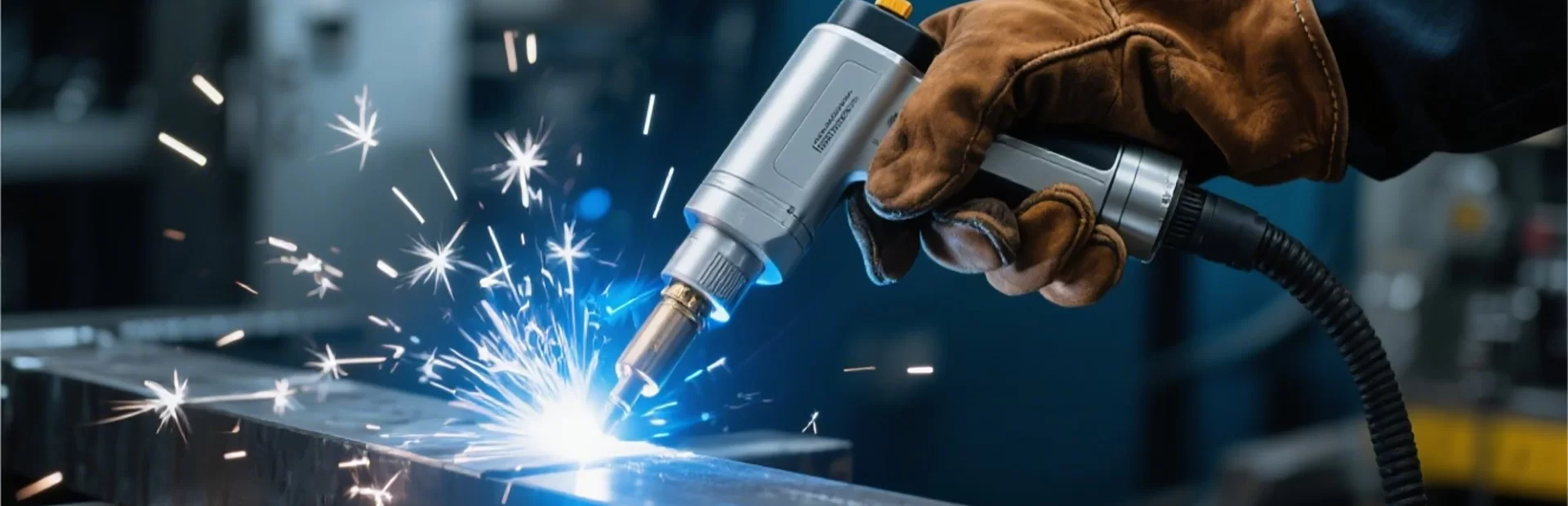

Finding an affordable yet reliable welding solution is a primary objective for many small-to-medium enterprises aiming to optimize their capital expenditure. The search for a cheap welding machine often involves a complex trade-off between the immediate purchase price and the operational longevity of the equipment. This article analyzes how businesses can identify high-value equipment that minimizes costs without compromising industrial safety or structural integrity.
In the current manufacturing landscape, the definition of "value" has shifted from simply finding the lowest price to calculating the Total Cost of Ownership (TCO). For sectors ranging from automotive repair to specialized metal fabrication, the ability to execute precise welds with minimal energy waste is critical. Understanding the underlying technology—whether it be traditional arc welding or advanced handheld laser systems—allows procurement officers to make data-driven decisions that support long-term growth.
Readers will discover the specific criteria for evaluating budget-friendly equipment, the technical indicators that signal quality, and the operational strategies to maximize ROI. By shifting the focus from "cheap" to "cost-effective," businesses can avoid the hidden expenses of frequent downtime and poor weld quality, ensuring a seamless transition from raw material processing to finished market-ready products.
Cost-Efficiency in Industrial Welding Equipment
Cost-efficiency in the welding industry is not merely about the sticker price but about the relationship between production output and resource input. For many operators, the initial investment is a hurdle, but the true cost is realized through electricity consumption, consumable replacement, and labor hours. Modern advancements in inverter technology and laser precision have made it possible to acquire equipment that was once reserved for high-budget factories. These systems focus on "precision solutions," reducing the amount of wasted filler material and minimizing the need for post-weld grinding and polishing, which significantly lowers the overall production cost per unit.
Strategic Selection Guide for Budget-Conscious Procurement
When evaluating machinery on a budget, the procurement process must be guided by technical requirements rather than marketing claims. The following dimensions provide a framework for analyzing whether a low-cost machine can meet the rigorous demands of a professional industrial environment.
Balancing Initial Price vs. Long-Term Value
The primary risk of selecting a low-cost unit is the "hidden cost" of failure. A truly value-driven purchase considers the machine's duty cycle and the availability of spare parts. Equipment that offers a balanced price point typically provides a standardized mechanical structure that is easy to repair and maintain, preventing expensive production halts. By prioritizing durability in the frame and stability in the power delivery, businesses ensure that the initial savings are not erased by premature equipment replacement.
| Evaluation Metric | Budget Option | Mid-Range Option | Impact on ROI |
|---|---|---|---|
| Initial Investment | Low | Moderate | Direct Cash Flow |
| Duty Cycle | Intermittent | Continuous | Production Volume |
| Maintenance Cost | Variable | Predictable | Operational Stability |
| Energy Efficiency | Standard | High (Inverter) | Monthly Utility Cost |
| Lifespan | 2-3 Years | 5-8 Years | Depreciation Rate |
| Skill Requirement | High Manual Skill | User-Friendly | Labor Cost |
Essential Technical Specifications for Entry-Level Units
For those seeking a budget-friendly option, focusing on core specifications is essential. Key areas include voltage stability, current control precision, and cooling efficiency. A machine that maintains a steady arc without fluctuations reduces the likelihood of porosity and slag inclusions. In handheld laser systems, the focus should be on the stability of the fiber source and the precision of the optics, as these factors directly determine the strength of the weld and the overall speed of the operation.
Operational Efficiency and Energy Consumption
Energy costs represent a significant portion of the operating budget. Modern cost-effective machines utilize advanced power conversion to reduce "idle" power draw. By selecting equipment with a high efficiency rating, companies can reduce their carbon footprint and utility bills. This is particularly important in large-scale operations where multiple machines run simultaneously, as even a 10% increase in efficiency can result in substantial annual savings.
Material Compatibility and Weld Integrity
A common mistake in low-cost procurement is purchasing a machine that is too specialized or too limited. A versatile machine capable of handling various thicknesses of galvanized steel, stainless steel, and aluminum provides greater business agility. Weld integrity must be verified through penetration tests and stress analysis; if a cheaper machine fails to achieve deep penetration, the cost of structural failure far outweighs the initial savings.
Maintenance Requirements for Cost-Effective Machinery
Simplicity is the key to low-cost maintenance. Machines designed with standardized, wear-resistant components allow for easy cleaning and lubrication without the need for specialized technicians. A procurement strategy should favor equipment where common wear parts—such as nozzles or electrodes—are widely available and inexpensive to replace, ensuring the machine remains operational with minimal downtime.
Avoiding Common Pitfalls in Low-Cost Procurement
Buyers should be wary of "feature bloat," where low-cost machines include unnecessary digital displays or functions that do not improve weld quality. Instead, focus on the quality of the reinforced steel frame and the reliability of the internal circuitry. Another pitfall is ignoring after-sales support; a machine is only as good as the technical assistance available when a component fails. Choosing a supplier with a proven track record in global trade and technical support is vital.
Scaling Production with Modular Equipment
The most sustainable way to grow is by investing in modular equipment. Starting with a basic, cost-effective unit and adding supporting pneumatic systems or advanced marking tools as the business expands prevents over-investing early on. This approach allows a company to align its equipment capabilities with its actual revenue growth, ensuring that each piece of machinery is fully utilized before the next investment is made.
FAQ
Does a lower price always mean lower weld quality?
Not necessarily. Many modern machines leverage optimized manufacturing processes to reduce costs while maintaining high standards of precision. The key is to evaluate the machine's stability and the quality of its internal components rather than the price alone. A well-engineered budget machine can produce professional-grade welds if the operator is skilled and the specifications match the application.
What is the most important feature to check when buying an affordable welder?
The duty cycle is the most critical feature. It defines how long a machine can operate at a given amperage within a 10-minute period before needing to cool down. If a machine has a very low duty cycle, your production speed will drop significantly, potentially costing you more in lost time than you saved on the initial purchase price.
Are handheld laser welders a cost-effective alternative to traditional machines?
Yes, for many applications. While the initial cost may be higher than basic arc welders, handheld laser welders significantly increase production speed and reduce the need for highly specialized labor. They offer higher precision and require less post-processing, which reduces the overall cost per part and improves the return on investment over time.
How can I reduce the long-term operating costs of my welding equipment?
Focus on three areas: energy efficiency, consumable management, and preventative maintenance. Using inverter-based machines reduces electricity costs, while implementing a strict maintenance schedule (cleaning and lubrication) prevents expensive mechanical failures. Additionally, optimizing the welding process to reduce filler material waste can lead to significant savings.
What should I ask a supplier to ensure I am getting a high-value machine?
Ask about the warranty terms, the availability of replacement parts, and the specific duty cycle under real-world loads. Inquire about the machine's compatibility with different materials and the type of technical support provided after the sale. A transparent supplier will provide detailed technical parameters rather than vague marketing descriptions.
Can a budget welding machine be used for industrial-scale production?
It depends on the volume. For low-to-medium volume production, a high-quality budget machine is often sufficient. However, for 24/7 heavy industrial use, the increased wear and tear usually require a machine with a higher duty cycle and more robust cooling systems to avoid overheating and premature failure.
References and further reading
- Industrial Welding Standards and Efficiency Guidelines for B2B Procurement.
- Guide to Total Cost of Ownership (TCO) in Metal Fabrication Machinery.
- Comparative Analysis of Laser vs. Traditional Arc Welding in Small-Scale Manufacturing.


