


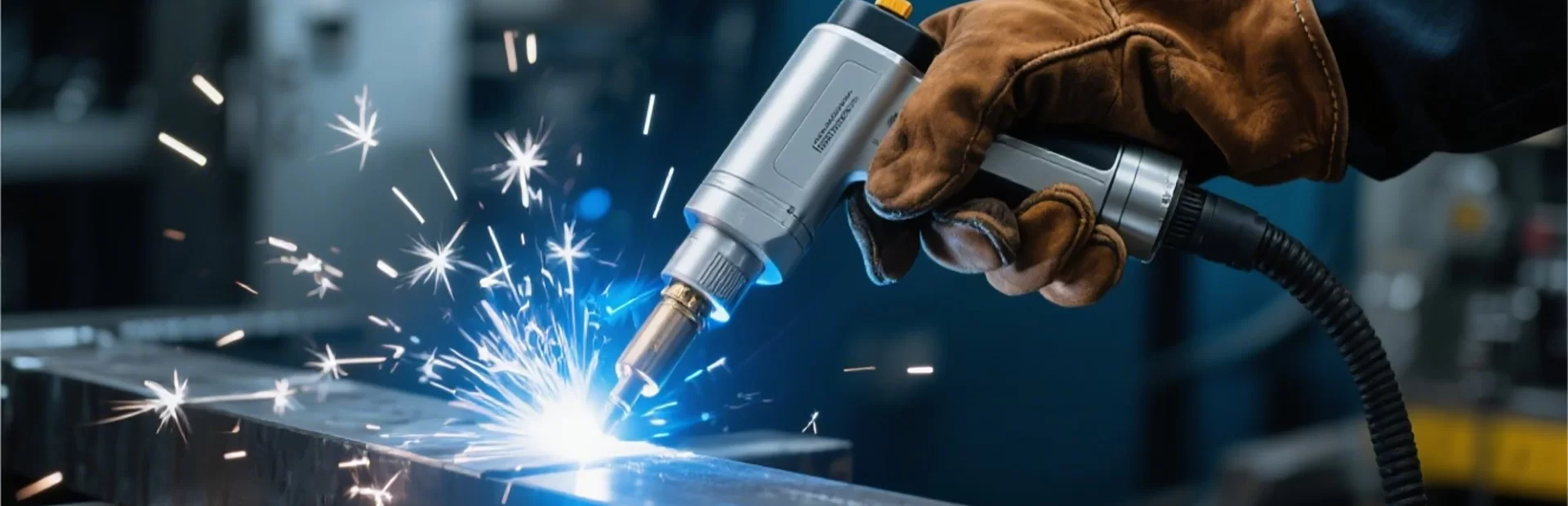

Industrial welding is undergoing a significant transition as high-precision laser systems become more accessible to small and medium-sized enterprises. The search for a cheap laser welder often stems from a need to balance initial capital expenditure with the requirement for high-speed, precise joining of metals. This article examines how businesses can identify budget-friendly equipment that maintains industrial integrity without compromising weld strength or operational safety.
In the B2B procurement landscape, "affordability" is rarely about the lowest sticker price and more about the total cost of ownership. For many manufacturers, transitioning from traditional TIG or MIG welding to laser technology offers a reduction in post-weld grinding and a decrease in heat-affected zones. However, navigating the market requires an understanding of where costs are reduced—whether through simplified optics, modified cooling systems, or streamlined control interfaces—and how those trade-offs affect production yield.
Readers will gain a technical framework for evaluating entry-level laser systems, understanding the critical specifications that dictate performance, and identifying the red flags in low-cost procurement. By focusing on application-specific needs rather than generic hardware, procurement officers can secure equipment that provides a genuine return on investment while ensuring long-term scalability in their production lines.
Analyzing Cost-Efficiency in Laser Welding Systems
The cost of laser welding equipment is primarily driven by the laser source, the beam delivery system, and the integration of CNC or handheld controls. In recent years, the shift toward fiber laser technology has drastically lowered the entry barrier compared to older CO2 or Nd:YAG systems. Fiber lasers are inherently more efficient, converting a higher percentage of electrical energy into light, which reduces both the purchase price and the monthly utility costs. For businesses seeking budget-friendly options, the focus has shifted toward handheld configurations, which eliminate the need for expensive robotic arms and complex jigging, thereby reducing the total system cost.
Buyer's Guide to Accessible Laser Technology
When evaluating equipment that promises a lower price point, it is essential to analyze the technical architecture to ensure the machine is fit for the intended industrial application. The following sections break down the critical dimensions of value evaluation for the modern procurement officer.
Defining Value vs. Price
The distinction between a low-price machine and a high-value machine lies in the stability of the beam and the lifespan of the source. A system that is marginally cheaper but requires frequent calibration or has a shorter diode life will eventually cost more than a mid-range professional unit. Value is found when the machine's capabilities exactly match the material thickness and production volume of the shop, avoiding over-payment for unnecessary power wattage.
| Evaluation Factor | Low-Price Indicator | High-Value Indicator | Impact on Production |
|---|---|---|---|
| Laser Source | Generic Brand/Unknown Origin | Recognized Industrial Grade | Consistency of Weld Penetration |
| Cooling System | Basic Air Cooling | Integrated Water Chiller | Duty Cycle and Stability |
| Control Interface | Basic Analog Switches | Digital PLC / Touchscreen | Repeatability and Setup Speed |
| Beam Quality | Wide Focal Point | High Precision Focus | Weld Width and Aesthetics |
| Build Quality | Thin Gauge Sheet Metal | Reinforced Industrial Frame | Vibration Dampening |
| Warranty | Short-term / Limited | Comprehensive Part Coverage | Long-term Risk Mitigation |
Essential Technical Specifications
Buyers must look beyond the "Maximum Power" claim. The actual output stability and the focal length of the lens determine the quality of the join. For most light-to-medium metal fabrication, a power range of 1000W to 1500W is sufficient. Key metrics to verify include the beam diameter at the focal point and the frequency of the laser pulse, as these dictate the "smoothness" of the weld bead and the amount of spatter produced during the process.
Material Compatibility Analysis
Different lasers interact with materials differently. While fiber lasers are excellent for reflective metals like aluminum and stainless steel, the reflectivity of the material can sometimes damage a low-quality laser source. It is critical to ensure the equipment includes the necessary back-reflection protection. A value-driven procurement strategy involves testing the machine on the specific alloy and thickness used in the company's primary product line to verify penetration depth.
Operating Costs and Consumables
The initial purchase is only one part of the equation. Operating costs include the consumption of shielding gases (such as Argon or Nitrogen) and the replacement of nozzles and protective lenses. Low-cost machines often use non-standard consumables that force the buyer into a proprietary ecosystem, increasing long-term costs. Standardized parts allow for competitive sourcing of consumables, reducing the cost per weld over the machine's lifecycle.
Common Procurement Pitfalls
A frequent mistake is purchasing a system without verifying the electrical requirements of the facility. Industrial lasers require stable voltage and often a dedicated circuit to prevent surges from damaging the sensitive electronics. Another pitfall is ignoring the training required for operators; laser welding is faster than TIG but requires a different set of skills regarding travel speed and angle to avoid burn-through on thin materials.
Installation and Safety Requirements
Budget equipment does not exempt a facility from safety standards. Laser welding produces intense light and fumes. A professional setup must include a dedicated laser-safe enclosure or appropriate curtains (OD rated for the specific wavelength) and a high-efficiency fume extraction system. Failing to account for these secondary costs during the procurement phase can lead to unexpected budget overruns and safety compliance issues.
Evaluating Supplier Support
Since laser systems are complex, the relationship with the supplier is as important as the hardware. For a company like Shijiazhuang Topstar International Trading Co., Ltd., the value proposition lies in bridging the gap between high-quality manufacturing and international logistics. Buyers should evaluate the supplier's ability to provide remote technical support, the availability of spare parts in their region, and the clarity of the provided technical documentation.
FAQ
Is a budget-friendly laser welder suitable for heavy industrial use?
It depends on the definition of "heavy use." For high-volume, 24/7 production lines, a professional-grade system with advanced water cooling and high-stability sources is required. However, for job shops, prototyping, and low-to-medium volume production, a cost-effective fiber laser welder can be highly efficient, provided the duty cycle of the machine matches the production schedule.
What is the most significant difference between expensive and affordable laser welders?
The primary differences are usually found in the laser source's lifespan, the precision of the beam delivery optics, and the robustness of the cooling system. High-end machines offer greater stability over longer periods and better integration with automation. Budget models often simplify the interface and use more standard components to reduce cost, which is perfectly acceptable for manual handheld operations.
Which materials are most compatible with entry-level fiber laser welders?
Fiber lasers are exceptionally effective for stainless steel, carbon steel, aluminum, and some titanium alloys. They are particularly valued for their ability to weld thin-gauge materials with minimal distortion. However, the user must ensure the correct shielding gas is used to prevent oxidation and maintain the integrity of the weld bead.
How do I avoid overpaying for laser welding equipment?
Avoid paying for power wattage you will never use. If your maximum material thickness is 3mm, you do not need a 3000W system; a 1000W or 1500W system will be more than sufficient. Focus on the "effective power" and the quality of the focal lens rather than the peak power number, as this determines the actual productivity of the machine.
What maintenance is required for a low-cost laser system?
Routine maintenance includes the regular cleaning and replacement of the protective lens to prevent burn-back, checking the coolant levels and quality in the chiller, and ensuring the fiber cable is not bent beyond its minimum radius. Keeping the optics clean is the most critical factor in maintaining beam quality and preventing permanent damage to the laser head.
Can I upgrade a budget laser welder later?
Most budget laser welders are designed as complete units, meaning you cannot easily "upgrade" the laser source itself. However, you can often upgrade the accessories, such as adding different nozzles for various applications or upgrading the chiller for better thermal management. It is best to purchase a system with a power capacity that allows for some growth in your production needs.
References and further reading
- Industrial Fiber Laser Standards and Safety Guidelines for Metal Fabrication.
- Comparative Analysis of TIG vs. Laser Welding in Small-Scale Manufacturing.
- Guide to Shielding Gas Optimization for Fiber Laser Applications.


