
Shijiazhuang Topstar
International Trading Co., Ltd.


Get In Touch
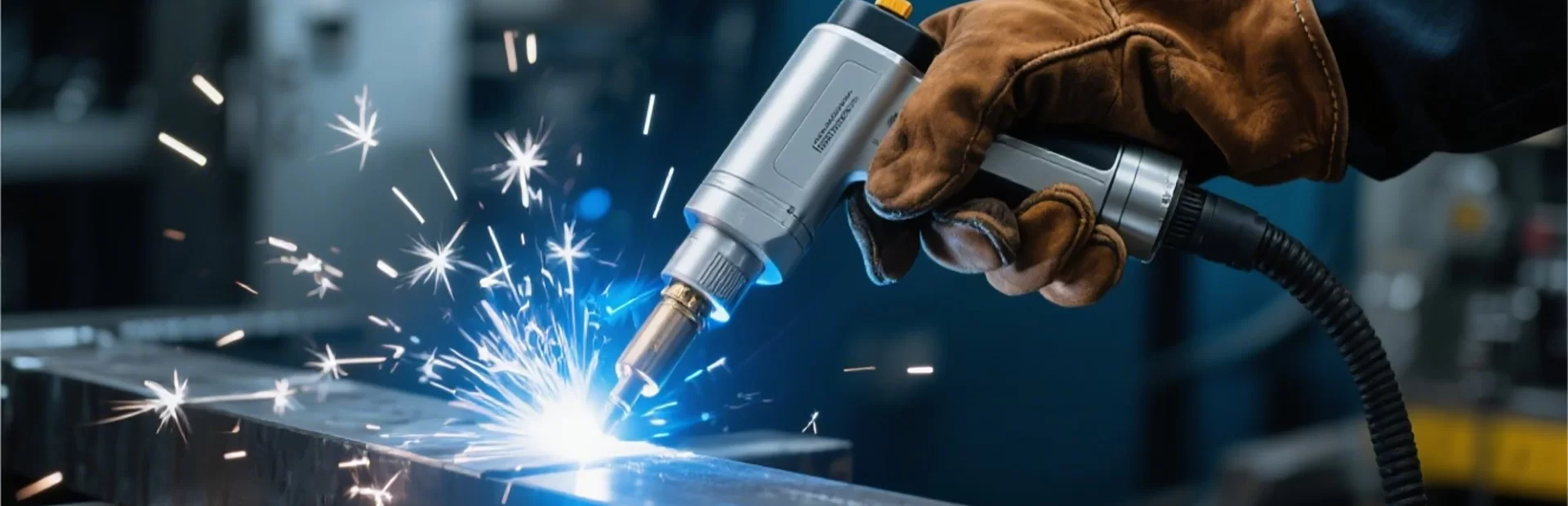
In the rapidly evolving landscape of industrial fabrication, precision and efficiency are the cornerstones of success. The introduction of the new welding machine technology is transforming how manufacturers approach complex assembly tasks, particularly in the production of pumps, valves, and gas compression machinery. By integrating advanced laser optics and precise thermal control, these systems eliminate the common pitfalls of traditional welding, such as excessive heat-affected zones and material deformation. Whether you are upgrading a legacy production line or establishing a new facility, choosing a cutting-edge system is essential for maintaining a competitive edge in the global market.

The modern new welding machine utilizes high-energy density beams to achieve deep penetration with a narrow weld width. This capability is critical for the manufacturing of high-pressure gas compressors and valves where seal integrity is non-negotiable. Unlike traditional arc welding, these systems offer non-contact processing, which significantly reduces mechanical stress on the substrate. The integration of smart PLC controls allows for real-time adjustment of power and speed, ensuring that every joint is uniform and burr-free, which drastically reduces the need for post-weld grinding and polishing.
Efficiency Boost: Advanced laser welding systems can increase production throughput by up to 40% compared to TIG welding, while maintaining a significantly smaller heat-affected zone (HAZ).
For manufacturers specializing in gas compression machinery, the precision of a new welding machine is indispensable. Components like compressor housings and valve seats require micron-level accuracy to prevent leakage and ensure safety under high pressure. The use of cold-process laser technology prevents the warping of thin-walled tubes and complex alloys. By implementing these systems, factories can achieve superior aesthetics and structural integrity, ensuring that components withstand extreme industrial environments without the risk of micro-cracks or thermal fatigue.

When evaluating the transition to a new welding machine, it is helpful to compare the technical outcomes against traditional fiber or arc welding. The most striking difference lies in the thermal impact. While traditional methods often leave behind slag and significant thermal deformation, the new generation of laser machines focuses energy so precisely that the surrounding material remains cool. This is particularly advantageous when welding dissimilar metals or heat-sensitive alloys used in precision valves.
To understand the capabilities of a new welding machine, one must look at the hardware parameters. Modern systems typically utilize high-stability laser sources with optional cooling methods to ensure consistent output over thousands of hours of operation. For general equipment manufacturing, such as pump and valve production, the ability to maintain a tight beam quality and high repeat accuracy is what separates industrial-grade machinery from entry-level tools.
The flexibility of the new welding machine extends beyond simple joints. In the production of pumps and valves, it is used for precision sealing, marking serial numbers for traceability, and welding delicate electronic sensors into the machinery. The non-contact nature ensures that fragile internal circuitry is not damaged by vibrations or excessive heat. Furthermore, the ability to process a wide range of materials—from stainless steel and titanium to specialized polymers—makes it a universal tool for any modern fabrication shop.
Investing in a new welding machine is not just about initial performance but long-term reliability. Regular maintenance, such as cleaning F-theta lenses with anhydrous alcohol and using distilled water in the cooling chillers, ensures the system operates at peak efficiency for decades. When considering the reduction in scrap material, the decrease in manual labor costs, and the increase in product quality, the return on investment (ROI) is typically realized within a short period, making it a strategic financial decision for growing enterprises.
The adoption of a new welding machine is a pivotal step for any manufacturer aiming for excellence in the general equipment sector. By combining ultra-high precision, cold-process technology, and exceptional versatility, these machines solve the most challenging problems in pump, valve, and compressor fabrication. As industry standards for safety and precision continue to rise, upgrading your technology today ensures that your business remains a leader in quality and efficiency tomorrow.
Cold processing uses photochemical interactions to create bonds or removals of material without relying on extreme heat to melt the substrate. In the context of a new welding machine, this prevents thermal deformation, slag formation, and micro-cracks. This is absolutely critical when working with high-precision components like IC chips or medical-grade plastics where heat would otherwise compromise the structural integrity of the part.
Yes, the versatility is one of the strongest selling points. These systems are engineered to handle a wide array of materials including plastics (ABS, PC), glass, ceramics, PCBs, and various metal alloys. For those in the pump and valve industry, the ability to switch between marking high-contrast logos on luxury packaging and welding technical components on a semiconductor wafer using the same platform provides immense operational flexibility.
Maintenance for a new welding machine focuses more on optical purity and thermal stability than on consumable replacement. Key tasks include the regular cleaning of lenses with anhydrous alcohol to prevent dust accumulation and the use of deionized water in the chiller to prevent scaling in the cooling pipes. Periodic power monitoring is also recommended to adjust for the natural aging of the laser crystals, ensuring consistent weld depth and quality.
For most high-power industrial applications, a water chiller is mandatory. The laser crystals and frequency-tripling modules generate significant internal heat during operation. A dedicated cooling system maintains the stability of these modules, preventing frequency drift and ensuring that the output power remains constant. This stability is what allows for the repeat accuracy of ± 0.002mm, which is essential for the high-density requirements of the semiconductor and aerospace industries.


