



Handheld Laser Welding Machine Price Comparison & Financial Guide
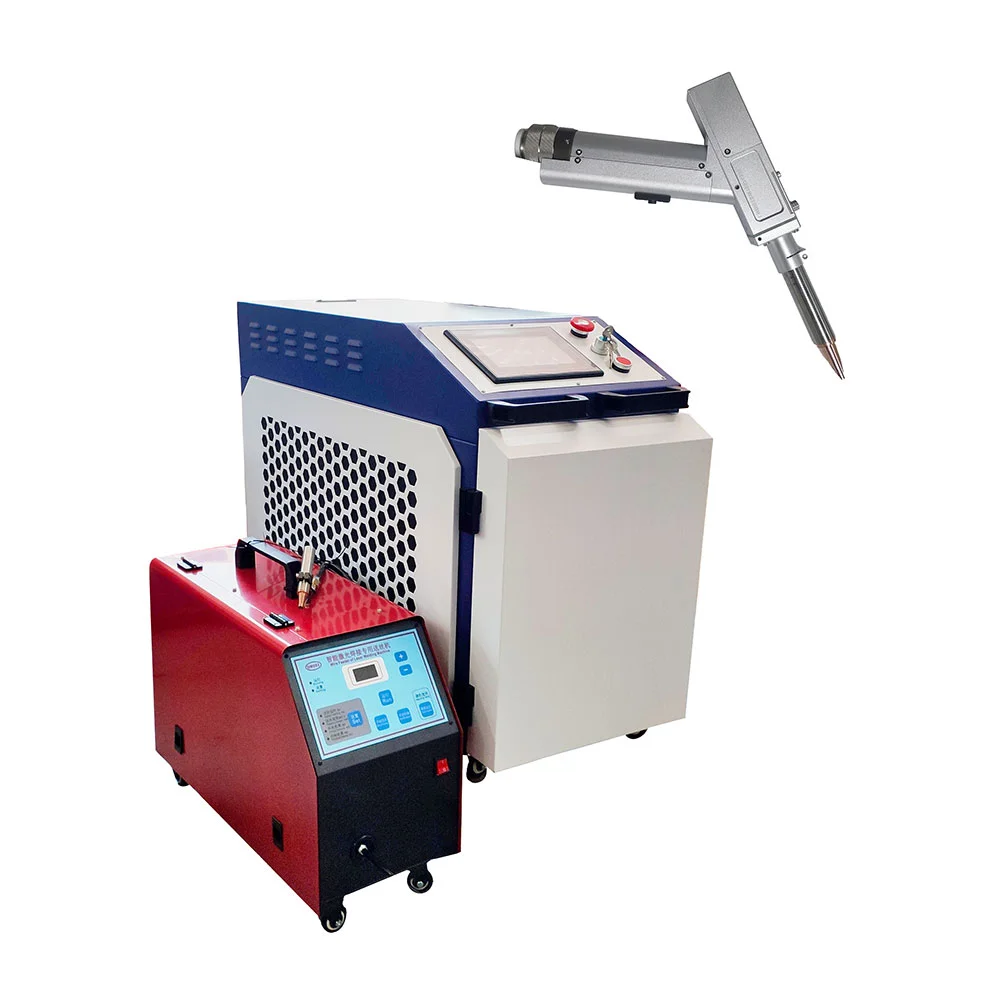
Capital expenditure evaluation requires establishing a strict baseline from verified equipment dimensions and material compatibility parameters. Procurement managers analyze asset footprints without assuming unstated performance ranges.
Dimensional boundaries dictate integration limits.
Establishing Baseline Equipment Footprint and Dimensional Constraints
Spatial Allocation and Dimensional Integration
Capital equipment integration begins by defining spatial allocation requirements strictly from the provided size parameter of 140*54*83cm. Workshop layout planning utilizes these physical dimensions to determine floor space occupation without extending assumptions to internal component arrangements or chassis weight distributions.
Clearance Corridors and Verification Protocols
Facility layout design is impacted directly by the static footprint boundaries, requiring designated clearance zones for installation access. Physical delivery specifications must be verified against procurement documentation to confirm dimensional accuracy upon arrival.
Incoming inspection protocols rely on direct measurement against the stated parameters.
Mapping Material Compatibility and Application Scope
Metal Input Boundaries and Material Specifications
Designated application ranges cover stainless steel, aluminum alloy, carbon steel, and galvanized materials without extending structural guarantees.
Primary equipment specifications omit material-specific thickness values, alloy grades, and feed rate ratings across all named metal categories.
Verification Checklist for Plant Operations
Plant directors utilize discrete metal headings to map incoming production streams against authorized operational parameters.
| Designated Metal Type | Primary Specification Status | Thickness / Grade Data | Feed Rate Boundary |
|---|---|---|---|
| Stainless Steel | Authorized Application Category | Not Provided | Not Specified |
| Aluminum Alloy | Authorized Application Category | Not Provided | Not Specified |
| Carbon Steel | Authorized Application Category | Not Provided | Not Specified |
| Galvanized | Authorized Application Category | Not Provided | Not Specified |
Financial Variables and Harmonized Quote Comparison Matrix
Quotation Alignment and Baseline Cost Framework
Vendor pricing proposals require a structured evaluation framework that aligns quotation line items with identical quantity, specification, delivery, and warranty parameters.
Commercial comparisons integrate identical baseline facts across all options to evaluate supplier proposals without fabricating unit prices or loss rates.
Harmonized Quote Evaluation Mechanics
Quotation line items must match the exact physical size of 140*54*83cm.
Procurement teams cross-reference incoming vendor documents against these fixed parameters to eliminate cost discrepancies driven by unverified dimensional variances.
| Parameter Category | Option A Supplier Baseline | Option B Supplier Baseline |
|---|---|---|
| material | [Pending Supplier Input] | [Pending Supplier Input] |
| model | [Pending Supplier Input] | [Pending Supplier Input] |
| size | 140*54*83cm | 140*54*83cm |
| capacity | [Pending Supplier Input] | [Pending Supplier Input] |
| moq | [Pending Supplier Input] | [Pending Supplier Input] |
| warranty | [Pending Supplier Input] | [Pending Supplier Input] |
| lead_time | [Pending Supplier Input] | [Pending Supplier Input] |
| application | [Pending Supplier Input] | [Pending Supplier Input] |
Addressing Documentation Gaps and Verification Boundaries
Procurement teams handle missing regulatory records by requesting clarification directly from suppliers without assuming unstated compliance levels.
The baseline specification record lacks formal test reports, specific certification numbers, issuing bodies, and performance standards. Procurement audits treat these missing items as unprovided fields rather than implying compliance defaults.
Unverified certifications or standards are never assigned to specific metal categories or structural assemblies. Plant auditors maintain strict separation between physical parameters and absent documentation.
Formulating Procurement Inquiry Fields and Conditional Comparison
Defining Essential Procurement Inquiry Fields
Structured inquiry fields are compiled by procurement teams to systematically capture missing commercial and operational parameters from vendors.
The boundaries for incoming commercial submissions are anchored strictly by the 140*54*83cm physical footprint boundary.
Every submitted commercial proposal is measured against identical baseline terms.
Executing Conditional Comparison Methods for Supplier Proposals
Conditional comparison models evaluate competing bids on an equal delivery baseline.
Quotes that deviate from authorized physical metrics are systematically filtered out by purchasing agents.
| Inquiry Variable Category | Baseline Verification Requirement | Conditional Comparison Metric |
|---|---|---|
| Physical Dimensions | 140*54*83cm footprint boundary | Confirm spatial integration limits match workshop layout plans. |
| Commercial Terms | Identical quantity and warranty parameters | Align cost submissions to maintain direct parity across vendor bids. |
Executing Final Capital Expenditure Decision Steps
Capital expenditure authorization depends entirely on synthesizing the spatial footprint and designated material scope into a structured audit framework. Plant directors review these parameters before issuing formal purchasing instruments.
Actionable next steps require issuing formal Requests for Quotation restricted strictly to the 140*54*83cm equipment dimensions and authorized metal groups. Any quotation submission deviating from these exact baselines is rejected immediately by the procurement team.
All evaluation metrics exclude unverified lifespan, performance, or safety claims.
Frequently Asked Questions
The static dimension defines the exact spatial occupation limits required on the workshop floor. Installation clearances depend strictly on these fixed exterior measurements, requiring facility engineers to map clearance zones directly around the given boundary.
Primary technical parameters omit material-specific thickness values, alloy grades, and feed rate ratings across all named metal categories. Operational limits remain bounded entirely by what is explicitly documented within the white-list fields.
Commercial comparisons require identical baseline facts including quantity, specification, delivery, and warranty terms. Quotation items must map directly to the authorized physical size and the designated metal application fields without fabricating unit prices.
Evaluators handle missing regulatory records by verifying whether the procurement scope permits uncertified tiers based on project destinations. Compliance reviews rely exclusively on provided text data while excluding unverified safety claims.
Procurement teams assess capital expenditures using only the physical size and material application fields provided. All evaluations exclude unverified lifespan, performance, or safety claims to maintain a strict decision baseline.
Conclusion
Procurement managers must issue formal Requests for Quotation using only the authorized physical dimensions of 140*54*83cm and the specified metal compatibility categories.
All vendor pricing submissions must align with these precise technical parameters without relying on unstated performance or compliance assumptions.
Verify that every vendor response matches the exact size envelope and listed material fields before advancing to final order placement.


