
Shijiazhuang Topstar
International Trading Co., Ltd.


Get In Touch
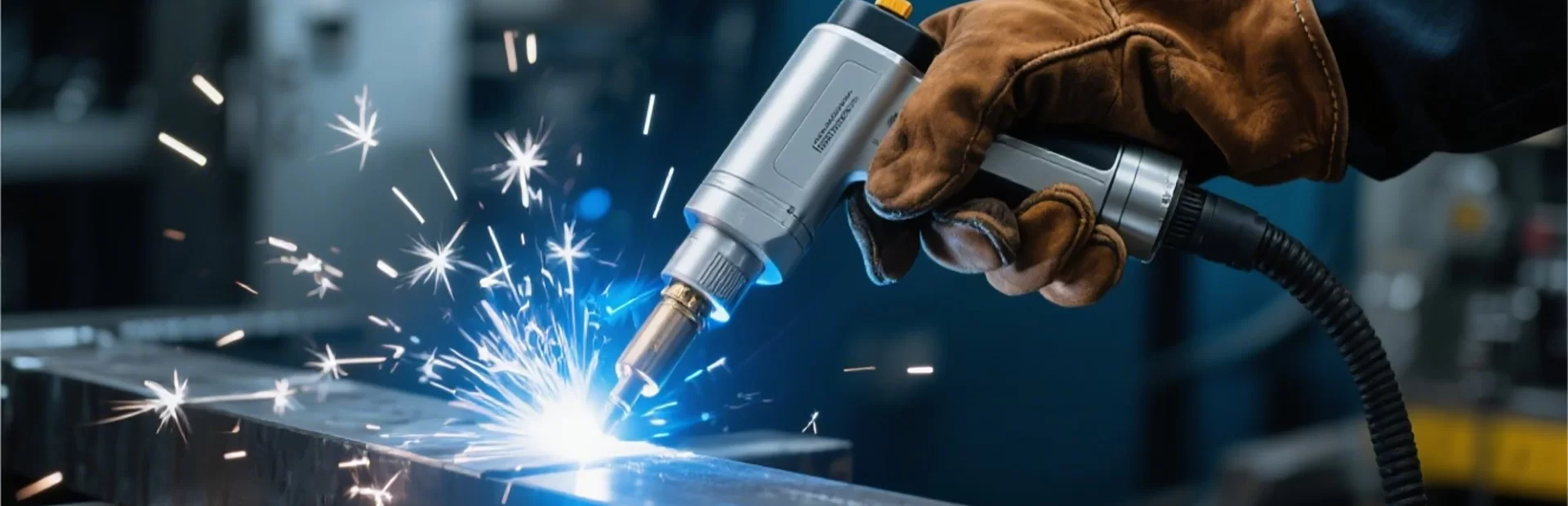
In the fast-evolving landscape of industrial manufacturing, the demand for precision, speed, and efficiency has never been higher. The transition toward high-energy laser technology has introduced the iron welding machine as a game-changer for workshops worldwide. By utilizing a concentrated laser beam to melt metal with surgical precision, this equipment eliminates the steep learning curve associated with traditional arc welding. Whether you are dealing with complex structures or large-scale workpieces, the handheld laser welder provides a flexible, high-strength solution that significantly reduces labor costs and production time. This guide explores how this technology is redefining the standards of metal fabrication.

One of the most significant advantages of a modern iron welding machine is its staggering processing speed. Traditional TIG or MIG welding relies on a slower thermal conduction process, whereas laser welding penetrates the material almost instantaneously. This results in welding speeds that are typically 2 to 10 times faster than conventional methods. Furthermore, the localized energy application minimizes the Heat Affected Zone (HAZ), preventing the common issue of "oil-canning" or warping in thin-gauge sheets. This thermal efficiency ensures that the workpiece remains stable, maintaining strict dimensional accuracy without the need for extensive post-weld straightening.
When evaluating the shift from arc welding to laser systems, the economic and technical disparities become clear. While traditional welding requires years of certification and practice to achieve a "beautiful weld," the handheld laser system is intuitive. Novice operators can create industrial-grade seams with minimal training, solving the acute shortage of skilled labor in the fabrication industry. The following table highlights the core differences in operational efficiency and output quality.
To maximize the return on investment, maintaining the fiber laser source and auxiliary components is critical. A high-quality iron welding machine can have a functional lifespan exceeding 100,000 hours if cared for properly. The most vital routine is the daily inspection of the protective lens to prevent metal spatter from damaging internal optics. Additionally, using distilled or deionized water in the cooling system prevents mineral buildup in the narrow cooling channels, ensuring the laser source operates within its rated temperature range to avoid overheating and sudden failure.
Depending on the material thickness and production volume, manufacturers can choose from various power ratings. From the compact 1500W model to the heavy-duty 3000W version, each machine is engineered for specific industrial needs. The "wobble" function in the welding head expands the tolerance range, making it easier to fill gaps in galvanized sheets or aluminum alloys. Below are the detailed specifications for the professional series.
The versatility of the iron welding machine makes it ideal for the general equipment sector, specifically in the manufacture of pumps, valves, and compressors. In these industries, the ability to weld stainless steel and carbon steel with high structural integrity is non-negotiable. For example, in pressure vessel fabrication, the deep penetration provided by the laser ensures joints that are often stronger than the base metal itself. This allows engineers to use thinner materials to achieve the same structural rating, reducing the overall weight and material cost of the final product.

While optimized for iron and steel, this technology excels in welding aluminum alloys and galvanized sheets. Aluminum is notoriously difficult to weld due to its high thermal conductivity and oxide layer; however, the concentrated energy of the laser overcomes these hurdles. The ergonomic torch design allows operators to reach narrow channels and internal corners that are inaccessible to bulky traditional torches. By providing a secure weld with minimal discoloration, the iron welding machine has become the gold standard for high-end fabrication shops globally.
Investing in a professional iron welding machine is more than just an equipment upgrade—it is a strategic move to lower operational overhead and increase volumetric throughput. From its rapid processing speeds and minimal heat distortion to its intuitive operation that empowers novice welders, the handheld laser welder solves the most persistent challenges of modern metalwork. By ensuring structural strength and aesthetic perfection, companies can significantly enhance their competitiveness in the global manufacturing market.
Unlike traditional TIG welding, which requires years of practice to master the coordination of the torch and filler wire, the handheld laser welder is remarkably intuitive. The intelligent control systems manage the laser output and pulse frequency automatically. Most novice operators can produce industrial-grade, smooth weld seams after just a few hours of basic training. Because it does not typically require specialized certification for basic operation, it allows manufacturers to deploy their workforce more flexibly and reduce reliance on a limited pool of certified veterans.
The system is incredibly versatile. While it is primarily marketed as an iron welding machine, it is highly effective for stainless steel, carbon steel, aluminum alloys, and galvanized sheets. The "wobble" function allows it to adapt to different material properties and gap widths, ensuring a secure bond across various alloys. This makes it a universal tool for shops producing everything from kitchen appliances to heavy-duty industrial compressors.
The fiber laser source is a solid-state component with no moving parts, meaning it is inherently durable. To ensure a lifespan of over 100,000 hours, you must focus on environmental control. Keep the machine in a stable temperature range and protect it from excessive vibration. The most critical maintenance task is cleaning the protective lens daily with high-purity alcohol to prevent spatter from absorbing laser energy. Additionally, ensure the water-cooling system uses distilled water to avoid mineral buildup in the cooling channels, which could otherwise lead to overheating.
One of the primary reasons companies switch to a laser-based iron welding machine is to prevent warping. Traditional arc welding applies heat over a wide area for a longer duration, which causes the metal to expand and contract unevenly. In contrast, the laser uses a highly concentrated beam that melts only the specific joint. This localized heat application drastically reduces the Heat Affected Zone (HAZ), allowing thin-gauge materials to remain stable and maintain their original dimensions without buckling.


