


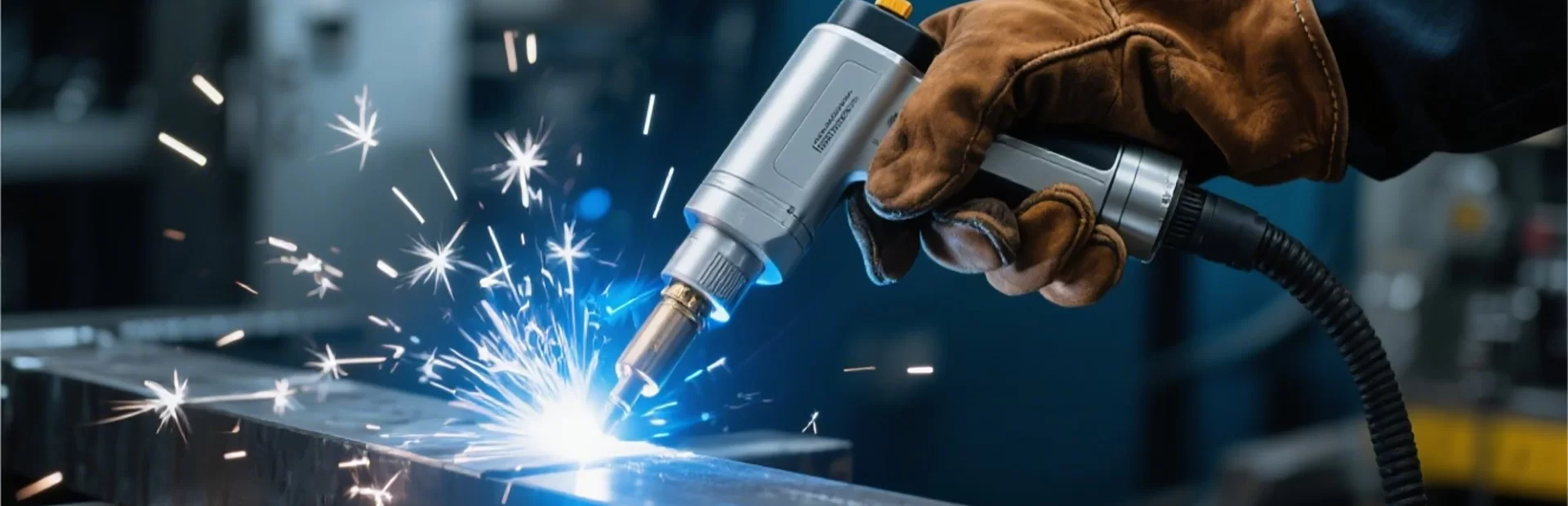
High Precision CBR5 Robot Arm Welding Machine China Solution
Transitioning from manual labor to automated precision is a critical leap for any fabrication facility facing rising labor costs and stringent quality demands. The CBR5 Robot Arm Welding Machine integrates high-precision multi-axis kinematics with advanced arc control to handle complex three-dimensional paths that are nearly impossible to replicate consistently by hand. By eliminating the variability of human fatigue, this system ensures that every weld bead is uniform, significantly reducing scrap rates and improving structural integrity in complex assemblies.
For manufacturers in the automotive, aerospace, and high-end furniture sectors, the shift toward robotic integration is no longer an option but a necessity for survival. Whether you are managing body-in-white production or precision metal components, this automation solution liberates your skilled technicians from hazardous fumes and intense heat, allowing them to pivot toward high-value system optimization rather than repetitive manual tasks.

Engineering Precision through 6-Axis Kinematic Control and Motion Stability
The core of the CBR5 model lies in its sophisticated 6-axis rotational design, which allows the welding torch to maintain the optimal angle and distance relative to the workpiece, regardless of the assembly's geometric complexity. This kinematic flexibility is powered by a 48V DC system, delivering a repeatability of ±0.03 mm. Such precision ensures that the heat input is distributed evenly across the joint, preventing burn-throughs and minimizing distortion in thin-walled components.
Beyond simple movement, the system employs real-time translation of Cartesian coordinates into precise motor rotations. This allows for seamless synchronization between travel speed, wire feed, and voltage, creating a stable arc that is essential for high-strength welds. With a Maximum Tool Speed of less than 2.0m/s and a working radius of 919mm, the arm provides an expansive reach while maintaining the rigid stability required for heavy-duty industrial environments.
- High-Precision Motion: 6-axis configuration for maximum geometric accessibility.
- Exceptional Reliability: MTBF exceeding 80,000 hours for continuous 24/7 operation.
- Efficient Energy Use: Low power consumption of 225w without sacrificing performance.

Operational Efficiency and the Elimination of Manual Variability
Manual welding is inherently subject to fluctuations based on the operator's skill level and physical condition. The CBR5 removes these variables, delivering a constant production cycle that drastically increases output. By implementing automated pre-flow and post-flow gas management, the system prevents molten pool oxidation, ensuring that the internal structure of the weld is as clean as the surface finish.
The integration of "Drag Teaching" allows operators to program complex paths by physically manipulating the arm, removing the steep learning curve usually associated with robotic coding. This intuitive approach, combined with a graphical interface, means that production lines can be repurposed for new product designs in minutes. This agility is particularly valuable for high-mix, low-volume manufacturing where flexibility is a competitive advantage.
Furthermore, the safety architecture includes over 21 adjustable features. Virtual walls and collision detection mechanisms protect both the equipment and the personnel, fulfilling corporate social responsibility by removing workers from the immediate vicinity of hazardous fumes and intense UV radiation.
Strategic Application Scenarios across High-Performance Industries
The Robot Arm Welding Machine is engineered for environments where structural failure is not an option. In automotive chassis production, the need for deep penetration and consistent beads is paramount; the CBR5 meets this by maintaining a perfectly constant arc length. Similarly, in the aerospace and rail transportation sectors, the ability to weld intricate 3D paths with sub-millimeter precision ensures compliance with strict international safety standards.
For the construction machinery industry, where heavy-gauge steel is common, the robot's stability allows for the integration of high-end MIG or TIG power sources. The high-speed industrial protocols ensure that the power source and the arm act as a single unit, adjusting parameters in real-time to accommodate variations in joint fit-up.
Even in the high-end metal furniture market, the CBR5 provides a distinct advantage. The "beautiful weld" achieved through robotic precision reduces the need for post-weld grinding and polishing, significantly lowering labor costs and material waste while increasing the perceived value of the final product.
Comparative Analysis: Manual vs. Robotic Arm Welding
| Metric | Manual Welding | Robotic Arm Welding (CBR5) | Business Impact |
|---|---|---|---|
| Production Speed | Variable/Low | Constant/High | Increased Throughput |
| Weld Consistency | Operator Dependent | Sub-millimeter Precision | Reduced Scrap Rates |
| Operating Cost | High Labor/Training | Low Long-term OpEx | Better Margin Control |
| Working Safety | Hazardous Exposure | Safe Remote Monitoring | Improved Worker Health |
| Setup Agility | Slow (Re-training) | Fast (Reprogramming) | Flexible Manufacturing |
Evaluating the Investment Return for Industrial Automation
When evaluating a welding machine china procurement, the primary focus should be on the Total Cost of Ownership (TCO) rather than the initial purchase price. The CBR5 model optimizes ROI by targeting the most expensive parts of the production chain: rework and skilled labor scarcity. By minimizing the scrap rate, companies can recover the investment through material savings alone within a short operational window.
The long-term reliability of the system, evidenced by its 80,000-hour MTBF, means that maintenance costs are predictable and minimal. Most scheduled maintenance focuses on servo motors and encoders, ensuring that the system remains a stable asset for years. When paired with modular fixtures, the system can switch between different product designs rapidly, making it an ideal solution for companies moving toward a "smart factory" model.
The Future of Automated Fabrication and Smart Integration
The trajectory of industrial welding is moving toward complete collaborative autonomy. The CBR5's collaborative mode is a stepping stone toward this future, allowing safe human-robot interaction for setup and monitoring tasks. As AI-driven vision systems become more integrated, we expect these robots to perform real-time seam tracking and autonomous error correction, further reducing the need for human intervention.
For global procurement managers, the key is to partner with suppliers who can bridge the gap between high-quality manufacturing and localized technical support. The focus is shifting from simply buying a tool to investing in a comprehensive solution that includes design, quality inspection, and after-sales support to ensure that the technology translates into actual growth opportunities.
Technical and Procurement FAQ
What industries benefit most from Robot Arm Welding Machines?
Automotive manufacturing (BIW and chassis), construction machinery, rail transportation, aerospace, and high-volume metal furniture production are the primary beneficiaries due to their need for high strength and consistency.
How does a robotic arm ensure welding quality compared to a human?
Robots eliminate human factors like fatigue, emotion, and skill fluctuations. They maintain a perfectly constant travel speed and arc length, resulting in uniform beads and minimal spatter.
Is the system flexible enough for small batch production?
Yes, by utilizing modular fixtures and interchangeable clamps, along with quick reprogramming, the same robotic line can switch between different product designs in minutes.
What are the safety features integrated into the CBR5 model?
The system includes over 21 adjustable safety features, including sophisticated collision detection, virtual walls to restrict motion, and a specialized collaboration mode for safe human proximity.
What is the expected lifespan and maintenance requirement?
The CBR5 features an MTBF (Mean Time Between Failures) of over 80,000 hours, ensuring long-term reliability with minimal scheduled maintenance of servo motors and encoders.
Can the robot arm be integrated with different welding power sources?
Yes, it is designed to integrate with high-end MIG, TIG, or Laser welding power sources via high-speed industrial protocols for seamless synchronization.
Technical Industry References
- ISO Standards for Robotic Welding Systems
- American Welding Society - Automation Guidelines
- NIST Manufacturing Extension Partnership
- Industrial Energy Efficiency Benchmarks
Ready to automate your production line? Contact our technical team today to determine the optimal configuration for your specific industrial challenges.
Related Industrial Insights


