


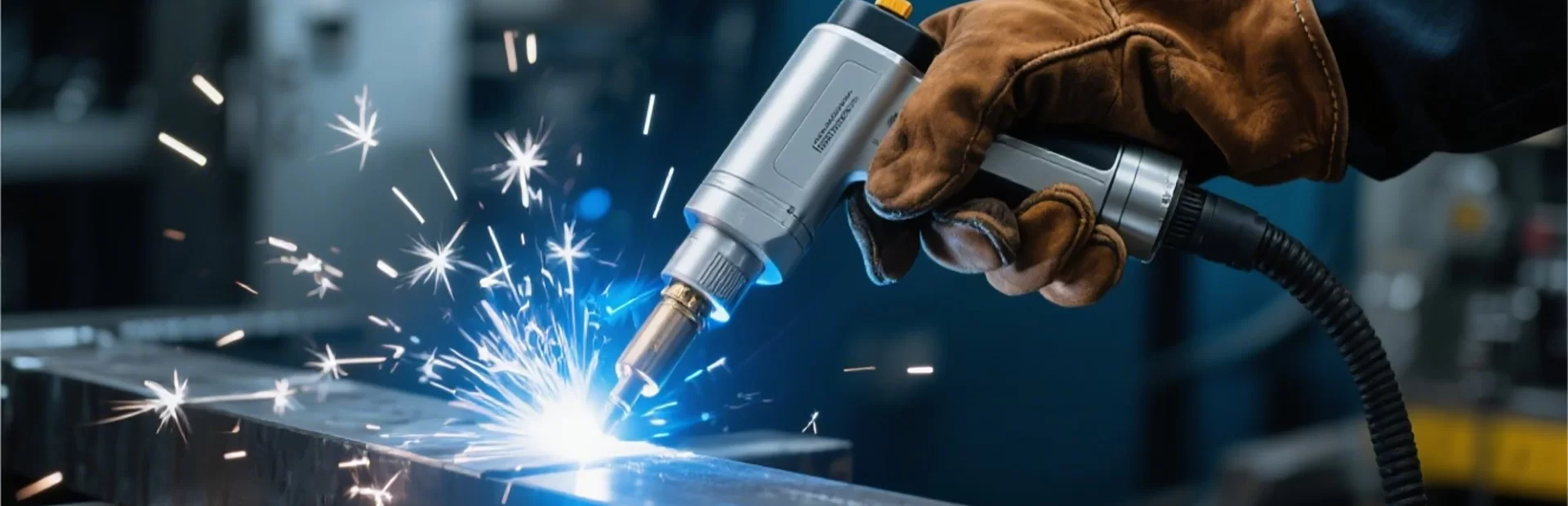
Fiber Laser Marking Machine and Welding Machine Price Guide
Precision marking is no longer just an add-on for industrial manufacturing; it is a critical requirement for traceability, branding, and quality assurance. The fiber laser marking machine leverages high-energy-density beams to create permanent identifiers on a vast array of materials, ranging from aerospace-grade aluminum to surgical-grade stainless steel. By utilizing a high-speed galvanometer system and focused field lenses, these machines deliver microscopic accuracy that traditional engraving cannot match.
For procurement managers and engineers, evaluating the total cost of ownership involves looking beyond the initial welding machine price or equipment cost to consider operating expenses. With virtually zero consumables and minimal maintenance, fiber laser technology offers a sustainable, high-efficiency alternative to chemical etching or inkjet printing. Whether you are marking intricate QR codes on IC chips or deep-engraving industrial nameplates, the right laser configuration ensures a seamless integration into automated production lines.

Advanced Fiber Laser Technology: How Precision Beam Control Works
The core of a fiber laser marking machine is its ability to generate a collimated beam that is reflected by a high-speed galvanometer. This system controls X/Y axis deflection with extreme precision, focusing the beam into a high-energy spot on the workpiece surface. Depending on the power settings, the machine induces physical or chemical changes—such as ablation, vaporization, or thermal oxidation—to create permanent marks.
One of the most significant technical advantages is the non-contact processing nature of the laser. Because there is no physical pressure applied to the material, delicate and fragile parts are not subjected to mechanical stress. This makes the technology ideal for high-precision components in the electronics and medical sectors. Furthermore, the use of fiber optic cables for amplification results in a beam quality that allows for a focused spot size as small as 20 microns, enabling text and graphics that remain legible even under magnification.
From an operational standpoint, the flexibility provided by software-driven control is unparalleled. Unlike traditional molds, markings can be edited instantaneously, allowing for the real-time encoding of serial numbers, batch dates, and variable data. This "zero consumables" approach not only reduces waste but also eliminates the downtime associated with replacing inks or engraving bits.

Material Specific Applications: From Deep Engraving to Surface Annealing
Fiber lasers are exceptionally versatile, but their interaction varies significantly across different metal alloys. For stainless steel, the machine can perform laser annealing, heating the surface just below its melting point to create a smooth, high-contrast black mark. This is essential for medical instruments where the protective chromium oxide layer must remain intact to prevent corrosion. Alternatively, deep engraving is used for industrial tools to ensure legibility even after years of heavy abrasion.
When working with aluminum, the process differs based on the surface treatment. On anodized aluminum, the laser removes the dye layer to reveal the natural silver substrate, creating a high-end aesthetic for consumer electronics like laptops and smartphones. For raw aluminum alloys, micro-pitting is used to scatter light, creating a visible white mark. The high thermal conductivity of aluminum requires a laser with superior beam quality to prevent heat dissipation from blurring the edges.
Copper and brass, known for their high reflectivity, were historically difficult to mark. However, modern fiber laser designs incorporate advanced isolators that prevent back-reflection from damaging the source. This allows for the creation of dark, oxidized marks on electrical components and plumbing fixtures that withstand extreme temperatures and corrosive environments.
Operational Efficiency and Integration in Smart Factory Environments
In the context of Industry 4.0, the fiber laser marking machine serves as a cornerstone for traceability. The ability to "mark on the fly" allows these systems to be integrated directly into high-speed conveyor belts. As a PCB or automotive part moves through the line, the galvanometer pulses at millisecond intervals to apply unique Data Matrix codes without stopping the production flow.
Beyond metals, the technology extends to plastics and polymers such as ABS, PC, and PP. By utilizing high-frequency pulsing, the laser can mark housings and integrated circuit (IC) chips with crisp identifiers that do not wear off with frequent handling. This ensures that safety warnings and brand logos remain permanent throughout the product's lifecycle.
Environmental sustainability is another key driver. Compared to chemical etching or traditional inkjet printing, laser marking is a clean, pollution-free technology. It consumes no hazardous chemicals and produces no liquid waste, significantly reducing the environmental footprint of the manufacturing facility while lowering long-term operating costs to essentially just the price of electricity.
Technical Specification and Material Compatibility Matrix
| Material Type | Recommended Process | Marking Effect | Industrial Application |
|---|---|---|---|
| Stainless Steel | Annealing / Deep Engrave | Black/White/Intaglio | Medical Tools, Nameplates |
| Aluminum Alloy | Bleaching / Micro-pitting | Silver/White | Aerospace, Electronics |
| Copper/Brass | Oxidation Marking | Dark Contrast | Electrical Connectors |
| ABS/PC Plastic | High-Freq Pulsing | Contrast Change | IC Chips, Device Housings |
| Coated Metals | Paint Stripping | Substrate Reveal | Mobile Phones, Laptops |
Procurement Considerations: Selecting the Right Laser Power and Configuration
Choosing the correct laser source is a balance between throughput and precision. For basic identification and surface marking, a 20W or 30W source (such as the K200 or K300 series) is typically sufficient and cost-effective. However, for applications requiring deep engraving or high-speed mass production, 50W to 60W sources provide the necessary energy density to vaporize material more rapidly, reducing cycle times per part.
Buyers should also evaluate the marking range and repeat accuracy. A marking range of 100-300mm is standard for most small-to-medium components, but customized options are available for larger workpieces. With a repeat accuracy of ±0.002mm, these machines ensure that every mark is placed in the exact same position, which is critical for automated assembly and quality inspection systems.
Reliability is another critical factor. High-quality fiber lasers are rated for approximately 100,000 working hours. When sourcing equipment, it is important to ensure the system includes built-in air cooling and supports the local power grid (e.g., 220V/50Hz or 110V). This reduces the need for external cooling infrastructure and minimizes installation complexity.
Future Trends in Industrial Identification and Marking Solutions
The trend in industrial marking is moving toward absolute miniaturization and total digitalization. As electronic components shrink, the demand for marks that can only be read by high-resolution scanners is increasing. We are seeing a shift toward integrated laser systems that communicate directly with ERP and MES software, allowing for the automatic generation of serial numbers based on real-time production data.
Furthermore, there is a growing emphasis on "zero-defect" manufacturing. Laser marking facilitates this by providing a permanent record of a part's origin and processing history. In the automotive and aerospace industries, this traceability is not just a preference but a regulatory requirement, ensuring that any defective batch can be traced back to the specific raw material lot or operator.
As the technology evolves, the integration of AI-driven vision systems will allow laser markers to automatically adjust their focus and position based on the actual placement of the part, eliminating the need for precise mechanical jigs. This will further increase production flexibility and reduce the cost of setup for small-batch customized orders.
Frequently Asked Questions About Fiber Laser Marking
What is the difference between laser annealing and deep engraving?
Laser annealing heats the material to create a thermal oxidation layer, resulting in a smooth, high-contrast black mark without removing material. Deep engraving vaporizes the metal to create a recessed "intaglio" effect, which is more durable against heavy wear and abrasion.
Can fiber lasers mark on plastic materials?
Yes, fiber lasers can mark certain plastics and polymers like ABS, PC, PP, and PE. This is typically achieved through high-frequency pulsing that changes the color or texture of the plastic surface without damaging the structural integrity of the part.
What are the typical maintenance requirements for these machines?
Fiber laser marking machines have very low maintenance needs. The primary requirements include keeping the lens clean from dust and debris and ensuring the built-in air cooling system is functioning properly. There are no inks or molds to replace.
How do I choose between a 20W and a 60W laser source?
A 20W source is ideal for shallow marking, surface coloration, and lightweight materials. A 60W source is recommended for deeper engravings, faster processing speeds in mass production, and harder metals that require higher energy density for vaporization.
Is fiber laser marking safe for the environment?
Yes, it is a clean processing technology. Unlike chemical etching or inkjet printing, it uses no chemicals or solvents and produces no hazardous liquid waste, making it a more environmentally friendly choice for industrial marking.
Can these machines be integrated into an existing automated production line?
Absolutely. Thanks to the high-speed galvanometer and software compatibility, fiber laser markers can be synchronized with conveyor belts and PLC systems to perform "marking on the fly" without stopping the production process.
Technical References and Industry Standards
- ISO Standards for Industrial Marking and Traceability
- NIST Guide to Laser-Material Interactions
- IEEE Standards for Electronic Component Identification
- Medical Device Marking and Safety Guidelines
Selecting a fiber laser marking machine is a strategic investment in production quality and operational efficiency. By matching the laser power to your specific material needs and integrating the system into your digital workflow, you can achieve unparalleled precision and permanent traceability for your products.
Related Industry Insights


