


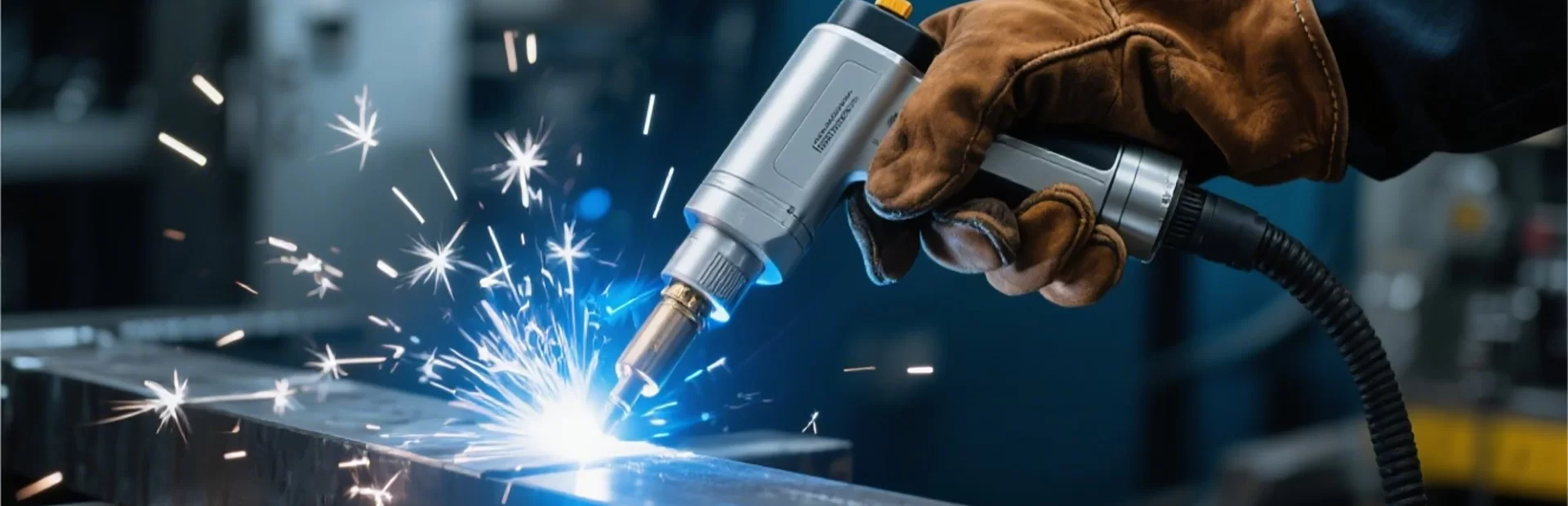

The transition from manual thermal welding to automated laser systems represents a fundamental leap in industrial fabrication. For sectors requiring micron-level accuracy, the ability to join components without mechanical stress or significant thermal distortion is no longer a luxury but a operational necessity. This analysis explores the technical integration of CNC-driven laser optics and how these systems solve the inherent instability of traditional joining methods.
In the context of modern manufacturing, procurement officers often struggle to balance production speed with structural integrity. Traditional TIG or MIG processes, while versatile, frequently introduce material deformation and high labor costs. By implementing an automatic platform laser welding solution, factories can transition to a non-contact process that is specifically engineered for high-reflectivity metals such as copper, gold, and aluminum.
Readers will examine the critical performance factors of laser power, the impact of CNC automation on repeatability, and the specific criteria used to evaluate a welding machine supplier. By the end of this guide, project managers will have a framework for selecting equipment that aligns with their material thickness requirements and quality control standards.
The Shift Toward Automated Laser Joining
Industrial joining technology is currently undergoing a paradigm shift, moving away from filler-wire dependent methods toward autogenous laser welding. The core driver of this evolution is the demand for miniaturization in electronics and the rigorous structural requirements of new energy vehicles. Unlike traditional arcs, a focused laser beam delivers energy density high enough to create a keyhole effect, allowing for deeper penetration with a significantly narrower weld bead. This precision reduces the need for post-weld grinding and polishing, directly lowering the total cost of ownership. Furthermore, the integration of industrial water cooling ensures that the laser source maintains stability during 24/7 continuous production cycles, preventing the thermal drift that often plagues lower-end systems. As factories move toward Industry 4.0, the ability to digitally program welding trajectories via CNC software enables a level of flexibility where a single machine can handle multiple product variations with minimal setup time.
Strategic Evaluation of Industrial Welding Systems
Selecting the right laser welding platform requires a deep dive into the relationship between power output, material reflectivity, and automation precision. The following subsections break down the technical and commercial considerations necessary for a high-performance implementation.
Precision Optics and Thermal Control
The efficacy of a laser system depends on its beam spot size and the stability of its focal point. Micron-level spots ensure that energy is concentrated exactly where needed, which is critical for components in medical devices or sensors. Effective thermal management, typically achieved through industrial water cooling, prevents the optics from overheating, which would otherwise lead to beam divergence and inconsistent weld depth.
| Laser Power | Max Thickness | Ideal Material | Precision Level |
|---|---|---|---|
| 1500W | ≤3mm | Stainless Steel / Thin Alloys | Micron-level |
| 2000W | ≤5mm | Copper / Aluminum | High Stability |
| 3000W | ≤8mm | Thick Plate / Heavy Industrial | Deep Penetration |
| CNC Managed | Variable | Dissimilar Metals | Sub-millimeter |
| Water Cooled | N/A | Continuous Load | Thermal Constant |
| Autogenous | ≤15% gap | High-Precision Fit | Zero Filler |
CNC Automation and Throughput
CNC platforms eliminate the variability introduced by human operators. By utilizing high-precision linear motors, the system ensures that every weld in a batch of ten thousand is identical to the first. This automation allows for complex trajectories that would be impossible to execute manually, increasing throughput while reducing the reliance on highly skilled manual welders.
Material Compatibility for Reflective Metals
Welding gold, silver, and copper is notoriously difficult due to their high reflectivity, which can bounce the laser energy back into the source. High-power configurations (2000W and above) are required to overcome this reflectivity barrier. The ability to maintain a stable melt pool in these materials is a benchmark of a high-quality system's optical design.
Mitigating the Heat-Affected Zone (HAZ)
A broad Heat-Affected Zone leads to material deformation and loss of structural integrity. Laser welding minimizes the HAZ by delivering an intense, short-duration pulse of energy. This results in a rapid melting and solidification cycle, ensuring that the surrounding material remains cool and structurally unchanged, which is vital for sensitive electronic components.
Cleanroom Integration and Contamination
Because laser welding is a non-contact process and typically requires no filler wire, it is an ideal solution for ISO Class 5 cleanrooms. The absence of sparks and fumes associated with MIG/TIG welding makes it suitable for producing surgical instruments or pacemakers where zero contamination is a strict regulatory requirement.
Data Traceability and ISO Compliance
Modern industrial platforms now include software that records every process parameter—power, speed, and path—for every single workpiece. This level of data traceability is essential for industries like aerospace or medical manufacturing, where quality archiving is mandatory to meet ISO standards and facilitate recall audits.
Evaluating Supplier Technical Support
The value of a system is tied to the support of the provider. Buyers should look for partners who offer comprehensive solutions, from initial design and customization to quality inspection and after-sales technical support. A provider with expertise in both the hardware (laser sources) and the trade logistics ensures a smoother implementation process.
FAQ
What is the primary advantage of automatic laser welding over TIG/MIG?
The primary advantage is the drastic reduction of the Heat-Affected Zone (HAZ) and the elimination of manual variability. CNC-driven laser systems provide sub-millimeter repeatability and micron-level precision, resulting in virtually no material deformation and higher production speeds compared to manual thermal methods.
Which laser power is recommended for welding copper or aluminum?
For high-reflectivity metals like copper and aluminum, 2000W or higher is recommended. These materials reflect a significant portion of the laser energy; higher initial power is necessary to break through the reflectivity barrier and establish a stable melt pool for a secure bond.
Can these machines handle dissimilar metal welding?
Yes, automatic platform laser welding machines are highly effective for joining dissimilar metals. By precisely controlling the energy density and the cooling rates through CNC software, the system can create a strong metallurgical bond between different metal types without the need for filler materials.
Is laser welding suitable for medical device manufacturing?
Absolutely. Since it is a non-contact process that does not require filler wires, it minimizes the risk of contamination. These systems can be integrated into ISO Class 5 cleanrooms, making them ideal for high-precision components such as surgical tools and pacemakers.
What thickness can the 1500W model effectively weld?
The 1500W model is optimized for materials with a thickness of up to 3mm. This makes it particularly effective for the production of automotive sensors and small consumer electronics where precision is more critical than deep penetration.
How does CNC automation specifically improve quality?
CNC automation uses linear motors to ensure that the laser head follows the exact same path for every single part. This eliminates human error, ensures consistent bead quality, and allows for the storage of pre-configured profiles for different materials, ensuring uniformity across massive production batches.
References and further reading
- International Organization for Standardization (ISO) - Quality Management Systems for Medical Devices.
- Industrial Laser Processing Handbook - Analysis of Thermal Conductivity in Reflective Metals.
- CNC Automation Standards for High-Precision Joining in Automotive Electronics.


