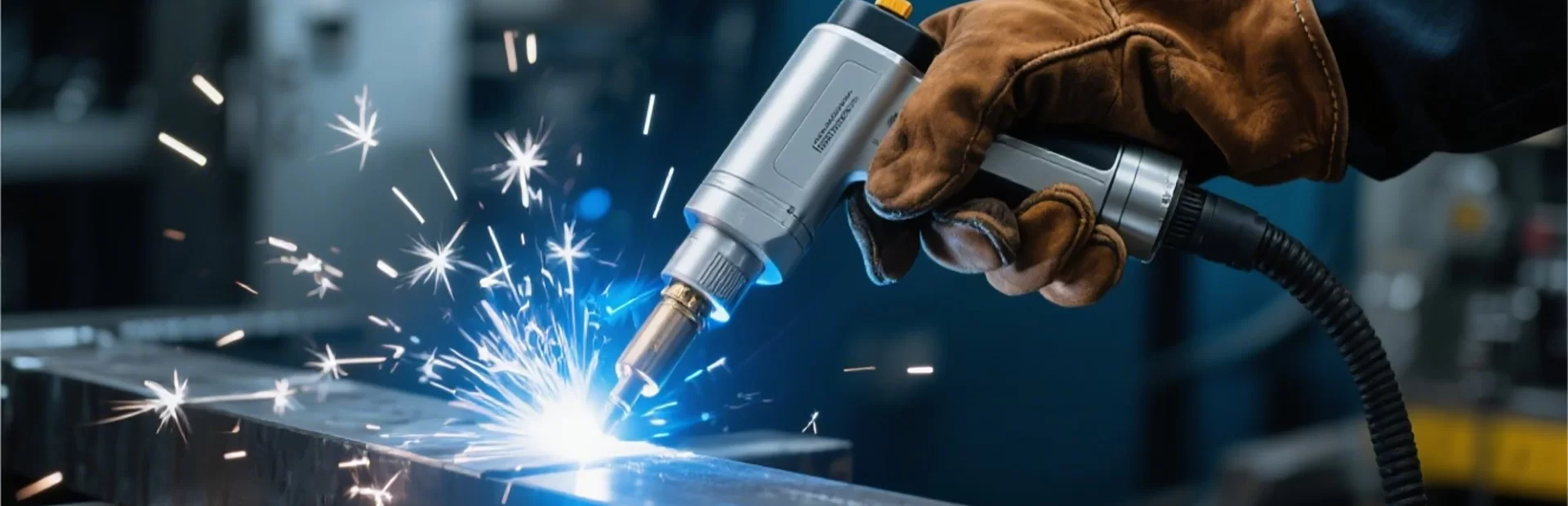
The emergence of the lightweld laser welder has fundamentally shifted the landscape of precision joining in modern manufacturing. By condensing the power of industrial lasers into a handheld, intuitive format, this technology allows fabricators to achieve deep-penetration welds with minimal thermal distortion, bridging the gap between automated robotic cells and manual craftsmanship.
In a global economy demanding faster turnaround times and tighter tolerances, the versatility of a lightweld laser welder provides a competitive edge. Whether it is assembling complex automotive components or repairing high-value aerospace parts, the ability to perform high-speed, clean welds without extensive jigging or preparation is transforming how we approach metal fabrication.
Understanding the technical nuances and operational advantages of the lightweld laser welder is essential for any business looking to optimize its production line. From reducing post-weld grinding to lowering energy consumption, the shift toward handheld laser solutions represents a broader trend of "democratizing" high-precision industrial tools.

Global Relevance and Industry Context of Laser Welding
The global manufacturing sector is currently facing a critical shortage of skilled TIG and MIG welders, creating a production bottleneck that threatens industrial growth. According to recent ISO standards and industrial labor reports, the learning curve for traditional welding can take years to master, whereas the lightweld laser welder reduces this training period to a matter of days, allowing companies to maintain high output despite labor shortages.
Beyond labor, the push for "Industry 4.0" necessitates tools that are both flexible and precise. Traditional welding often introduces significant Heat Affected Zones (HAZ), leading to material warping—a problem that is particularly costly in the production of thin-walled tubes and high-precision machinery. The introduction of handheld laser systems solves this by concentrating energy precisely where it is needed, ensuring structural integrity without sacrificing speed.
Defining the Lightweld Laser Welder Mechanism
At its simplest, a lightweld laser welder is a high-power fiber laser system designed for handheld operation. Unlike traditional arc welding, which relies on an electric arc between an electrode and the workpiece, this technology uses a focused beam of coherent light to melt the base material instantly. This results in a weld that is deeper and narrower, significantly reducing the amount of filler material required.
This technology is deeply connected to the modern need for "micro-manufacturing." As devices become smaller and more complex, the ability to join dissimilar metals—such as copper to stainless steel—becomes paramount. The laser's ability to modulate power in real-time allows it to handle these differing thermal conductivities without burning through the thinner material or failing to penetrate the denser one.
From a humanitarian and safety perspective, the lightweld laser welder removes the need for hazardous fluxes and reduces the emission of toxic fumes compared to traditional methods. This creates a healthier workspace for operators and reduces the environmental footprint of the fabrication shop, aligning industrial goals with global sustainability targets.
Core Components for Maximum Precision
The stability of a lightweld laser welder relies heavily on its fiber laser source. This component converts electrical energy into a high-density light beam that is transmitted via an optical fiber. The purity and stability of this beam determine the consistency of the weld bead, ensuring that every joint meets rigorous quality control standards without the need for constant manual adjustment.
Crucial to the operation is the "Wobble Head" technology. The lightweld laser welder utilizes an oscillating beam pattern that effectively widens the weld pool. This prevents the "nail-head" effect and allows the welder to bridge larger gaps between parts, making the system far more forgiving than a stationary laser beam and significantly increasing the scalability of production.
Lastly, the integrated cooling system and safety interlocks ensure that the lightweld laser welder can operate continuously in high-temperature industrial environments. Advanced sensors detect the proximity of the nozzle to the workpiece, automatically adjusting power output to prevent over-penetration, which is vital when working with varying material thicknesses.
Performance Metrics and Efficiency Gains
When comparing the lightweld laser welder to traditional MIG or TIG methods, the most striking difference is the speed of execution. Laser welding can be up to 4-10 times faster depending on the material thickness. This is because the high energy density allows for higher travel speeds while still maintaining a full-penetration weld, drastically reducing the cycle time per part.
Moreover, the reduction in post-processing is a massive cost-saver. Traditional welds often require extensive grinding and polishing to remove slag and splatter. Because the lightweld laser welder produces a clean, aesthetic seam with minimal spatter, many parts can go directly from the welding station to the assembly or painting stage, eliminating an entire step in the production chain.
Comparative Efficiency of Laser Welding Methods
Real-World Applications Across Global Sectors
In the automotive sector, the lightweld laser welder is revolutionizing the production of exhaust systems and chassis frames. The ability to weld thin-walled stainless steel without causing deformation ensures that airtight seals are maintained, which is critical for emissions compliance. In high-volume assembly plants in Germany and Japan, these welders are used to rapidly join battery housings for EVs, where thermal management and precision are non-negotiable.
Beyond automotive, the medical device industry utilizes the lightweld laser welder for creating surgical instruments and implants. The non-contact nature of the process ensures that there is no mechanical contamination of the sterile materials. Similarly, in remote industrial zones—such as oil rigs or mining sites—the portability of these units allows for high-quality structural repairs to be performed on-site, avoiding the massive cost of transporting heavy machinery back to a central facility.
Long-Term Value and Sustainability Impact
The long-term value of investing in a lightweld laser welder extends far beyond immediate speed gains. By significantly reducing the amount of filler wire and shielding gas required, companies can lower their consumable costs by up to 40%. This creates a leaner production model that is less susceptible to the price volatility of raw materials.
Sustainability is another core advantage. Traditional welding consumes vast amounts of electricity to maintain an arc; in contrast, fiber lasers are highly efficient in their energy conversion. When combined with the reduction in scrap material—thanks to the precision of the lightweld laser welder—the total carbon footprint of the manufacturing process is lowered.
Finally, there is the "human" value. By simplifying the welding process, the lightweld laser welder restores dignity and accessibility to the trade. It allows workers who may not have the innate steady hand required for TIG welding to produce professional, high-quality results, fostering a more inclusive and productive workforce.
Future Innovations in Laser Joining Technology
Looking ahead, the lightweld laser welder is expected to integrate more deeply with AI-driven vision systems. Future iterations will likely feature real-time seam tracking, where the machine automatically adjusts the focal point and power based on the gap it detects in the joint, effectively removing the possibility of human error during the welding process.
We are also seeing a trend toward "Green Laser" technology, focusing on the use of renewable energy sources to power the fiber source. As digital transformation accelerates, the lightweld laser welder will likely become a node in an IoT network, reporting weld quality data in real-time to a central cloud for instant QA certification, eliminating the need for separate X-ray or ultrasonic testing.
The ultimate goal is a fully autonomous, mobile welding ecosystem where the lightweld laser welder acts as the effector for a collaborative robot (cobot). This synergy will combine the precision of laser technology with the repeatability of robotics, allowing for the mass production of complex 3D geometries that are currently impossible to manufacture.
Technical Comparison of Lightweld Laser Welder vs Traditional Methods
|
Comparison Dimension
|
Lightweld Laser Welder
|
TIG Welding
|
MIG Welding
|
| Processing Speed |
Ultra-Fast (10/10) |
Slow (3/10) |
Moderate (6/10) |
| Thermal Distortion |
Minimal (9/10) |
High (4/10) |
Moderate (5/10) |
| Skill Requirement |
Low Entry (8/10) |
Expert Only (2/10) |
Moderate (5/10) |
| Post-Weld Grinding |
Rarely Needed (10/10) |
Moderate (6/10) |
Extensive (3/10) |
| Energy Efficiency |
High (9/10) |
Moderate (6/10) |
Low (4/10) |
| Material Versatility |
Excellent (9/10) |
Good (7/10) |
Fair (6/10) |
FAQS
The primary advantage is speed and the reduction of the Heat Affected Zone (HAZ). While TIG welding is precise, it is incredibly slow and often causes the metal to warp due to prolonged heat exposure. The lightweld laser welder concentrates energy into a tiny point, allowing for deep penetration at high speeds, which minimizes distortion and eliminates the need for extensive post-weld grinding.
Not at all. One of the biggest selling points of this technology is its intuitive nature. Unlike traditional welding, which requires years of "muscle memory" to master the torch angle and filler feed, the lightweld laser welder is far more forgiving. Most operators can be trained to produce industrial-grade welds within a few days of practice.
Yes, the lightweld laser welder is exceptionally capable of joining dissimilar metals, such as aluminum to steel or copper to stainless steel. By modulating the laser's power and using the "wobble" function, it can manage the different melting points and thermal conductivities of different materials, creating a strong bond where traditional arc welding would fail.
It reduces costs across three main areas: labor, consumables, and time. By slashing the learning curve, you reduce labor costs. By requiring less filler material and shielding gas, you lower consumable spend. Most importantly, by removing the need for secondary grinding and polishing, you dramatically shorten the production cycle, increasing your overall throughput.
Safety is paramount. Operators must wear certified laser safety goggles to protect against reflected beams. Additionally, the work area should be enclosed or shielded to prevent bystanders from being exposed to the laser. Most modern lightweld systems come with built-in safety interlocks and proximity sensors to ensure the beam only fires when the nozzle is correctly positioned.
Absolutely. While the initial capital expenditure is higher than a basic MIG machine, the ROI is achieved quickly through the elimination of secondary processing and the ability to take on high-precision jobs that were previously impossible. The versatility of a single machine handling multiple materials makes it an ideal "all-in-one" solution for small to medium enterprises.
Conclusion
The lightweld laser welder represents a pivotal evolution in industrial fabrication, blending the power of fiber optics with the flexibility of handheld operation. By addressing the most pressing challenges of modern manufacturing—namely the skilled labor shortage, the need for extreme precision, and the drive for environmental sustainability—this technology does more than just speed up production; it redefines the standard of what is possible in metal joining.
As we move toward a future of AI-integrated manufacturing and greener energy, adopting solutions like the lightweld laser welder is no longer an option but a necessity for staying competitive. We encourage manufacturers to evaluate their current bottlenecks and embrace the transition to laser technology to unlock new levels of efficiency and quality. Visit our website: www.topstarlaser.com