In the modern landscape of industrial manufacturing, the pursuit of precision and traceability has led to the widespread adoption of advanced marking technologies. Among these, Laser coding has emerged as a pivotal solution for industries requiring permanent, high-contrast identification on diverse materials, ensuring that every component can be tracked throughout its lifecycle.
The global shift toward Industry 4.0 has placed immense pressure on manufacturers to eliminate human error and reduce operational downtime. By integrating automated systems that provide indelible marks, companies can significantly enhance their quality control protocols and meet stringent international regulatory standards for safety and authenticity.
Whether applied to security fencing components or complex machinery, the implementation of Laser coding provides a sustainable alternative to traditional ink-based methods, offering a permanent mark that resists wear, corrosion, and extreme environmental conditions.

The Industrial Significance of Laser coding
The integration of high-performance marking systems is no longer an option but a necessity for manufacturers dealing with high-tensile materials and security hardware. In the production of industrial barriers, ensuring that every batch of material is identifiable prevents costly mix-ups and ensures that safety specifications are strictly adhered to across global supply chains.
By utilizing these advanced technologies, plants can maintain a seamless transition from raw material feeding to market-ready spools. The ability to mark components with absolute precision ensures that regional standards, such as those required for military or border installations, are clearly documented and verifiable.
Defining Laser coding in Modern Production
At its core, Laser coding refers to the process of using a concentrated beam of light to permanently alter the surface of a material to create text, barcodes, or QR codes. Unlike inkjet printing, which relies on consumables that can fade or smudge, this method creates a physical change in the substrate, making it ideal for metals, plastics, and coated wires.
In the context of heavy machinery and security fencing production, this technology serves as the digital fingerprint of the product. It allows operators to embed critical data—such as production dates, batch numbers, and tensile strength ratings—directly onto the hardware without compromising the structural integrity of the material.
This evolution in marking is closely tied to the need for humanitarian and security infrastructure, where the longevity of the mark is as important as the durability of the fence itself. It ensures that maintenance crews can identify specifications in the field, even after years of exposure to harsh weather.
Core Components of High-Precision Marking
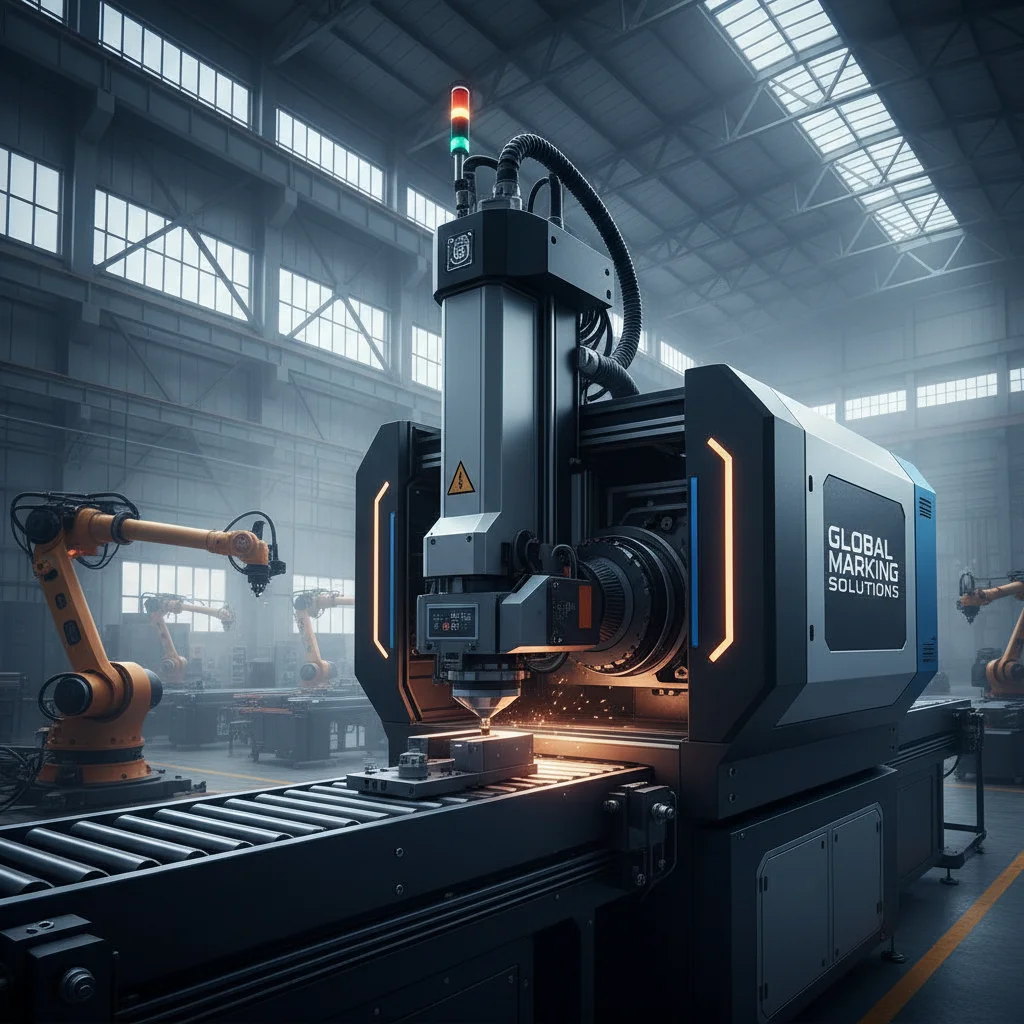
The effectiveness of Laser coding depends heavily on the synchronization between the marking head and the conveyor system. For high-speed production lines, such as those producing tons of wire per shift, the system must be capable of marking on the fly, ensuring that the production speed is not hindered by the identification process.
Durability and scalability are the primary drivers for adopting Laser coding in the manufacturing sector. By removing the need for ink cartridges and solvents, companies reduce their environmental footprint while simultaneously increasing the reliability of their product tracking systems.
Furthermore, the precision of the beam allows for the creation of micro-marks that are invisible to the naked eye but readable by industrial scanners. This adds an extra layer of security against counterfeiting, which is critical for high-security installations like prisons and military bases.
Technical Performance and Efficiency Metrics
When evaluating the efficiency of a marking system, manufacturers look at the balance between throughput and mark quality. In high-volume environments, the ability to maintain a consistent mark depth and contrast across thousands of units is the benchmark of a professional-grade system.
The following data illustrates the comparative performance ratings of different marking methodologies used in heavy industrial environments, focusing on permanence, speed, and operational cost.
Comparative Efficiency of Laser coding Methodologies
Global Applications Across Security and Infrastructure
Across the globe, from the border posts of North America to the industrial zones of Southeast Asia, the need for verified security materials is paramount. In these regions, the application of identification technology ensures that high-tensile wire and security fencing meet specific regional certifications, such as the IOWA type standards.
Beyond security, these systems are used in the automotive and aerospace sectors to track every single bolt and bracket. In disaster-relief operations, where modular housing and temporary fencing are deployed rapidly, permanent marks help NGOs and governments manage assets in chaotic environments.
Long-Term Economic and Operational Value
The transition from manual or ink-based labeling to an automated laser-based system represents a significant shift in ROI. While the initial investment is higher, the total cost of ownership is drastically reduced through the elimination of consumables and the reduction of labor-intensive quality checks.
From a logical perspective, the reliability of a permanent mark reduces the risk of product recalls and legal liabilities. When a security failure occurs, the ability to trace the exact production shift and raw material batch allows for targeted corrections rather than expensive, wide-scale replacements.
Emotionally, this provides peace of mind to the end-user. Whether it is a prison warden or a border patrol agent, knowing that the equipment installed was manufactured under strict, traceable quality controls fosters a sense of trust and reliability in the infrastructure.
Future Innovations in Digital Traceability
The future of industrial marking lies in the convergence of laser technology and the Internet of Things (IoT). We are moving toward a world where a mark is not just a static piece of information, but a gateway to a digital twin of the product, accessible via a smartphone scan.
Green energy initiatives are also driving the development of more energy-efficient laser sources. New materials and pulsing techniques are allowing for even faster marking speeds with lower power consumption, aligning industrial growth with global sustainability goals.
As automation continues to evolve, we expect to see AI-driven vision systems that inspect the mark in real-time, automatically adjusting the laser parameters to compensate for material variations, ensuring 100% consistency regardless of the raw material source.
Core Analysis of Traceability Technology Implementation
| Technology Tier |
Permanence Level |
Integration Speed |
Cost per Unit |
| Manual Stamping |
Medium |
Very Slow |
High (Labor) |
| Inkjet Coding |
Low |
Fast |
Medium (Ink) |
| Fiber Laser |
Extreme |
Very Fast |
Very Low |
| CO2 Laser |
High |
Fast |
Low |
| UV Laser |
High |
Medium |
Medium |
| Dot Peen |
High |
Slow |
Low |
FAQS
The primary benefits include permanent marks that do not fade or rub off, the elimination of expensive consumables like ink and solvents, and significantly higher marking speeds. This makes it far more suitable for industrial materials like galvanized steel or PVC-coated wire used in security fencing.
Yes, professional systems are designed for "on-the-fly" marking. They integrate with the machine's conveyor or feeding system, allowing products to be marked without stopping the line, thus maintaining a production capacity of 1 ton per shift or more without bottlenecks.
No, when properly calibrated, the process removes or alters only a microscopic layer of the surface. It does not create deep structural stress points, ensuring that the high-tensile properties of security wire remain intact.
It is incredibly simple. Since the process is digital, operators can change the text, serial numbers, or QR codes via a software interface in seconds, eliminating the need to replace physical dies or stamps.
Compared to inkjet systems, maintenance is minimal. There are no nozzles to clog or ink tanks to refill. Maintenance primarily consists of keeping the lens clean and ensuring the cooling system is functioning properly.
Absolutely. The software allows for complete customization of fonts, sizes, and data formats to meet specific regional or government requirements, such as those needed for international border security projects.
Conclusion
In conclusion, the adoption of Laser coding represents a critical leap forward for industrial manufacturers seeking to harmonize high-volume production with absolute traceability. By replacing outdated marking methods with a permanent, digital solution, companies can ensure the integrity of their security products while significantly reducing operational costs and environmental impact.
As we look toward a future defined by smarter factories and stricter global standards, the ability to embed indelible data into every product will be a key competitive advantage. We encourage manufacturers to embrace these automated marking solutions to enhance their ROI and guarantee the highest levels of security and trust for their global clients. Visit our website: www.topstarlasers.com