The global manufacturing landscape is undergoing a seismic shift toward precision and efficiency, with the emergence of advanced joining technologies leading the charge. In the realm of high-end equipment fabrication, the ability to join metals with surgical precision while maintaining structural integrity is no longer a luxury but a competitive necessity. This evolution is driving industries to move away from cumbersome traditional methods toward more agile, high-energy solutions that reduce waste and accelerate production cycles.
Across the automotive, aerospace, and medical device sectors, the demand for seamless joints and minimal thermal distortion has intensified. Traditional welding often requires extensive post-process grinding and polishing, which adds significant labor costs and increases the risk of material fatigue. The industry is now seeking a balance between the robustness of industrial-grade bonds and the finesse of high-precision engineering to meet the rigorous standards of modern ISO certifications.
Among these innovations, laser welding has emerged as a transformative force, offering a portable yet powerful alternative to stationary welding stations. By utilizing a high-energy laser beam to precisely melt metal, this technology enables the fabrication of complex structures and large workpieces without the need for exhaustive specialized certifications. It represents a bridge between industrial power and operational flexibility, redefining how we approach metal assembly.

The Fundamentals of Handheld Laser Welding
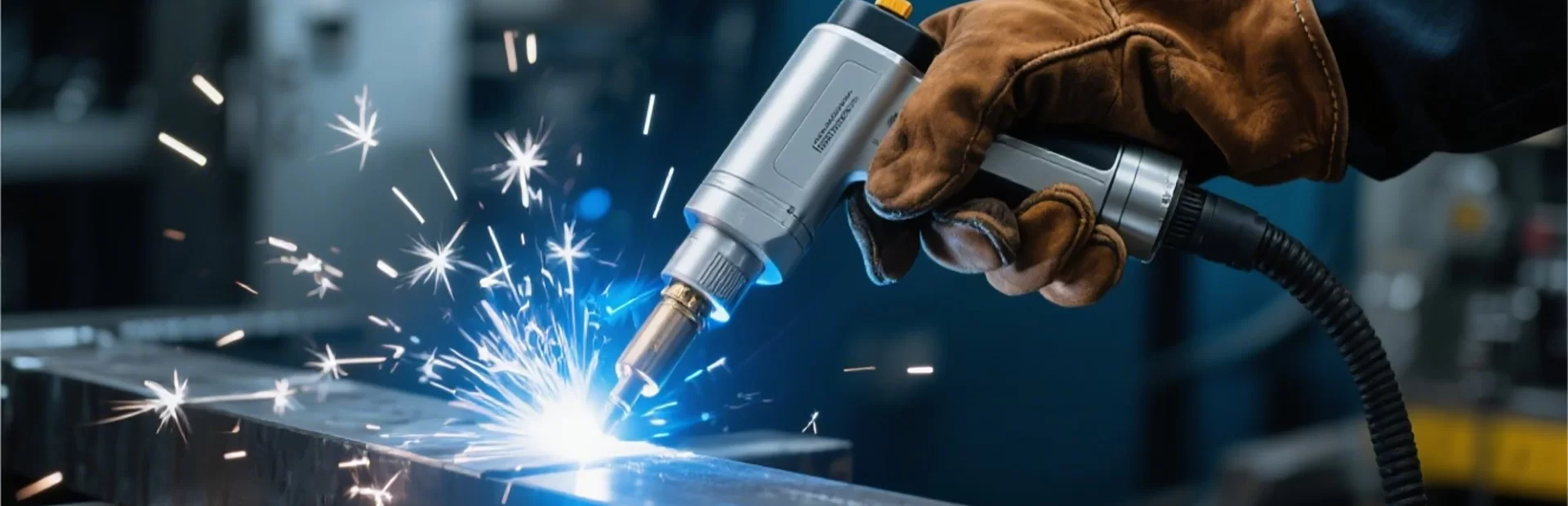
Handheld laser welding represents a new generation of portable equipment designed to solve the inherent challenges of on-site fabrication. Unlike traditional stationary systems, this technology combines a flexible main unit with a lightweight handheld torch, allowing operators to navigate large workpieces and complex geometries with ease. The process utilizes a concentrated beam of light to melt the base metal, creating a deep and narrow weld that is far more precise than arc welding.
One of the most significant breakthroughs of this system is its accessibility. It lowers the barrier to entry for industrial-grade joining, as it does not require the years of specialized training typically associated with TIG or MIG welding. This democratizes high-precision manufacturing, allowing novice welders to produce aesthetically pleasing and structurally sound seams with a simple "pull" motion, drastically reducing the reliance on highly certified labor.
Core Technical Advantages and Speed
The most immediate benefit of adopting this technology is the staggering increase in production velocity. Handheld laser welding systems are approximately 2 to 10 times faster than traditional welding methods. This leap in speed is not just about the movement of the torch, but about the efficiency of the heat transfer, which allows for rapid solidification and shorter cycle times per component.
Beyond speed, the visual and ergonomic impact is substantial. The process is designed to be eye-friendly, reducing the intense glare and spatter associated with traditional arcs. This improvement in the working environment leads to less operator fatigue and a higher consistency in weld quality over long shifts, which is critical for maintaining industrial standards in high-volume manufacturing.
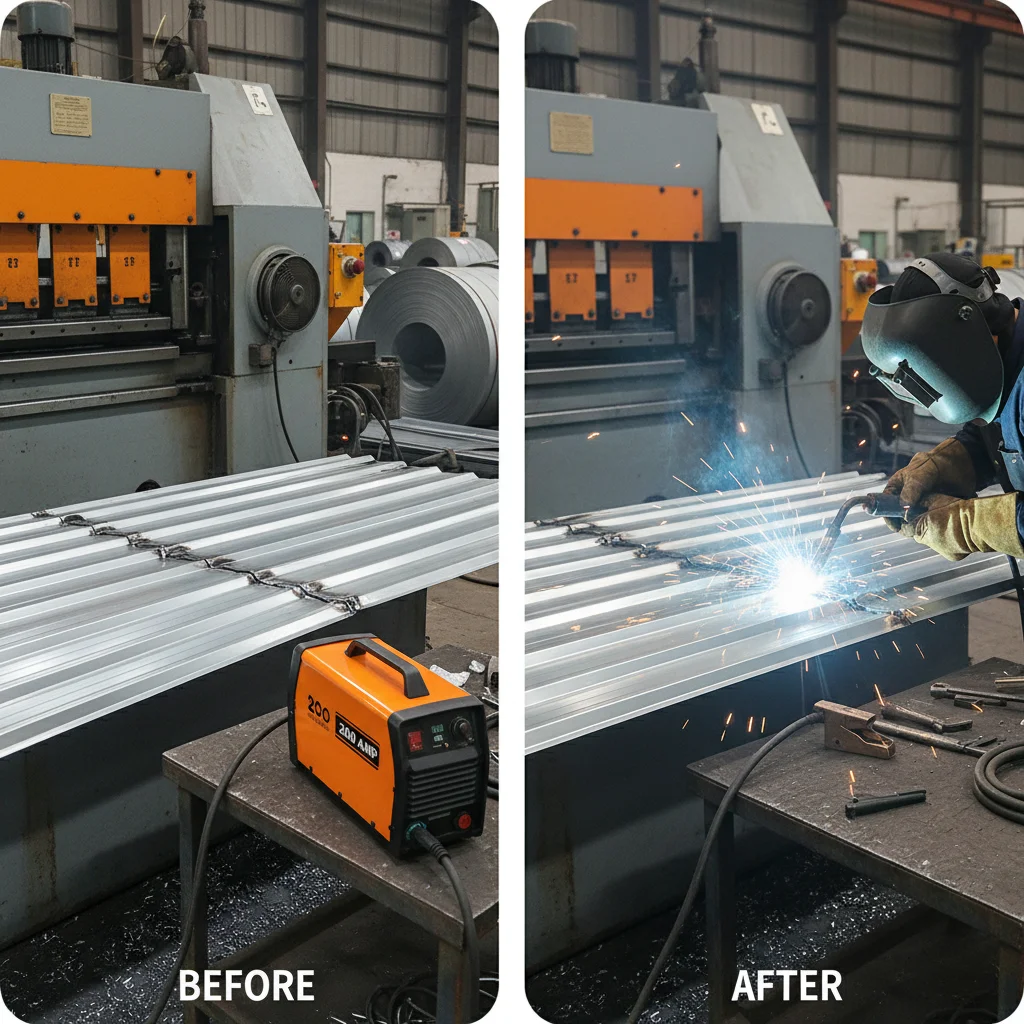
Furthermore, the reduction in post-processing is a major cost-saver. Because the laser creates a smooth, beautiful weld seam in a single pass, the need for additional polishing and grinding is minimized. This removes an entire stage from the production line, saving countless man-hours and reducing the consumption of abrasive materials, directly impacting the bottom line of the fabrication shop.
Versatility Across Metal Materials
The adaptability of laser welding allows it to be deployed across a wide spectrum of industrial metals. Whether dealing with the corrosion resistance of stainless steel or the lightweight requirements of aluminum alloys, the system adjusts to the thermal conductivity of the material to ensure a secure bond without compromising the metal's properties.
For more challenging materials like carbon steel and galvanized sheets, the high-precision laser welding head overcomes traditional pitfalls. By expanding the tolerance range of the processed component and optimizing the weld width, the system prevents the common issue of burn-through and ensures that the weld remains stable and scar-free.
This versatility extends to the use of filler wires for gap bridging. The integration of stepping motor-driven wire feeders allows for precise delivery of materials like 4043 aluminum (1.0-1.2mm diameter), ensuring that even wider gaps are filled uniformly. This makes the technology suitable for everything from thin-walled tubes to heavy-duty industrial frames.
Performance Analysis of Power Variants
Selecting the right power level is crucial for optimizing the efficiency of laser welding operations. The 1500W variant is ideal for light-duty applications and thinner materials, offering a compact footprint and efficient water-cooling. In contrast, the 2000W and 3000W models provide deeper penetration and the ability to handle thicker gauges of steel and aluminum, making them the preferred choice for heavy machinery manufacturing.
The transition from 1500W to 3000W not only increases penetration depth but also allows for wider wobble widths (up to 8mm in the 3000W model), which is essential for filling larger gaps and ensuring weld stability. This scalability allows a facility to standardize its equipment while tailoring the specific power output to the task at hand, from delicate medical instruments to robust industrial valves.
Efficiency Ratings of Laser Welding Power Levels
Precision Engineering and User Experience
The user-centric design of the handheld system is evident in its detailed accessories. The inclusion of a dedicated gun holding rack and a protective machine body case ensures that the delicate welding torch is shielded from dust and accidental damage, extending the lifespan of the equipment. Furthermore, the rotary lens design of the protective lenses allows each piece to be used up to six times, significantly reducing the frequency and cost of consumables.
Operational precision is further enhanced by the exclusive focus adjustment fixture, which makes it simple for operators to calibrate the laser focus with extreme accuracy. This ensures that the energy is delivered exactly where it is needed, maintaining a consistent weld bead and reducing the likelihood of material warping. Combined with the red light positioning system, the operator can align the weld path with confidence before the arc is even struck.
Operational Safety and Quality Control
Safety and quality are integrated directly into the hardware through intelligent monitoring systems. A key feature is the gas monitor function, which continuously tracks the supply of Nitrogen, Argon, or Air. If the gas pressure drops or the supply is interrupted, the machine triggers an immediate alarm, preventing the formation of porous or contaminated welds that could lead to structural failure.
The system's flexibility is augmented by its digital memory, allowing operators to store up to 30 different parameter setting packages. This means that once a perfect weld is achieved for a specific material and thickness, it can be saved and recalled instantly, eliminating the guesswork and variability that often plague manual welding processes.
To further ensure long-term reliability, the equipment is backed by independent R&D teams specializing in fiber laser sources and robotic software. This ensures that the machines are not just static tools but evolving platforms that can be upgraded to incorporate new welding processes, such as 6-axis robot integration, ensuring the facility remains at the cutting edge of technology.
Industrial Application and Specification Comparison
Implementing laser welding in a production environment requires a clear understanding of the trade-offs between different power grades. From the compact 1500W unit to the industrial-strength 3000W machine, each model is optimized for different throughput requirements and material thicknesses. The choice often depends on the desired penetration depth and the gap tolerance of the workpieces.
In real-world scenarios, such as the fabrication of gas compressors or valve housings, the ability to switch between continuous and pulse modes is invaluable. Continuous mode provides maximum speed for long seams, while pulse mode allows for controlled heat input on delicate parts, preventing deformation in thin-walled stainless steel components.
Ultimately, the synergy of water-cooling, precise wire feeding, and high-power fiber lasers makes this technology a cornerstone of modern "Smart Manufacturing." By reducing the skill gap and increasing the output per hour, companies can scale their production without proportionally increasing their labor costs.
Comparative Analysis of Handheld Laser Welding Model Specifications
| Model Grade |
Laser Power |
Input Voltage |
Max Wobble Width |
| LN-HW 1500 |
1500W |
220VAC |
0-5mm |
| LN-HW 2000 |
2000W |
220VAC |
Standard Swing |
| LN-HW 3000 |
3000W |
380VAC |
0.5-8mm |
| 1500W Series |
1500W |
220VAC |
Low-Medium |
| 2000W Series |
2000W |
220VAC |
Medium |
| 3000W Series |
3000W |
380VAC |
High |
FAQS
No, one of the primary advantages of this equipment is that it is easy to learn and operate. Even novice welders can achieve industrial-grade, beautiful welds without the need for traditional, lengthy welding certifications, making it an ideal solution for shops looking to increase productivity quickly.
This technology is highly versatile and can be used to weld a variety of metals including stainless steel, aluminum alloys, carbon steel, and galvanized steel. The high-precision head ensures stability and secure bonds across these different material properties.
The wobble function expands the laser spot, which increases the tolerance range for the processed component and the weld width. This is especially useful for filling gaps (up to 8mm in 3000W models) and ensuring a more stable and aesthetically pleasing weld formation.
The machines are equipped with a built-in gas monitor function. When the gas supply is insufficient or stops completely, the machine will trigger an alarm to remind the worker, preventing poor weld quality and ensuring the structural integrity of the joint.
The system utilizes a rotative lens design with double protective lenses. Because of this design, each piece can be used up to 6 times, which significantly reduces the frequency of replacements compared to traditional single-lens systems.
Continuous mode provides a steady beam of energy for high-speed welding of long seams. Pulse mode delivers energy in bursts, which is ideal for controlling heat input, reducing deformation on thin materials, and performing precise spot welds.
Conclusion
Handheld laser welding represents a paradigm shift in metal fabrication, combining the raw power of fiber lasers with the flexibility of handheld operation. By drastically increasing welding speeds, reducing the need for post-process polishing, and lowering the skill barrier for operators, this technology allows manufacturers to achieve higher precision and efficiency. From the intelligent gas monitoring to the scalable power options ranging from 1500W to 3000W, every aspect of the system is designed to ensure industrial-grade reliability and operational ease.
As we move toward a future of automated and digital manufacturing, integrating such agile tools is essential for any business aiming to maintain a competitive edge. Whether you are upgrading a small workshop or optimizing a large-scale production line, the transition to laser-based joining offers long-term value in terms of labor costs, material waste, and overall product quality. We invite you to explore how these solutions can transform your production capacity. Visit our website: www.topstarlasers.com