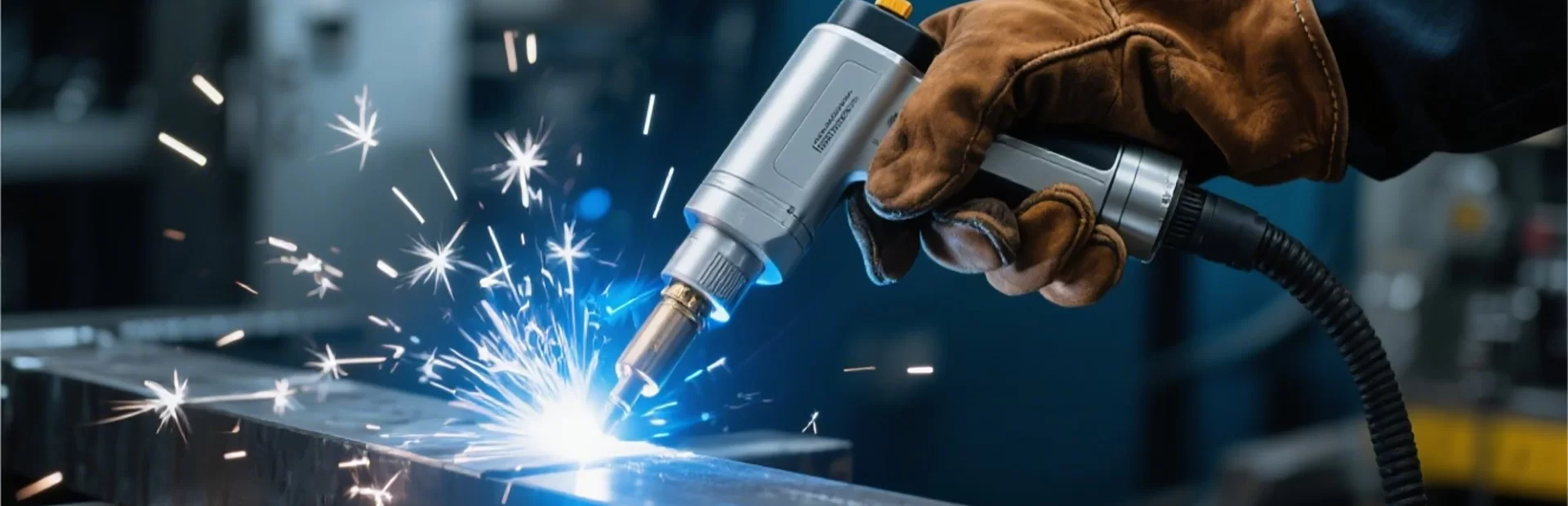
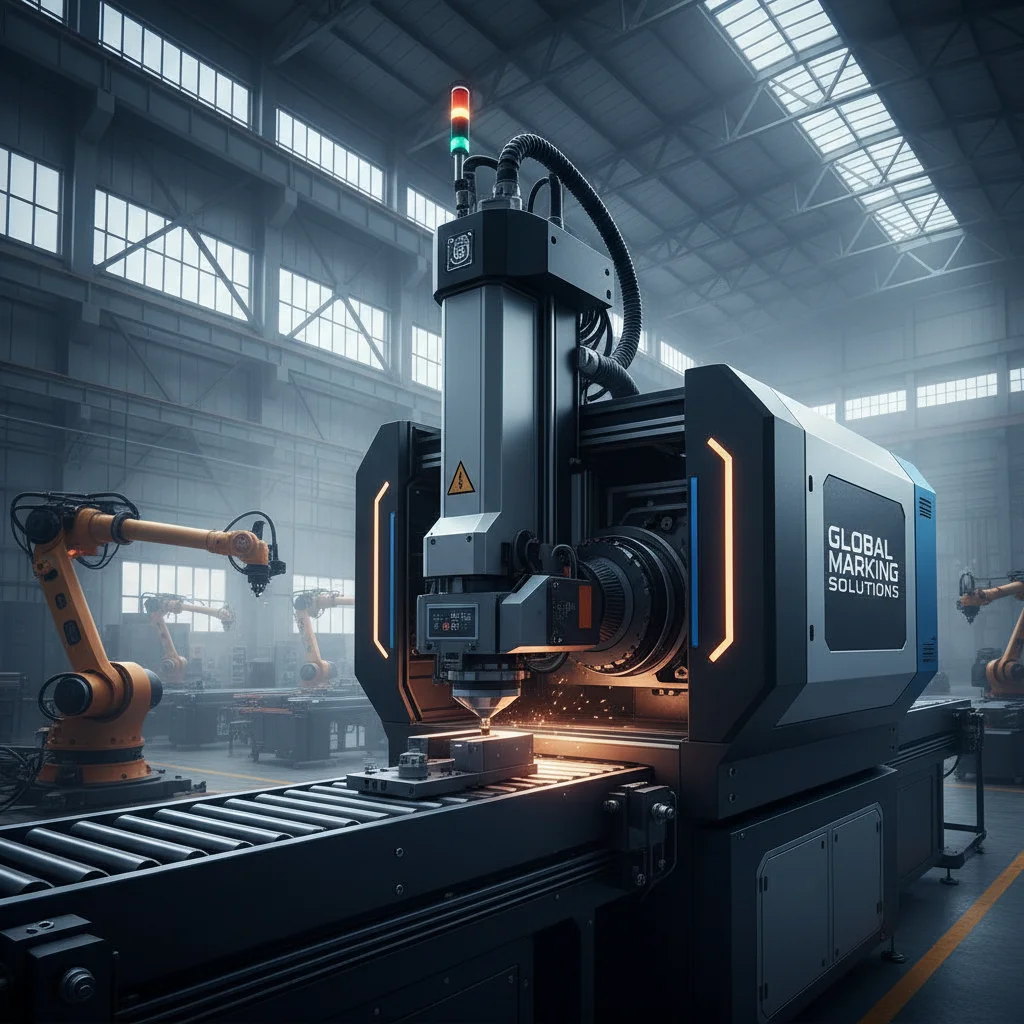
The evolution of industrial fabrication has led to the emergence of the 3 in 1 welding machine concept, where versatility and precision converge to meet the demands of modern manufacturing. In an era where production cycles are tightening and quality standards are rising, the ability to integrate multiple welding capabilities into a single streamlined workflow is no longer a luxury but a competitive necessity. By leveraging advanced robotic arms and multi-functional power sources, industries can now achieve a level of consistency that was previously impossible with manual labor.
Globally, the shift toward automation in the "3 in 1 welding machine" paradigm is driving a revolution in how complex three-dimensional structures are joined. From the automotive assembly lines of Germany to the aerospace hubs of North America, the integration of robotic precision reduces material waste and eliminates the variability caused by human fatigue. This transition is critical for sectors pursuing high output and high consistency, ensuring that every weld bead is uniform and structurally sound.
Understanding the technical synergy behind a 3 in 1 welding machine system allows manufacturers to optimize their floor space and reduce long-term operational costs. By combining flexible movement, precise software control, and powerful welding sources, these systems empower businesses to pivot quickly between different product lines, supporting the flexible manufacturing models required for today's high-mix, low-volume market demands.

Global Impact of 3 in 1 Welding Machine Automation
The global industrial landscape is witnessing a paradigm shift as the 3 in 1 welding machine approach replaces traditional, fragmented welding stations. By consolidating capabilities, manufacturers can operate 24/7 with a stability that far exceeds manual welding. This increase in productivity is essential for maintaining competitiveness in a global market governed by ISO standards and rigorous quality benchmarks.
Beyond simple speed, the impact is seen in the drastic reduction of rework and scrap rates. When a robotic system handles complex three-dimensional paths, the consistency of the weld is maintained regardless of the shift duration or environmental temperature, effectively removing the "human factor" of emotion and fatigue from the production equation.
Defining the 3 in 1 Welding Machine Framework
In simple terms, a 3 in 1 welding machine system in the context of robotic automation represents the synergy between mechanical kinematics, electronic control, and the welding power source. It is not merely a tool but a complete ecosystem where a multi-axis robotic manipulator—typically featuring six degrees of freedom (DOF)—mimics human arm movement with sub-millimeter precision.
This framework is designed to address the challenges of modern industrialization, such as the shortage of highly skilled welders and the need for extreme reliability in critical components. By integrating high-torque servo motors and absolute encoders, the system ensures that the welding torch is always oriented perfectly to the workpiece, regardless of the path's complexity.
Ultimately, this technology bridges the gap between custom craftsmanship and mass production. It allows for the creation of "Body-in-White" structures in the automotive sector or high-strength frames in construction machinery, ensuring that every joint meets the exact structural requirements mandated by safety regulations.
Core Components of Robotic Welding Systems
The mechanical architecture of a 3 in 1 welding machine is centered around the multi-axis manipulator. The base and lower arm provide the necessary reach and rotation, while the wrist (end effector) allows for the complex tilting and rotation of the welding torch, which is essential for handling three-dimensional paths.
Integration is key; the robot's "brain" (the controller) communicates with the "muscle" (the power source, such as MIG, TIG, or Laser) via high-speed industrial protocols. In a 3 in 1 welding machine setup, the controller manages travel speed, wire feed, and voltage in real-time to maintain arc stability.
Safety and programming are the final core pillars. With features like collision detection, virtual walls, and drag teaching (graphical interfaces), the 3 in 1 welding machine becomes an accessible tool for operators, allowing for rapid reprogramming and deployment without needing deep coding knowledge.
Efficiency Metrics and Production Stability
The true value of implementing a 3 in 1 welding machine lies in its ability to deliver unparalleled stability. While manual welding is subject to the fluctuations of human skill and stamina, a robotic system operates with a repeatability of ±0.03 mm, ensuring that the thousandth part produced is identical to the first.
This stability simplifies overall line management and allows for a predictable production cycle. When the travel speed and gas flow are digitally locked, the risk of oxidation or penetration failure is virtually eliminated, which is critical for high-stress components like chassis and suspension subframes.
Operational Performance of 3 in 1 Welding Machine Configurations
Global Applications Across Diverse Industries
The versatility of the 3 in 1 welding machine makes it indispensable across multiple sectors. In the automotive industry, it is the backbone of Body-in-White (BIW) production, where spot and laser welding are coordinated in cells to join stamped panels. Similarly, in aerospace, these systems ensure the extreme reliability required for engine components and aircraft structures.
Beyond heavy industry, the furniture sector utilizes these machines to balance aesthetic beauty with mass production. By producing ultra-clean welds with minimal spatter, a 3 in 1 welding machine reduces the need for secondary grinding and polishing, allowing for the rapid manufacture of office chairs and shelving units that are both durable and visually appealing.
Long-Term Economic and Social Value
From an economic perspective, while the initial investment in a 3 in 1 welding machine is higher than manual equipment, the long-term ROI is significant. Lower labor costs, reduced material waste, and the elimination of expensive rework create a leaner production model that can easily absorb the costs of the initial capital expenditure.
Socially, the transition to robotic welding is a triumph of corporate social responsibility. Workers are freed from hazardous welding fumes, intense UV light, and extreme heat. This shifts the human role from a high-risk manual laborer to a high-value system monitor or maintenance technician, improving overall health and job satisfaction.
Furthermore, the flexibility of these systems supports "high-mix, low-volume" production. This means smaller businesses can compete with larger corporations by quickly adapting their 3 in 1 welding machine lines to new designs via simple reprogramming, fostering innovation and agility in the marketplace.
Future Trends in Robotic Welding Innovation
Looking ahead, the 3 in 1 welding machine is evolving toward deeper integration with AI and "Industry 4.0" protocols. We are seeing the rise of "collaborative mode," where robots work safely alongside humans without the need for bulky safety cages, using advanced collision detection and sensors to ensure a seamless human-robot partnership.
Digital transformation is also introducing "digital twins," where a welding process is simulated in a virtual environment before being deployed to the physical 3 in 1 welding machine. This eliminates trial-and-error on actual materials, further reducing scrap and optimizing the welding path for maximum speed and minimal thermal distortion.
Sustainability is another driving force. Future iterations are focusing on lower power consumption—similar to the 225w efficiency of current compact models—and the integration of green energy sources to power the welding arc, aligning industrial growth with global environmental goals.
Technical Specifications and Performance Analysis of Robotic Welding Systems
| Performance Metric | Manual Welding | 3 in 1 Robotic System | Industrial Impact |
|---|
| Repeatability | Low (Variable) | ±0.03 mm | High Consistency |
| Production Speed | Moderate | Very High (<2.0m/s) | Increased Throughput |
| Operational Time | 8-10 Hours/Day | 24/7 Continuous | Maximized Asset Use |
| Material Waste | Significant (Rework) | Minimal | Cost Reduction |
| Worker Safety | High Risk (Fumes/UV) | Safe (Monitoring) | CSR Compliance |
| Flexibility | Skill Dependent | Program Driven | Agile Manufacturing |
FAQS
In a robotic context, a 3 in 1 welding machine refers to the integrated system combining a multi-axis robotic arm, a precise digital controller, and a versatile welding power source (such as Laser, MIG, or TIG). This combination allows the system to handle complex 3D paths, maintain consistent speed, and adjust welding parameters in real-time, providing a complete solution for high-precision industrial joining.
Stability is achieved through the elimination of human variability. The system uses high-torque servo motors and absolute encoders to ensure a repeatability of ±0.03 mm. Because the robot does not suffer from fatigue or emotional fluctuation, the welding speed, arc length, and wire feed remain constant across 24/7 operations, resulting in uniform weld beads and zero structural failure due to human error.
Yes, absolutely. One of the greatest advantages of these systems is their unparalleled flexibility. By using modular fixtures and graphical programming interfaces (such as drag teaching), operators can quickly reprogram the arm to weld different products. This makes it ideal for "high-mix, low-volume" manufacturing, allowing a factory to switch from one product style to another in minutes.
Professional systems include over 21 adjustable safety features. Key among these are collision detection, which stops the arm upon unexpected contact; virtual walls, which restrict the arm's movement to a safe zone; and collaboration mode, which allows the robot to work safely alongside human operators by limiting speed and force.
While the initial investment is higher, costs are reduced through three main channels: lower labor expenditure due to the reduced need for highly skilled manual welders, a significant drop in material costs thanks to lower scrap and rework rates, and increased throughput from 24/7 operational capabilities.
The automotive industry is the largest user, particularly for Body-in-White and chassis assembly. Other key sectors include aerospace (engine components), construction machinery (excavator frames), rail transportation (high-speed rail skins), and the metal furniture industry, where aesthetic finish and volume are equally important.
Conclusion
The integration of the 3 in 1 welding machine framework into industrial workflows represents a critical leap toward total manufacturing optimization. By synthesizing robotic kinematics, intelligent control, and powerful welding sources, industries can finally decouple high-volume output from quality variability. The result is a production environment that is not only more efficient and cost-effective but also significantly safer for the human workforce.
As we look toward the future of "Industry 4.0," the continued evolution of AI-driven path optimization and collaborative robotics will further democratize access to this technology. For manufacturers seeking to remain competitive in an increasingly demanding global market, transitioning to automated, versatile welding systems is no longer optional—it is the path to sustainable growth. Visit our website to explore these solutions: www.topstarlaser.com