Shijiazhuang Topstar
International Trading Co., Ltd.


Get In Touch
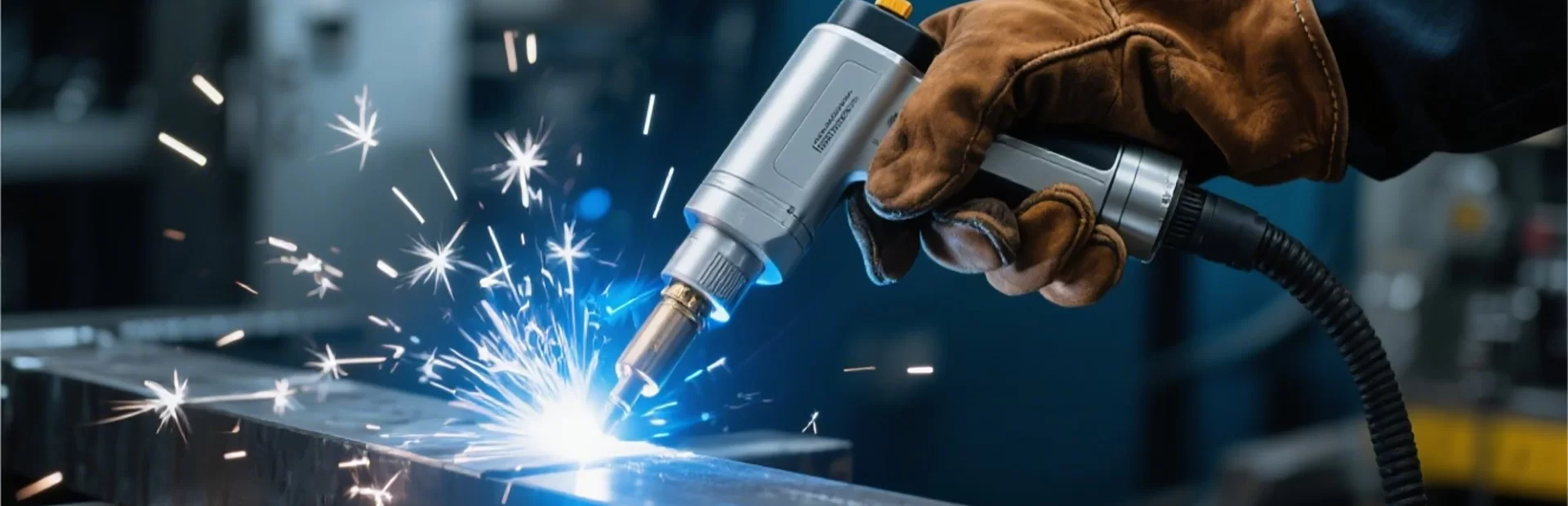
Determining the right budget for metal joining equipment often leads buyers to a critical crossroad: balancing initial expenditure against long-term operational efficiency. While many search for the most competitive handheld welding machine price, the actual value is found in the intersection of power stability, beam quality, and the reduction of post-weld processing.
The shift toward handheld laser systems represents a fundamental change in industrial fabrication. Unlike traditional TIG or MIG welding, these systems prioritize agility and lower skill barriers, allowing operators to achieve high-precision welds without years of specialized training. This democratization of precision welding is driving a surge in demand across the general equipment manufacturing sector.
To make an informed procurement decision, it is essential to look beyond the sticker price and analyze the technical variables that influence the total cost of ownership. The following analysis explores the mechanics of pricing and the performance metrics that separate industrial-grade tools from entry-level alternatives.


For decades, the manufacturing of general equipment—ranging from pumps to compressors—relied on stationary welding stations or bulky manual equipment. However, the introduction of handheld laser welders has disrupted this workflow by combining the power of industrial lasers with the flexibility of a handheld torch.
This transition is not merely about convenience; it is about throughput. Handheld systems significantly reduce the time required for part positioning and setup, allowing for a continuous production flow that was previously only possible with fully automated robotic cells.
The variance in the handheld welding machine price is primarily driven by the source of the laser and the quality of the optical components. Fiber lasers, which are the industry standard for these machines, vary in efficiency based on the pump diodes and the cladding quality of the fiber. Higher-end machines utilize superior optics that maintain a tighter focal point over longer periods, reducing the frequency of lens replacements.
Another critical cost factor is the cooling system. Industrial-grade welders require sophisticated water chillers to prevent the laser source from overheating during continuous operation. A cheap cooling unit may save initial costs but often leads to thermal instability, resulting in inconsistent weld penetration and increased downtime.
Furthermore, the control interface and safety features add to the investment. Systems that include advanced "wobble" technology—which oscillates the laser beam to create wider, more stable weld beads—require more complex galvanometers and software, increasing the price but vastly improving the machine's versatility across different material thicknesses.
When analyzing the ROI of a laser welding system, the initial purchase price is only a fraction of the equation. The true value is measured by the reduction in consumables and the decrease in labor hours. Traditional welding requires significant filler material and extensive grinding to remove slag and spatter; laser welding produces a clean, narrow bead that often requires zero post-processing.
The real economic advantage of handheld laser technology lies in the drastic reduction of the "skill gap." By simplifying the welding process, companies can transition general operators into productive welders with minimal training, effectively decoupling production capacity from the scarcity of certified master welders.
Energy efficiency also plays a role in long-term sustainability. Modern fiber lasers convert electrical energy to light with much higher efficiency than CO2 lasers or traditional arc welding. For a factory operating multiple shifts, the cumulative savings in electricity and the reduction in ventilation requirements (due to lower fume generation) create a compelling financial case for the upgrade.
To understand how pricing relates to performance, we can examine a relative index. Low-cost machines often sacrifice beam stability and cooling efficiency, which manifests as a lower "Reliability Score" over 1,000 hours of operation. Mid-range systems provide a balanced approach, while high-end industrial units prioritize maximum uptime and material versatility.
The following index illustrates the relative trade-offs between different price tiers. While the "Entry Level" provides the lowest barrier to entry, the "Industrial Tier" offers the highest efficiency per weld meter, effectively lowering the cost per part in high-volume environments.
In a typical industrial setting, such as the production of air compressors or valve housings, the ability to weld complex geometries without rotating the workpiece is invaluable. A manufacturer evaluating handheld systems often finds that the mobility of the laser head allows for the welding of oversized frames that would otherwise require an expensive, large-format CNC laser bed.
Moreover, in sectors like security fencing—where companies might also utilize wire mesh making machines—the integration of laser welding can accelerate the assembly of support structures. By choosing a system with appropriate power ratings for the specific metal gauge, facilities can optimize their production cycle and reduce the overall footprint of their welding department.
The industry is currently moving toward a hybrid model where handheld laser systems serve as the bridge to full automation. We are seeing a rise in "cobot" (collaborative robot) integration, where a handheld laser head is mounted on a robotic arm. This allows for a seamless transition: a human operator can perform complex, low-volume welds manually, and then program the arm to repeat those same paths for high-volume batches.
Another significant trend is the advancement in safety sensors. New generation machines incorporate real-time distance sensors and "dead-man" switches that instantly terminate the beam if the nozzle loses contact with the material or if an obstruction is detected. This reduces the reliance on heavy safety enclosures and allows the laser to be used in more open factory environments.
As we look forward, the focus is shifting toward multi-material capabilities. Research into adjusted pulse frequencies and beam modulation is allowing laser systems to join dissimilar metals—such as aluminum to steel—with fewer defects. This opens new possibilities in the manufacture of lightweight, high-strength industrial components.
Selecting the right system requires a structured evaluation of the specific application. A buyer should not simply look for the lowest handheld welding machine price but should instead map their requirements—material thickness, daily volume, and operator skill level—against the available technical tiers.
The primary trade-off is usually between "Versatility" and "Specialization." A generic mid-range machine is suitable for most small-to-medium workshops, but a custom OEM solution is necessary for factories with unique voltage requirements or specific local safety standards.
To facilitate this process, the following framework compares typical selection criteria across different operational needs, ensuring that the chosen equipment aligns with the intended production output.
| Volume Level | Recommended Power | Key Priority | Relative ROI Speed |
|---|---|---|---|
| Prototype/Low | 1kW - 1.5kW | Flexibility | Moderate |
| Small Batch | 1.5kW - 2kW | Weld Quality | Fast |
| Medium Scale | 2kW - 3kW | Consistency | Very Fast |
| High Volume | 3kW+ | Uptime/Speed | Immediate |
| Custom OEM | Tailored | Compliance | Strategic |
| Diversified | Multi-power | Versatility | Stable |
The price is primarily determined by the laser source power (wattage), the quality of the fiber optic cable, and the sophistication of the cooling system. Additionally, advanced features like "wobble" technology, which allows for wider weld beads, and the inclusion of high-end safety sensors will increase the initial cost but typically lower the cost per part by increasing weld quality and operator safety.
Yes, provided the wattage is sufficient. While 1kW systems are ideal for thin sheets, 2kW to 3kW systems can penetrate significantly thicker materials. For very thick plates, the "deep penetration" mode is used, though it may require a filler wire feeder to ensure a structural fillet weld. Always verify the penetration depth specifications relative to your material gauge before purchasing.
Handheld laser welding has a significantly lower learning curve. TIG welding requires precise coordination of the torch, filler rod, and foot pedal, often taking months or years to master. In contrast, handheld laser systems are more "point-and-shoot," with the machine handling much of the thermal management. This allows general operators to achieve industrial-grade results after just a few days of training.
The most critical maintenance task is keeping the protective lens clean. Dust or spatter on the lens can cause the laser beam to reflect, potentially damaging the head. Regular checks of the water chiller's coolant levels and filter replacements are also essential to prevent overheating. Unlike traditional welders, there are no electrodes to replace, which reduces daily maintenance time.
Calculate the ROI by comparing the current cost of labor and consumables (filler wire, shielding gas, grinding discs) against the projected costs of the laser system. Factor in the increase in production speed (typically 3-10x faster than TIG) and the elimination of post-weld grinding. In most high-volume environments, the reduction in labor hours alone allows the machine to pay for itself within 6 to 18 months.
They are highly effective for stainless steel, carbon steel, aluminum, and some alloys. However, highly reflective materials (like copper or polished brass) require specific laser wavelengths or higher power settings to avoid beam reflection. For these materials, it is recommended to use a system specifically optimized for high-reflectivity metals to ensure both safety and weld integrity.
The procurement of a handheld laser welding system should be viewed as a strategic investment in production agility rather than a simple equipment purchase. By focusing on the technical drivers of quality—such as beam stability and cooling efficiency—manufacturers can avoid the pitfalls of under-powered systems and realize the full potential of their workforce.
As the industry moves toward greater automation and material versatility, the ability to integrate these flexible tools into a wider production ecosystem—alongside air compressors and marking systems—will define the next generation of competitive manufacturing. The goal is not just to find the lowest price, but to secure the highest operational value.