


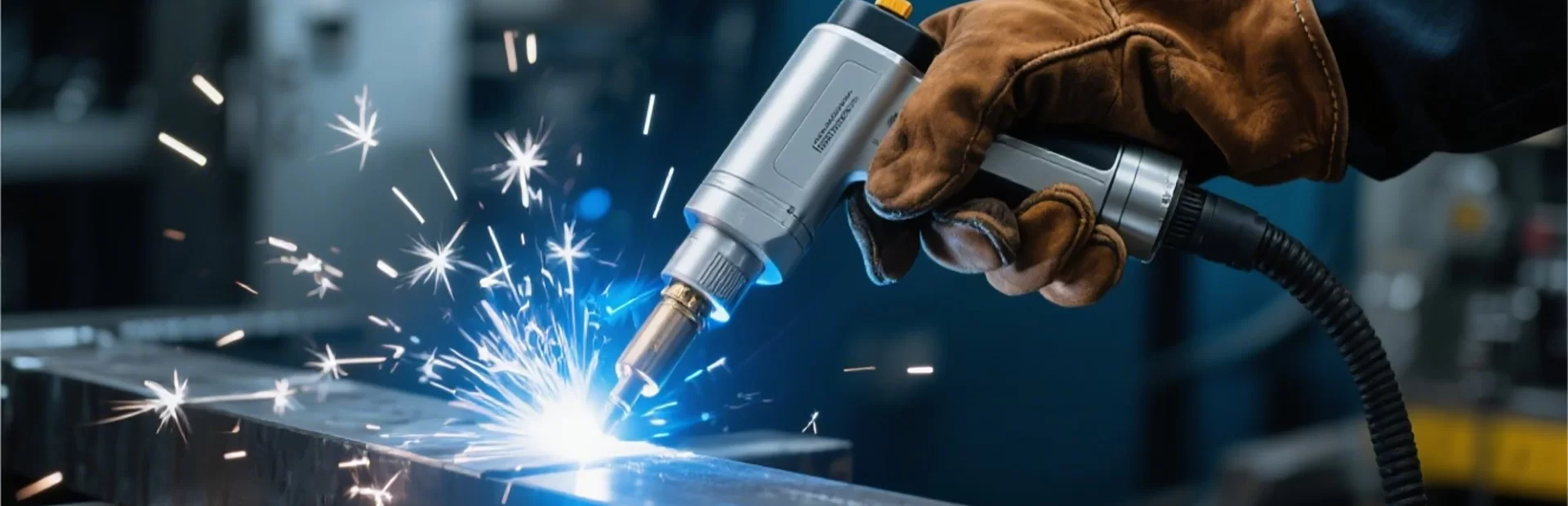

Procuring industrial welding equipment requires a sophisticated understanding of how technical specifications translate into operational costs. When businesses search for the latest welding machine price, they are often looking beyond the initial purchase figure to find the total cost of ownership. This guide examines the financial and technical variables that determine the market value of modern welding systems, focusing on the shift toward high-precision laser solutions.
The transition from traditional arc welding to laser-based systems has redefined the B2B procurement landscape. For manufacturers in the metal processing and electronics sectors, the investment decision is no longer based solely on the lowest entry price but on the machine's ability to reduce waste and increase throughput. Understanding the intersection of power wattage, beam stability, and automation capabilities is essential for making an informed commercial decision.
In the following analysis, we will break down the primary drivers of equipment costs and provide a framework for evaluating supplier capabilities. Readers will learn how to differentiate between basic entry-level units and industrial-grade systems, and how to identify the specific technical features that justify a higher price point in a professional manufacturing environment.
Industrial Welding Cost Dynamics
The pricing of modern welding machinery is governed by a complex interplay of component quality, energy efficiency, and the level of integration. In the current market, the most significant price volatility is found in laser welding systems due to the rapid evolution of fiber and CO2 laser sources. A professional-grade system integrates high-frequency power supplies and precision optics that significantly raise the initial capital expenditure but lower the per-unit production cost. For instance, the shift toward handheld laser welders has democratized high-precision joining, offering a middle ground between manual MIG/TIG welding and fully automated robotic cells. These systems require specialized safety housing and cooling mechanisms, which are critical cost drivers. Furthermore, the integration of software for real-time monitoring and parameter adjustment adds a layer of value that separates industrial tools from hobbyist equipment. When analyzing the market, buyers must account for the "hidden" costs of installation, operator training, and safety compliance, as these often constitute a significant percentage of the total project budget.
Evaluating Welding Equipment Value
Determining the actual value of a welding system involves mapping technical specifications to the specific needs of the production line. The following seven dimensions provide a comprehensive framework for analyzing whether a machine's price aligns with its industrial utility.
Laser Technology Impact
The choice of laser source—whether fiber, CO2, or hybrid—is the primary determinant of the machine's cost and application range. Fiber lasers are typically more expensive initially but offer superior energy efficiency and lower maintenance costs compared to CO2 systems. The value lies in the ability to weld reflective metals with higher speed and deeper penetration, directly impacting the ROI of the equipment.
| Technology Type | Initial Investment | Operational Cost | Primary Application |
|---|---|---|---|
| Fiber Laser | High | Low | Precision Metal Joining |
| CO2 Laser | Medium | Medium | Non-Metallic/Hybrid |
| TIG/MIG Arc | Low | High (Consumables) | Heavy Structural Steel |
| Plasma Welding | Medium | Medium | Thick Plate Welding |
| Handheld Laser | Medium-High | Low | Flexible Small Batch |
| Robotic Integration | Very High | Lowest (Per Unit) | Mass Production |
Power Output and Pricing
Wattage directly correlates with the thickness of materials that can be processed and the speed of the weld. Increasing the power output requires more robust cooling systems and higher-grade laser diodes, which incrementally increases the price. Buyers must avoid over-specifying power, as excess wattage can lead to material burn-through and unnecessary energy expenditure without providing additional production value.
Material Compatibility Factors
The ability to handle diverse materials—from aluminum and stainless steel to specialized alloys—requires specific optical configurations and shielding gas setups. Systems designed for multi-material versatility command a premium because they utilize more advanced beam-shaping technology to prevent spatter and ensure weld integrity across different thermal conductivity profiles.
Operational Efficiency Costs
High-value machines focus on reducing the "cycle time" per weld. This is achieved through faster galvanometer steering and optimized focal lengths. A machine that reduces a weld cycle by even 10% can save thousands of man-hours annually, effectively paying for its higher initial cost through increased factory throughput and reduced labor overhead.
Consumable Expenditure Analysis
A critical part of the value equation is the cost of consumables such as nozzles, shielding gases, and electrode tips. Laser systems drastically reduce these costs compared to traditional welding. When evaluating a quote, the "cost per weld" is a more accurate metric than the purchase price, as low-cost machines often have expensive, proprietary replacement parts.
Precision and Error Reduction
The cost of rework and scrapped parts can be devastating in high-precision industries like electronics or pharmaceuticals. Premium equipment provides tighter repeatability (often within ±0.002mm) and more stable beam profiles. Investing in high-precision machinery is essentially an insurance policy against the high costs of quality failure and customer returns.
Long-term Maintenance Value
Industrial longevity is determined by the quality of the internal components, such as the RF power supply or the cooling pump. Equipment backed by a professional trade partner, like SHIJIAZHUANG TOPSTAR INTERNATIONAL TRADING CO., LTD., offers better lifecycle value through reliable sourcing of parts and technical support, ensuring the machine does not become a stranded asset due to a lack of maintenance.
FAQ
What primarily drives the cost of industrial laser welding machines?
The primary cost drivers are the laser source (fiber vs CO2), the power wattage, and the precision of the optical delivery system. Higher power and tighter tolerances require more expensive components and advanced cooling systems to maintain stability during continuous operation.
Is a handheld laser welder more cost-effective than a robotic system?
For small to medium batch production and complex geometries, handheld systems are more cost-effective due to lower initial investment and higher flexibility. However, for massive, repetitive production lines, robotic systems offer the lowest cost-per-unit through total automation.
How does laser welding reduce long-term operational expenses?
Laser welding reduces expenses by eliminating many traditional consumables, reducing energy consumption per weld, and significantly lowering the rate of material waste. The increased speed of the process also reduces labor costs per completed part.
What should I check in a supplier's technical specifications?
Buyers should focus on the repeatability precision, the lifespan of the laser source (e.g., 20,000 work hours), the cooling method (air vs water), and the compatibility of the control software with existing industrial operating systems.
Do the latest welding machine prices include installation and training?
This varies by supplier. Professional trade companies typically offer a "one-stop" service that includes sourcing, quality inspection, and after-sales support. It is critical to confirm if technical commissioning is included in the quoted price to avoid unexpected costs.
Which material is the most expensive to weld with laser technology?
Highly reflective metals like copper and gold are the most challenging and expensive to weld, as they require specific laser wavelengths (typically green or blue lasers) or extremely high power densities to overcome the material's natural reflection of the beam.
References and further reading
- Industrial Laser Physics and Thermal Interaction Standards for Metal Processing.
- Guide to Total Cost of Ownership (TCO) for B2B Manufacturing Equipment.
- Comparative Analysis of Fiber vs CO2 Laser Efficiency in Automotive Welding.


