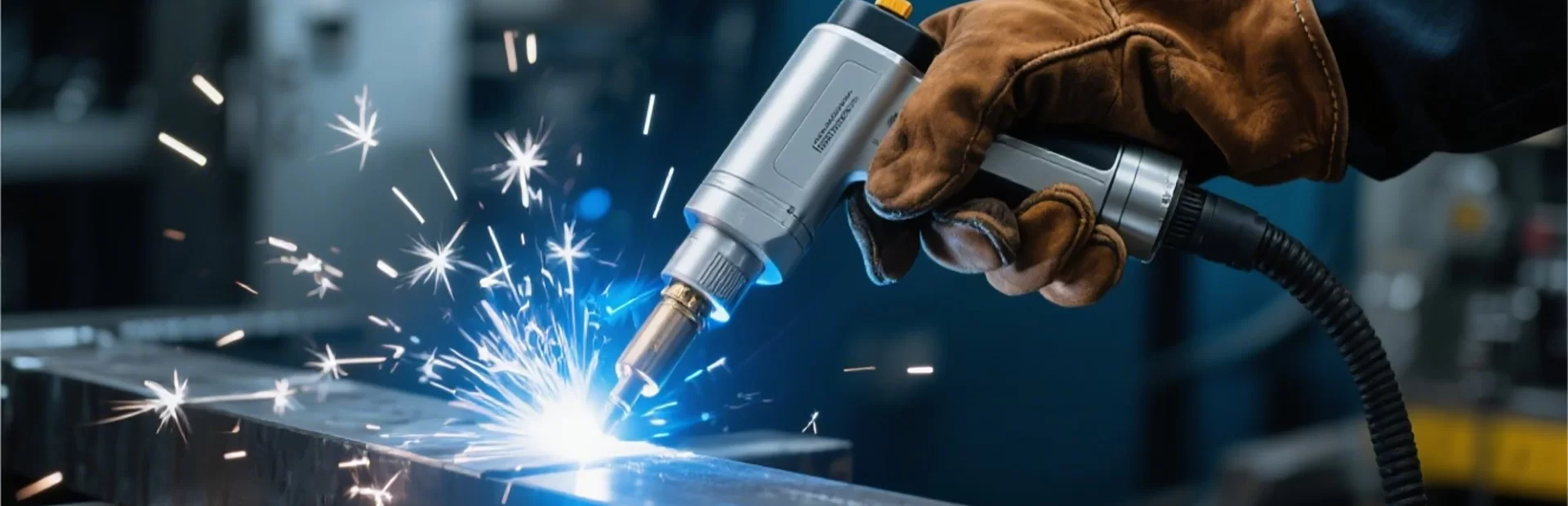
In the competitive landscape of industrial manufacturing, the search for a good welding machine often defines the boundary between operational stagnation and scalable growth. For sectors like storage racking and general machinery, the precision of a joint is not merely an aesthetic detail but a critical safety requirement that determines the load-bearing capacity of the final product.
Global industrial standards, including those set by ISO, emphasize that the integrity of structural welds is paramount to preventing catastrophic failures in warehouses and factories. Transitioning from manual labor to an automated, high-precision system allows manufacturers to eliminate human error, ensuring that every beam and side hook is fused with absolute consistency.
Understanding the nuances of what constitutes a good welding machine empowers business owners to optimize their production lines, reduce waste, and significantly lower the cost per unit. By integrating advanced laser and PLC technologies, companies can transform their workshop from a labor-intensive environment into a high-throughput digital powerhouse.

Global Relevance of High-Precision Welding
Across the globe, the demand for structural steel components—particularly for logistics and warehousing—has surged with the rise of e-commerce. This growth necessitates a good welding machine that can handle massive volumes without sacrificing the structural integrity of the joints. In regions like Southeast Asia and North America, the transition toward automated welding is no longer a luxury but a necessity to meet strict ISO safety certifications.
The challenge lies in the inconsistency of manual welding, where fatigue leads to "cold starts" or uneven penetration. By implementing standardized automated systems, manufacturers can ensure that every storage beam can support the rated tonnage, reducing the risk of industrial accidents and enhancing the global supply chain's reliability.
Defining the Modern Good Welding Machine
In simple terms, a good welding machine is an integrated system that combines high-energy thermal sources (such as lasers or advanced inverters) with precise motion control to join metals with minimal distortion. In the context of storage beam and side hook production, it is a machine that transforms a raw steel profile into a load-bearing architectural component with surgical precision.
Modern definitions have shifted from merely "creating a bond" to "optimizing the metallurgical property" of the joint. This means the equipment must manage the Heat Affected Zone (HAZ) effectively, ensuring that the metal does not become brittle or warp during the fusion process, which is critical for the longevity of industrial shelving.
Furthermore, the "good" in a welding machine now refers to its intelligence. A machine equipped with PLC (Programmable Logic Controller) and a user-friendly HMI (Human Machine Interface) allows non-specialist operators to produce professional-grade welds, bridging the global skilled labor gap in the manufacturing sector.
Core Components of Industrial Welding Excellence
The foundation of a good welding machine starts with its power source. Whether it is a fiber laser source for deep penetration or a high-frequency inverter for arc stability, the ability to maintain a constant current and voltage under varying load conditions is what separates industrial-grade equipment from entry-level tools.
Precision control mechanisms, such as "Wobble Technology" or beam oscillation, are essential. These features allow the machine to bridge natural gaps between the storage beam and the side hook, creating a wider, more robust weld bead that distributes stress more evenly across the joint, significantly increasing the weight capacity of the rack.
Finally, durability and scalability are key. A professional system is built with heavy-duty fixtures and cooling systems that allow for 24/7 operation. The ability to quickly swap jigs and update software parameters ensures the machine can adapt to different beam sizes and materials without requiring a complete hardware overhaul.
Practical Applications in Rack Manufacturing
In the production of pallet racking, the application of a good welding machine is most evident in the connection of side hooks to beams. These hooks are the primary points of failure in a shelving system; therefore, utilizing a laser beam welding process allows for a "keyhole" effect, where the energy penetrates deep into the metal, creating a fusion that is often stronger than the base material itself.
Beyond simple assembly, these machines are used in high-volume industrial zones to create specialized heavy-duty H-beams. By automating the sequence—feeding, clamping, welding, and cooling—manufacturers can achieve a throughput that would require dozens of manual welders, drastically reducing the time-to-market for large-scale warehouse projects.
Performance Comparison of Welding Machine Technologies
Long-Term Value and Economic Advantages
Investing in a good welding machine provides tangible economic benefits that extend far beyond the initial purchase price. The primary gain is the drastic reduction in "cost per weld." By automating the process, companies reduce their reliance on high-cost certified welding specialists for repetitive tasks, instead utilizing a single operator to oversee multiple automated cells.
Moreover, the long-term value is found in sustainability and waste reduction. High-precision welding minimizes spatter and reduces the need for post-weld grinding and polishing. This not only saves on consumables and labor but also aligns with green manufacturing initiatives by lowering energy consumption per joint and reducing the carbon footprint of the production facility.
Future Innovations in Welding Technology
The future of the good welding machine is inextricably linked to Industry 4.0. We are seeing the integration of AI-driven vision systems that can detect gaps in real-time and adjust the laser power or wobble frequency on the fly. This "closed-loop" feedback system ensures that even if raw materials have slight dimensional variances, the resulting weld remains perfect.
Digital twins are also becoming prevalent, allowing engineers to simulate the welding process in a virtual environment before the first piece of steel is ever cut. This reduces prototype waste and allows for the optimization of the welding path to further increase speed and reduce heat distortion.
Additionally, the shift toward hybrid welding—combining laser precision with the gap-filling capabilities of arc welding—promises to make machines even more versatile. This evolution will allow a single production line to handle everything from thin-walled light shelving to massive industrial cantilever racks without changing equipment.
Challenges and Strategic Selection Solutions
One of the most common challenges in selecting a good welding machine is the balance between versatility and specialization. A machine optimized for thin-gauge steel may struggle with heavy-duty H-beams, while a high-power system might burn through lighter materials. The solution lies in selecting equipment with adjustable fixtures and programmable parameter presets.
Another hurdle is the initial capital expenditure. While automated systems are expensive, the "total cost of ownership" (TCO) is lower when considering the reduction in scrap rates and labor costs. Expert insight suggests focusing on machines with modular designs, allowing for future upgrades to the laser source or control software without replacing the entire chassis.
Finally, safety remains a critical concern. The transition to high-power lasers requires strict adherence to safety protocols, including enclosed cabinets and fume extraction. A truly professional solution integrates these safety features into the machine's core design rather than treating them as optional add-ons.
Analysis of Selection Criteria for Industrial Welding Systems
| Feature Dimension |
Manual Welding |
Semi-Auto System |
Laser Auto-Welder |
| Production Speed |
Low |
Medium |
Very High |
| Joint Consistency |
Variable |
Stable |
Absolute |
| Labor Requirement |
High Skill |
Medium Skill |
Operator Level |
| Heat Distortion |
High |
Medium |
Minimal |
| Energy Efficiency |
Low |
Medium |
High |
| Initial Investment |
Low |
Medium |
High |
FAQS
A good welding machine for this specific application must offer a combination of high penetration (to ensure the side hook doesn't snap under load), high automation (to maintain volume), and precision control over heat to prevent the beams from warping. Laser systems are generally considered the gold standard because they provide deep welds with minimal thermal distortion.
Not entirely, but it shifts their role. While the machine handles the repetitive, high-volume welding of beams and hooks, your skilled welders transition into "equipment technicians" and "quality controllers." This allows you to produce 5-10x more output with the same headcount, focusing human expertise on complex custom jobs rather than monotonous repetitions.
Yes, provided the machine is properly enclosed. Professional laser welders isolate the operator from ultraviolet light, sparks, and toxic fumes through protective shielding. Furthermore, because the process is automated, the operator is not holding the torch, eliminating the risk of electric shock or physical strain from long-term manual operation.
Choose a laser welder if your priority is maximum speed, minimal post-weld grinding, and the highest possible joint strength. Choose MIG/MAG if you are working with extremely thick, heavy-gauge structural steel where massive filler material is required and aesthetic finish is less critical than raw bulk mass.
Because most modern machines use touch-screen interfaces with saved presets, basic operation training usually takes only a few days. The operator simply selects the product model from the library, loads the part, and starts the cycle. Detailed technical training for parameter adjustment usually takes 1-2 weeks.
Depending on production volume, most manufacturers see a full return on investment (ROI) within 12 to 24 months. This is achieved through a combination of reduced labor costs, lower scrap rates, and the ability to take on larger contracts due to increased production capacity.
Conclusion
In summary, the implementation of a good welding machine is a strategic catalyst for any manufacturing business aiming for industrial leadership. By transitioning from the unpredictability of manual welding to the precision of automated laser systems, companies can ensure unmatched structural integrity, drastically increase their throughput, and lower their long-term operational costs.
As we move toward a future of smart factories and sustainable production, the ability to weld with precision and efficiency will be the primary differentiator in the marketplace. We encourage manufacturers to evaluate their current bottlenecks and invest in technology that not only meets today's demand but scales for tomorrow's innovations. Visit our website for more professional solutions: www.topstarlaser.com