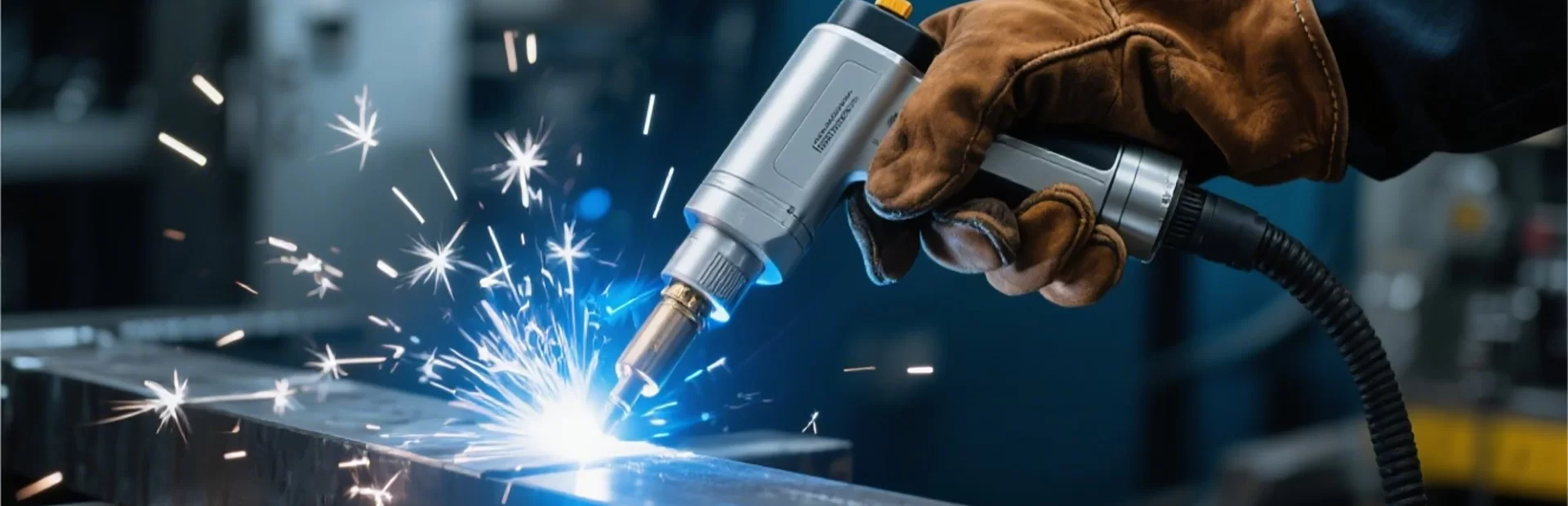
The global industrial landscape is currently undergoing a massive shift toward precision automation, where the role of specialized welding machine suppliers has become pivotal. As manufacturers move away from traditional joining methods that cause material deformation, the demand for high-precision laser systems has surged. These suppliers provide the critical infrastructure needed to achieve micron-level accuracy in sectors ranging from consumer electronics to aerospace.
Choosing the right partnership among various welding machine suppliers can determine the operational efficiency of a modern factory. The integration of CNC automation and high-power laser optics allows for the seamless welding of high-reflectivity metals like gold and copper, which were previously challenging to join. This evolution in technology ensures that structural integrity is maintained while minimizing the heat-affected zone.
For companies aiming to scale their production without compromising quality, collaborating with expert welding machine suppliers is the most effective strategy to implement non-contact, energy-efficient processes. By leveraging advancedAutomatic Platform Laser Welding Machines, industries can transition from manual, error-prone labor to consistent, automated excellence.

The Evolution of Precision Welding Technology
The transition from traditional thermal welding, such as TIG or MIG, to laser-based automation represents a paradigm shift in manufacturing. Traditional methods often suffered from broad heat-affected zones, leading to material warping and imprecise seams. By utilizing focused laser beams, today's systems can achieve micron-level beam spots, ensuring that only the necessary area is melted, which preserves the microstructural integrity of the workpiece.
Modern systems integrated by leading providers now feature CNC platforms that enable 24/7 continuous production. This shift not only increases throughput but also eliminates the variability associated with human error. The ability to weld high-melting-point and high-reflectivity metals—such as silver, gold, and aluminum—has opened new possibilities for the miniaturization of electronic components and the development of high-efficiency electric vehicle batteries.
Defining the Role of Modern Welding Machine Suppliers
Welding machine suppliers are no longer just hardware vendors; they have evolved into integrated solution providers. In the context of high-precision laser welding, a supplier's value lies in their ability to synchronize laser optics, CNC motion control, and thermal management systems. This holistic approach ensures that the equipment can handle diverse materials while maintaining strict adherence to ISO quality standards.
From a humanitarian and industrial perspective, these suppliers enable the production of critical medical devices, such as surgical tools and pacemakers. Because laser welding is a non-contact process and requires no filler wire, it minimizes contamination risks, making it an essential technology for ISO Class 5 cleanroom environments. This level of purity is impossible to achieve with conventional welding methods.
Ultimately, the goal of professional suppliers is to reduce the total cost of ownership for the manufacturer. By providing data traceability—where every process parameter for each weld is recorded—they help factories implement rigorous quality control and production tracking, reducing waste and increasing the overall reliability of the final product.
Core Components of Automatic Laser Systems
The efficiency of an automatic platform system depends heavily on the laser power options provided by welding machine suppliers. With choices typically ranging from 1500W to 3000W, manufacturers can tailor the equipment to their specific material thickness. For instance, the 1500W model is the "sweet spot" for automotive sensors, while 3000W is necessary for thicker industrial structural components.
CNC automation is the heart of the system, allowing for complex trajectory design via intelligent software. Expert welding machine suppliers ensure that their platforms use high-precision linear motors to achieve sub-millimeter repeatability. This allows for rapid adjustments in power and speed to accommodate small-batch, high-variety production needs without stopping the line.
Thermal monitoring and industrial water cooling are equally critical. High-power lasers generate significant heat that must be managed to prevent the equipment from overheating and to maintain the material's integrity. Top-tier welding machine suppliers integrate advanced cooling loops that stabilize the operating temperature between 0-40°C, ensuring consistent bead quality across thousands of cycles.
Global Applications and Industry Use Cases
Across the globe, from the electronics hubs of East Asia to the automotive plants in Europe and North America, automatic laser welding is transforming production. In the consumer electronics sector, the ability to weld miniaturized components without causing thermal damage is crucial for the next generation of smartphones and wearables. The precision provided by specialized equipment ensures a sleek, aesthetically perfect finish with zero deformation.
In the new energy vehicle (NEV) sector, the demand for high-stability joins in battery packs has led to a surge in the adoption of laser systems. Welding high-reflectivity copper busbars requires a high energy density that only laser sources can provide. By automating this process, manufacturers can ensure that every connection is identical, which is critical for the safety and longevity of high-voltage battery systems.
Efficiency Comparison by Welding Machine Suppliers' Technology
Long-term Value of Laser Automation
The investment return on transitioning to an automated laser system is evident when comparing production speeds and labor costs. While traditional welding requires highly skilled laborers to manage the torch and heat, laser automation is operator-managed. This drastically reduces the reliance on a shrinking pool of skilled welders and lowers the long-term payroll costs.
Furthermore, the sustainability aspect cannot be overlooked. Laser welding is a near-zero waste process because it typically relies on autogenous welding (where the base metals melt and fuse without the need for filler wire). This not only reduces material costs but also minimizes the environmental footprint of the manufacturing process, aligning with global green energy initiatives.
Future Trends in Industrial Joining
The future of industrial joining is heading toward complete digital integration. We are seeing a move toward "Smart Welding," where AI-driven software can analyze the weld pool in real-time and adjust laser power instantaneously to compensate for material impurities or fit-up gaps. This will further push the boundaries of repeatability and consistency.
Another emerging trend is the expansion of dissimilar metal welding. As we develop new alloys for aerospace and hydrogen fuel cells, the ability to join metals with vastly different melting points will be critical. Laser systems are uniquely positioned to handle this by controlling energy density with extreme precision, preventing the formation of brittle intermetallic compounds.
Sustainability will also drive the adoption of more energy-efficient laser sources. New fiber laser technologies are reducing power consumption while increasing beam quality. As welding machine suppliers continue to innovate, the barrier to entry for small-to-medium enterprises (SMEs) will drop, democratizing high-precision manufacturing.
Overcoming Challenges in Material Welding
One of the primary challenges in the industry has always been the reflectivity of metals like copper and gold. These materials act like mirrors, reflecting the laser energy back into the source and potentially damaging the equipment. To solve this, modern suppliers have developed specialized beam delivery systems and higher power thresholds (2000W+) to "break through" the reflectivity barrier.
Another common hurdle is the seam requirement. For a successful autogenous weld, the gap must be less than 15% of the material thickness. Achieving this requires high-precision jigging and CNC alignment. By integrating the welding head with a high-accuracy platform, the system ensures that the beam is always perfectly centered on the seam, regardless of the workpiece complexity.
Finally, the challenge of the Heat-Affected Zone (HAZ) is addressed through the use of ultra-short pulses. By focusing energy into a micron-level spot, the material reaches the melting point and solidifies almost instantly. This prevents heat from spreading to surrounding areas, which is essential for maintaining the structural integrity of thin-walled components.
Comparative Analysis of Laser Welding Specifications
| Power Model | Max Thickness | Ideal Application | Precision Rating |
|---|
| 1500W | ≤ 3mm | Auto Sensors / Electronics | 9.8/10 |
| 2000W | ≤ 5mm | Battery Busbars / Medical | 9.5/10 |
| 3000W | ≤ 8mm | Industrial Frames / Heavy Duty | 9.2/10 |
| Custom High-Power | Variable | Aerospace / Marine | 9.0/10 |
| Low-Power Precision | < 1mm | Micro-Electronics / Jewelry | 9.9/10 |
| Hybrid Systems | Variable | Dissimilar Metal Joining | 9.4/10 |
FAQS
For high-reflectivity metals like copper and aluminum, we strongly recommend 2000W or higher. These materials reflect a significant portion of the laser energy, meaning higher initial power is required to overcome the reflectivity barrier, stabilize the melt pool, and ensure a deep, strong weld.
Yes, the automatic platform laser welding machine is highly capable of joining different metals. By precisely controlling the energy density and cooling rates via CNC software, the system can create a strong bond between dissimilar materials while minimizing the formation of fragile intermetallic layers.
CNC automation utilizes high-precision linear motors to ensure sub-millimeter repeatability. Unlike manual welding, which is subject to human fatigue and hand-shake, CNC automation ensures that every weld in a batch is identical in depth, width, and trajectory, leading to zero-defect production.
Absolutely. Because it is a non-contact process that requires no filler wire, it eliminates the risk of contamination. This makes it ideal for manufacturing surgical tools or pacemakers, and it can be seamlessly integrated into ISO Class 5 cleanrooms to meet strict healthcare standards.
The 1500W model is optimized for materials with a thickness of up to 3mm. This power level is considered the "sweet spot" for the majority of consumer electronics and automotive sensors, providing the perfect balance between energy efficiency and penetration depth.
The HAZ is reduced by focusing the laser energy into a micron-level spot and utilizing ultra-short pulses. This causes the material to reach its melting point and solidify almost instantly, which prevents the heat from conducting into the surrounding material and prevents warping.
Conclusion
The integration of automatic platform laser welding represents a quantum leap in industrial joining technology. By combining high-power laser optics with CNC precision, manufacturers can now achieve micron-level accuracy, weld high-reflectivity metals with ease, and drastically reduce production costs. The ability to maintain zero-contamination environments and ensure total data traceability makes these systems an indispensable asset for any modern factory aiming for ISO-level quality.
As the industry moves toward smarter, more sustainable manufacturing, the partnership between factories and advanced welding machine suppliers will be the catalyst for innovation. We encourage manufacturers to evaluate their current thermal deformation rates and labor costs to see how an upgrade to laser automation can provide a rapid return on investment. To explore these high-precision solutions further, visit our website: www.topstarlaser.com.