Look, I’ve been running around construction sites for fifteen years, and let me tell you, things are changing fast. It used to be you knew what you were getting – same steel, same wire, same old process. But now? Everybody’s talking about prefabrication, modular construction, faster turnaround… it all boils down to needing better, more reliable welded wire mesh machine suppliers. And honestly, the demands are getting tougher. It's not just about making the mesh anymore, it's about getting it on site when we need it, in the exact shape, with the right finish.
You wouldn’t believe how many suppliers claim they can handle complex shapes, then you get to the site and it's a disaster. Have you noticed how many drawings are inaccurate? Seriously. A millimeter off on a CAD file translates to a whole lot of wasted time and frustration on the ground. That’s why finding a welded wire mesh machine supplier who actually understands construction, not just manufacturing, is crucial.
It’s all about mitigating risk now. We used to just build it, hoping for the best. Now, everything has to be documented, inspected, and guaranteed. And that pressure is going all the way down the supply chain. It's impacting everything.
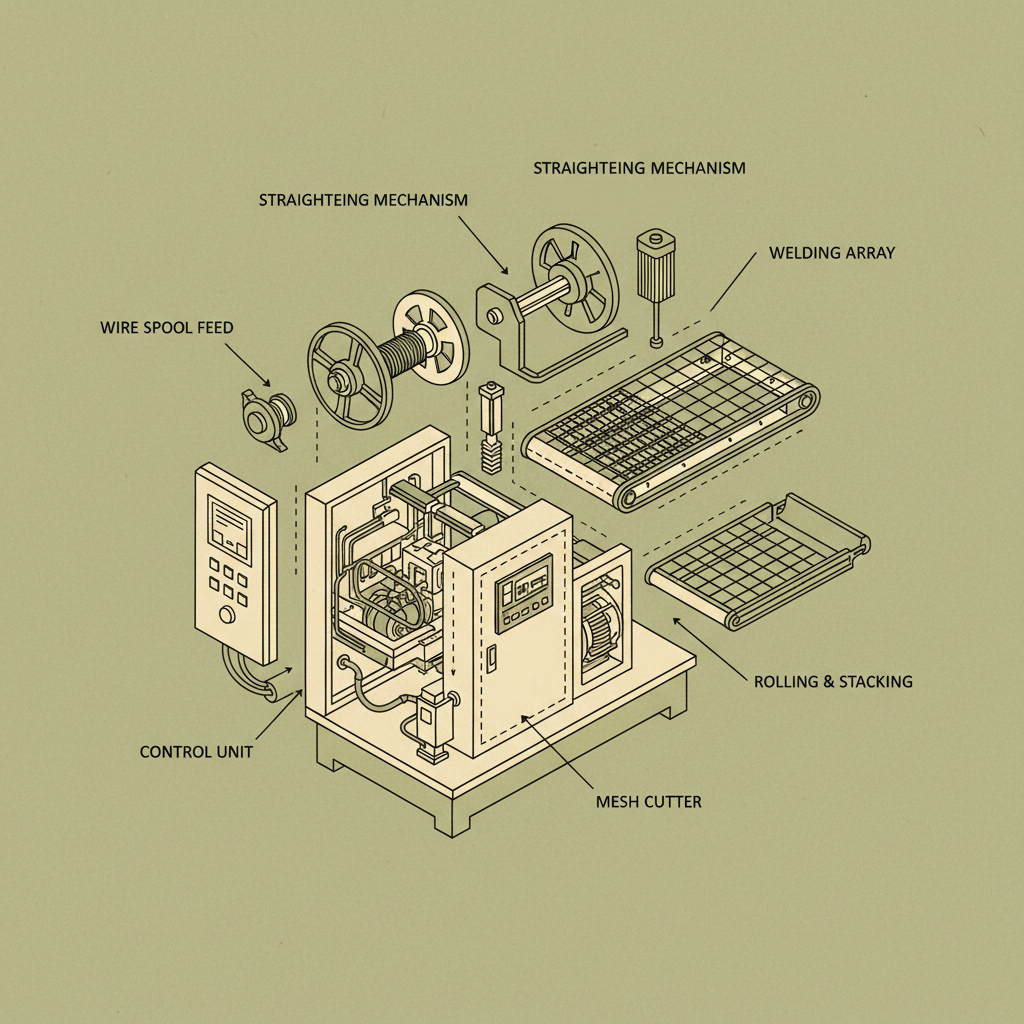
The Current Landscape of Welded Wire Mesh Machine Suppliers
To be honest, the market’s flooded. A ton of suppliers, mostly in China, but quality control is… spotty. I encountered this at a factory in Jiangsu province last time. They said they had ISO 9001 certification, but the welding was inconsistent, and the wire gauge was all over the place. It’s the smaller, family-run operations that often surprise you, good and bad. They’re agile, willing to work with you, but sometimes lack the robust quality assurance systems of the bigger players.
What’s trending? Everyone wants automation. Faster machines, robotic welding, less human intervention. Makes sense, labor costs are rising. But it's not just about speed. It's about precision, repeatability, and minimizing waste. And it’s about finding a welded wire mesh machine supplier that’s willing to actually invest in R&D. Not just copy what everyone else is doing.
Common Design Pitfalls & Material Selection
Strangely, a lot of designers don't fully understand the limitations of the material. They’ll spec a wire mesh for a retaining wall that’s simply not strong enough, or they’ll choose a galvanized coating that won’t hold up in a corrosive environment. It's crucial to work with a supplier who can advise on material selection – the grade of steel, the type of coating, the wire diameter… all of it matters.
I’ve seen so many projects delayed because the mesh wasn’t properly designed for the load it was supposed to bear. Or the wire was too brittle and cracked during installation. It seems simple, but it requires a deep understanding of mechanics and material science. And frankly, most folks just don't have it.
Then there's the trap of trying to save a few bucks by using cheaper materials. Yeah, it lowers the initial cost, but it’ll bite you in the rear end later with premature failure and costly repairs. You get what you pay for, plain and simple. And it often ends up costing more in the long run.
Real-World Testing & On-Site Handling
Forget the lab tests, okay? I care about how it performs when my guys are actually trying to install it in the pouring rain, or in the blazing sun. That's where a good welded wire mesh machine supplier comes in – they should be willing to let you test their product in real-world conditions. I once pushed a supplier to do a pull test on a muddy construction site. They initially resisted, said it wasn't "scientific" enough. But after some… persuasion… they agreed. And guess what? The mesh failed.
Handling is huge. Some of these meshes are sharp as hell, and the wire coatings can flake off easily. We need something that can be moved and installed without causing injuries or contaminating the site. The smell matters too, believe it or not. Some galvanizing processes leave a really unpleasant odor. It sounds silly, but it impacts morale.
We regularly do bend tests, shear tests, and corrosion resistance tests – not in a fancy lab, but right there on the job site. We expose it to the elements, subject it to stress, and see how it holds up. That’s the only way to be sure.
Application Variety & Performance Metrics
The applications are endless – everything from reinforcing concrete to animal enclosures to security fencing. But the performance metrics change depending on the application. For concrete reinforcement, you need tensile strength and ductility. For fencing, you need corrosion resistance and impact strength. For animal enclosures, you need… well, you need something the animals can't chew through.
I’ve seen welded wire mesh used in some surprisingly creative ways. One contractor used it to create a temporary bridge across a ravine. Another used it to build a retaining wall for a landslide-prone hillside. It's amazing what you can do with a little ingenuity and a good supply of mesh.
Performance Metrics for Different Welded Wire Mesh Machine Supplier Applications
Advantages, Disadvantages, & Customization Options
Look, welded wire mesh is strong, relatively lightweight, and cost-effective. Those are the big wins. But it's not perfect. It can corrode, it can bend, and it can be difficult to work with if you don’t have the right tools. And frankly, some of the suppliers are just terrible at communication.
Customization is key. We had a project in Vegas where the architect wanted a very specific mesh pattern for a façade. The supplier initially said it wasn't possible. But after some back-and-forth, and a few sketches, they figured it out. It took longer, and it cost more, but they delivered. That's the kind of flexibility you need. And, believe me, a good welded wire mesh machine supplier will always find a way.
Case Study: A Shenzhen Smart Home Manufacturer
Last month, that small boss in Shenzhen who makes smart home devices insisted on changing the interface to after we had already ordered a huge batch of mesh for the enclosures. Said he wanted to be "future-proof." The result? We had to scrap a ton of mesh and reorder everything to the new specifications. Cost us a fortune and delayed the project by two weeks. Lesson learned: get everything finalized before you place the order.
Anyway, I think he was just trying to one-up his competitors. It was purely a marketing thing. He’d seen some article about USB-C being the future, and jumped on the bandwagon without thinking it through. That’s Shenzhen for ya.
The supplier, to their credit, handled it pretty well. They absorbed some of the cost and expedited the new order. But it still hurt. It highlights the importance of having a supplier who’s not just a manufacturer, but a partner. Someone who’s willing to work with you to solve problems, even when those problems are self-inflicted.
Material Properties Comparison
So, you're looking at different materials, right? Here's a rough breakdown. This isn't scientific, it's just what I've seen work (and not work) in the field.
Galvanized steel is the workhorse – cheap, strong enough for most applications. Stainless steel is for when you need serious corrosion resistance – think coastal environments or chemical plants. PVC-coated mesh is good for animal enclosures – prevents rust and protects the animals from sharp edges.
And then you've got these fancy alloys… titanium, duplex steel… Those are for specialized applications where cost isn't a concern. Frankly, I haven’t used those much. They're usually overkill.
Material Comparison for Welded Wire Mesh Applications
| Material Type |
Corrosion Resistance (1-10) |
Tensile Strength (1-10) |
Cost (1-10) – 1 is cheapest |
| Galvanized Steel |
6 |
8 |
2 |
| Stainless Steel (304) |
9 |
7 |
6 |
| PVC Coated Steel |
7 |
7 |
4 |
| Galvanized Steel – Epoxy Coated |
8 |
8 |
5 |
| Aluminum Mesh |
8 |
5 |
7 |
| Stainless Steel (316) |
10 |
7 |
9 |
FAQS
Honestly, it's not thinking about the environment. They get something cheap, thinking it'll be fine, but then it rusts through in a year. You gotta consider exposure to salt, chemicals, UV rays… it all matters. A good supplier will ask those questions before you even place the order. It's not about upselling, it’s about getting you the right product.
Critical. Absolutely critical. A weak weld is a failure point. Look for consistent weld spacing, smooth welds, and no signs of burn-through. If the welds look sketchy, they are sketchy. Don't risk it. Especially in applications where safety is a concern, like retaining walls or guardrails.
Yeah, absolutely. Most of the steel and aluminum used in mesh is fully recyclable. But it depends on the coating. PVC coatings can be a problem. It's worth asking your supplier about their recycling policies and whether they'll take back scrap material.
Lead times vary wildly. It depends on the complexity of the order, the material availability, and the supplier’s workload. Expect at least 4-6 weeks for something truly custom. And don't be afraid to push back if they give you a ridiculously short timeline – they're probably overpromising. It’s better to get a realistic estimate and plan accordingly.
Keep it dry! That’s the big one. Stack it off the ground on pallets, and cover it with a tarp. Rust is your enemy. Also, be careful about handling it – those sharp edges can cut you. Wear gloves and be mindful of where you're stepping.
Galvanized steel has a zinc coating that protects it from rust. It's cheaper, but the coating can get scratched or damaged over time. Stainless steel is inherently corrosion-resistant, but it’s more expensive. For most applications, galvanized is fine, but if you're in a harsh environment, stainless is the way to go.
Conclusion
Ultimately, finding a reliable welded wire mesh machine supplier isn’t just about getting the lowest price. It’s about finding a partner who understands your needs, can deliver quality products on time, and can provide technical support when you need it. It’s about mitigating risk and ensuring that your project stays on schedule and within budget. There's a lot of hype out there, a lot of slick marketing… but at the end of the day, it comes down to the basics: quality materials, good workmanship, and reliable service.
And remember this: whether this thing works or not, the worker will know the moment he tightens the screw. If the mesh is flimsy, the welds are weak, or the coating is peeling, he’ll know. Trust your guys on the ground. They’re the ones who will ultimately determine whether your project succeeds or fails. welded wire mesh machine supplier can provide you with what you need.