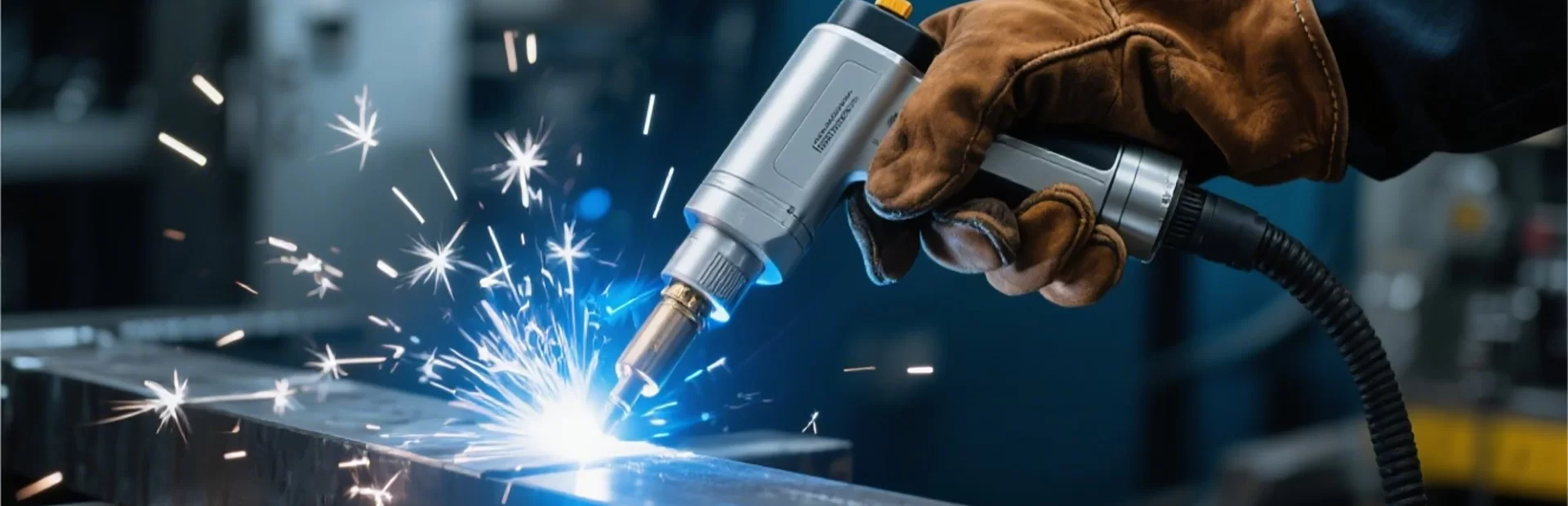
The global demand for high-security perimeter fencing has surged, leading to a critical need for precision machinery that can produce durable physical barriers at scale. While specialized tools like an argon welding machine are essential for high-end metal fabrication, the production of barbed wire requires a different kind of mechanical synchronization to ensure tensile strength and uniformity.
Modern industrial security relies on the ability to transform raw galvanized or PVC-coated wire into formidable barriers through automated twisting and knotting. The efficiency of this process determines the feasibility of securing vast areas, from military installations to international border posts, where manual production is no longer viable due to labor costs and inconsistency.
Understanding the synergy between automated wire processing and heavy-duty industrial engineering is key to maximizing production ROI. By integrating high-performance machinery, manufacturers can achieve a seamless transition from raw material to market-ready spools, ensuring that every barb is placed with mathematical precision for uncompromising security.

The Industrial Significance of High-Tensile Wire Production
The production of high-tensile security fencing is a cornerstone of global infrastructure protection. From safeguarding military bases to securing large-scale agricultural estates, the ability to produce consistent, high-strength barbed wire is essential. This process requires machinery that can handle raw materials with diameters between 1.6mm and 3.0mm, ensuring that the finished product can withstand extreme environmental stress and attempted breaches.
Unlike artisanal methods, industrial-grade production focuses on mechanical synchronization. By automating the feeding and twisting process, manufacturers can eliminate the human error associated with manual knotting. This shift toward automation not only increases the output volume but also ensures that the structural integrity of the fence remains uniform across thousands of meters of wire.
Technical Definition and Mechanical Logic
A professional Barbed Wire Machine is a high-performance industrial solution engineered specifically for the mass production of security fencing. At its core, the machine operates by automating the complex sequence of wire feeding, precision twisting, and secure knotting. It transforms raw galvanized or PVC-coated wire into a physical barrier where barbs are locked into place through a synchronized rotating twisting head.
The mechanical logic centers on the relationship between the main drive speed—typically around 600r/min—and the feeding rate of the wire. This synchronization ensures that the distance between barbs (commonly 3”, 4”, 5”, or 6”) remains mathematically precise. This level of control is what separates industrial output from manual production, as it guarantees a consistent pitch and structural elasticity throughout the entire spool.
In the broader context of metalworking, while an argon welding machine focuses on fusing materials through heat and inert gas, the barbed wire machine focuses on mechanical deformation and interlocking. Both represent the pinnacle of their respective niches—one providing chemical-bond strength and the other providing mechanical-grip durability for large-scale deployment.
Core Components for Operational Efficiency
The efficiency of a wire production line depends on several critical systems. First is the Raw Material Feeding system, which utilizes an automated payoff system combined with straightening rollers. This prevents kinks in the wire and maintains constant tension, which is vital for avoiding breaks during high-speed twisting. Without this stability, the final product would suffer from inconsistent barb placement.
Central to the operation is the Barbing Mechanism and Spiral Forming head. The machine uses a precision shearing sequence to cut the barbs and a synchronized rotating head to lock them securely to the main strand. This mechanism ensures that barbs do not slip, a common failure point in lower-quality fencing. This precision is as critical to security as the weld quality produced by a professional argon welding machine in structural engineering.
Finally, the Automated Coiling system and reinforced steel frame provide the necessary finishing and stability. The coiling system uses length counters to produce consistent 100-300 meter spools, ready for market. The heavy-duty steel frame is engineered to dampen vibrations caused by the 2.2KW motor, ensuring that the machine remains reliable during continuous 8-hour shifts without losing calibration.
Global Application Scenarios and Scalability
Industrial security fencing is deployed globally in diverse environments. In border security and military zones, double-strand configurations are often preferred for their increased deterrence. The ability of the machinery to switch between single and double-strand specs allows manufacturers to serve varied regional standards, such as the 4-point IOWA type or 2-point barbs, depending on the specific security requirements of the client.
For agricultural sectors and large estates, the focus shifts toward cost-efficiency and durability. The rapid deployment of these machines allows local manufacturers to scale production to meet seasonal demands, producing up to 1 ton of finished wire per 8-hour shift. This scalability ensures that infrastructure projects can be completed on time, reducing the reliance on expensive imports of pre-made fencing.
Production Performance Comparison: Automated vs Manual
Long-Term Value and Cost-Benefit Analysis
The primary value proposition of transitioning to automated wire production is the exponential increase in ROI. Manual production is labor-intensive and prone to high error rates, which leads to waste and inconsistent product quality. By investing in a machine with a rated power of 2.2KW and a capacity of 1 ton per shift, manufacturers significantly lower their long-term labor costs and stabilize their output.
Beyond the financial metrics, there is a profound impact on reliability and trust. In security applications, a single weak point or a slipped barb can compromise an entire perimeter. Automated precision ensures that every inch of the fence meets the required safety standards, providing peace of mind for high-stakes environments. This reliability makes the equipment a strategic asset rather than just a tool.
Future Trends in Automated Security Fencing
The future of the fencing industry is moving toward smarter automation and specialized materials. We are seeing an increase in the use of advanced PVC coatings and higher-grade galvanized alloys that require more precise tension control. Modern machines are adapting by incorporating more adjustable die-sets and digital counters to further reduce material waste and increase precision.
Digital transformation is also touching the mechanical side of production. While the current process is primarily mechanical, the integration of PLC (Programmable Logic Controllers) allows for faster changeovers between different barb distances. This flexibility enables manufacturers to respond to custom orders more rapidly, mimicking the versatility found in other high-tech metal tools like an argon welding machine.
Sustainability is becoming a key driver, with a focus on reducing the energy footprint of mass production. By optimizing drive speeds and reducing friction through better lubrication systems and wear-resistant components, the next generation of machinery will offer even higher energy efficiency while maintaining the heavy-duty output required by the security industry.
Overcoming Challenges in Mass Wire Production
One of the most common challenges in wire production is the wear and tear of the cutting and twisting components. Because the machine processes high-tensile steel, the shearing blades are subject to intense stress. The solution lies in the use of standardized, wear-resistant components that can be easily replaced or lubricated, ensuring that maintenance does not lead to prolonged downtime.
Another hurdle is the adaptation to regional standards. Different countries have different requirements for barb spacing and point types (such as the 2-point vs 4-point systems). This is addressed through OEM customization, where tailored die-sets are created to match localized specifications, ensuring the product is compliant with regional laws and security protocols.
Finally, managing the raw material tension is critical to prevent "kinking," which can cause the machine to jam. By utilizing sophisticated straightening rollers and automated payoff systems, the machine maintains a constant flow of material. This engineering approach eliminates manual intervention and ensures a continuous, seamless transition from raw wire to a finished spool.
Analysis of Production Metrics and Material Compatibility
| Material Type |
Diameter Range |
Production Speed |
Durability Rating |
| Galvanized Steel |
1.6-3.0mm |
High (1t/8h) |
9/10 |
| PVC Coated Wire |
1.6-2.8mm |
Medium-High |
8/10 |
| High-Tensile Alloy |
1.6-2.5mm |
Medium |
10/10 |
| Standard Mild Steel |
2.0-3.0mm |
Very High |
6/10 |
| Stainless Steel |
1.6-2.0mm |
Low-Medium |
9/10 |
| Hybrid Coated |
1.6-2.8mm |
Medium |
8/10 |
FAQS
The machine is specifically engineered to handle high-tensile galvanized wire and PVC-coated wire. It supports main strand diameters ranging from 1.6mm to 3.0mm, ensuring compatibility with most industrial security fencing standards worldwide.
Yes, the equipment is designed for versatility. It supports multiple standard barb distances, including 3”/4”/5” or 4”/5”/6”, allowing you to meet various regional security requirements or specific client specifications easily.
The machine features an intuitive design that requires only simple training for operators to get started. Maintenance is straightforward, primarily consisting of routine cleaning and the lubrication of standardized, wear-resistant components to ensure long-term reliability.
Yes, we offer full OEM customization. This includes providing specific die-sets for regional variations, such as the 4-point IOWA type or other localized 2-point configurations, as well as customizing control interfaces to suit your operational needs.
Under standard operating conditions, our professional Barbed Wire Machine can produce approximately 1 ton of finished barbed wire per 8-hour shift, making it ideal for high-volume mass production.
The machine employs a synchronized twisting mechanism. As the two main wires are spirally formed together, the mechanism "locks" the barb firmly into the strand, eliminating the risk of slippage and ensuring the fence remains effective over time.
Conclusion
In summary, the transition from manual to automated barbed wire production represents a critical upgrade for any industrial manufacturer serving the security sector. By combining a high-performance 2.2KW drive system with precision barbing mechanisms and automated coiling, the process becomes a streamlined operation capable of producing 1 ton of high-tensile fencing per shift. This shift not only reduces labor costs and eliminates human error but also ensures the structural integrity required for military and border security.
Looking forward, the integration of more flexible die-sets and enhanced material compatibility will continue to drive the industry toward greater efficiency. For manufacturers aiming to scale their production and maximize ROI, investing in synchronized automation is the only viable path to remain competitive in a global market. To explore how professional industrial machinery can transform your production line, visit our website: www.topstarlaser.com