SHIJIAZHUANG TOPSTAR INTERNATIONAL TRADING CO., LTD.
Shijiazhuang Topstar
International Trading Co., Ltd.
Get In Touch
welded wire mesh machine factory

Automatic Laser Welding Machine vs Traditional Hand Welder

0%

Table of Contents

The global manufacturing landscape is currently undergoing a massive shift toward precision and automation, where the demand for high-integrity joints in critical components has never been higher. In sectors ranging from aerospace to consumer electronics, the ability to join materials with micron-level accuracy is no longer a luxury but a necessity for competitiveness. Understanding the evolution of joining technology is essential for any factory looking to reduce waste and increase production throughput.

Across international borders, the transition from traditional thermal welding to advanced laser systems is solving long-standing industrial challenges such as material deformation and imprecise seams. This shift is particularly evident in the production of new energy vehicles and medical devices, where structural integrity must be guaranteed under rigorous safety standards. By adopting automated solutions, manufacturers can effectively eliminate human error and ensure consistent quality across millions of units.

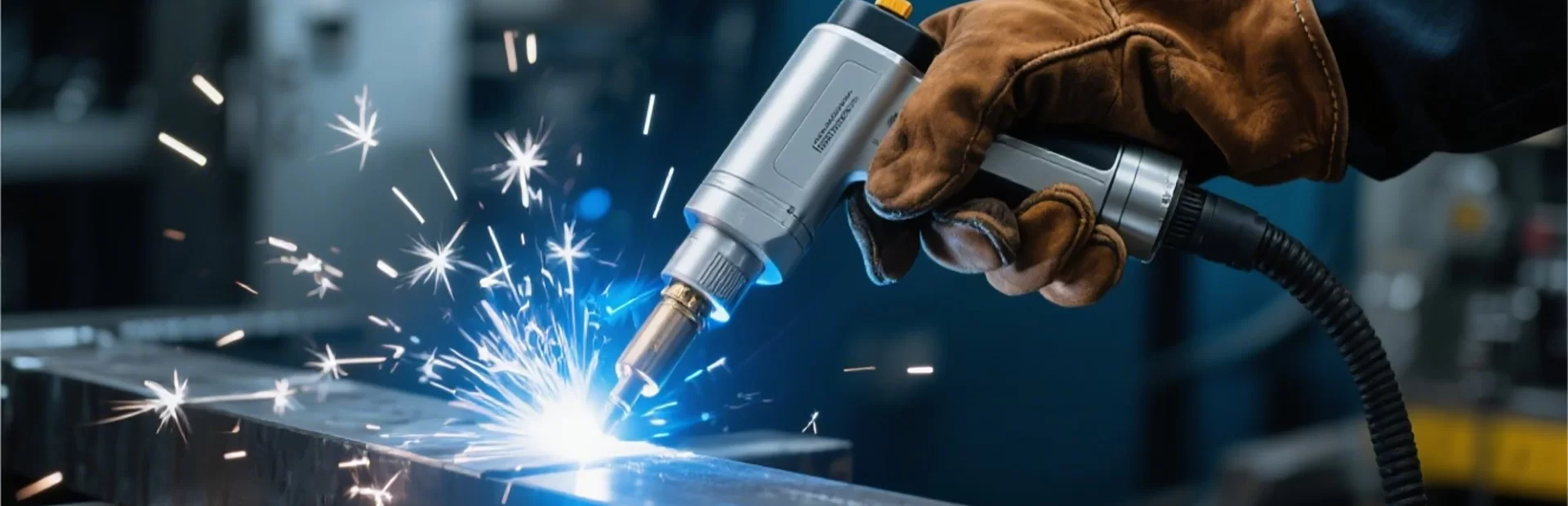
While many technicians still rely on a hand welder for simple repairs, the industry is rapidly moving toward the Automatic Platform Laser Welding Machine for primary production. This system integrates high-precision laser optics with CNC automation, allowing for the seamless welding of high-reflectivity metals like gold, silver, copper, and aluminum. By moving beyond manual limitations, factories can now achieve non-contact processing that ensures maximum structural integrity with minimal heat-affected zones.

hand welder

The Precision Engineering of Laser Joining

hand welder

The Automatic Platform Laser Welding Machine represents the pinnacle of modern industrial joining, utilizing micron-level beam spots to ensure an incredibly minimal heat-affected zone (HAZ). Unlike a traditional hand welder, which often distributes heat broadly across the material, this laser system focuses energy so precisely that materials reach their melting point and solidify almost instantly.

This level of precision results in aesthetically perfect welds with virtually no thermal deformation, which is critical for the miniaturized components found in consumer electronics. By maintaining the microstructural integrity of the metal, the system prevents the warping and stress fractures that typically plague traditional thermal welding methods.

CNC Automation and Production Efficiency

Integrated CNC platforms are the engine behind 24/7 continuous production, transforming the welding process from a manual craft into a high-throughput industrial operation. By utilizing high-precision linear motors, the system ensures sub-millimeter repeatability, meaning the thousandth part is identical to the first.

This shift drastically reduces labor costs by moving from a reliance on highly skilled manual operators to a model where a single technician manages a fleet of automated machines. The ability to program complex welding trajectories via intelligent software allows for a level of consistency that manual tools simply cannot match.

Furthermore, the automation extends to batch scheduling and queue management, allowing factories to handle diversified electronic components without lengthy downtime for reconfiguration. This flexibility is essential for modern "just-in-time" manufacturing environments.

Versatility in High-Reflectivity Metals

One of the most significant hurdles in industrial joining is the challenge of welding high-reflectivity and high-melting-point metals. While a basic hand welder might struggle with the energy bounce-back from copper or gold, our automatic platform system is specifically engineered to overcome this barrier.

By offering laser power options of 1500W, 2000W, and 3000W, the system provides the necessary energy density to penetrate materials like aluminum and silver. For these highly reflective metals, we typically recommend 2000W or higher to maintain a stable melt pool and ensure a deep, strong bond.

Beyond single metals, the system excels in joining dissimilar metal combinations. By precisely controlling energy density and cooling rates, the machine creates a stable molecular bond between different materials, a feat that is exceptionally difficult to achieve with traditional manual welding techniques.

Comparative Analysis of Welding Methods

When comparing traditional TIG/MIG methods to automatic laser welding, the difference in production speed is staggering. Traditional methods are often slow and manual, whereas the automated laser system provides ultra-high throughput with near-zero material waste, as autogenous welding eliminates the need for filler wires.

The reduction in the heat-affected zone is perhaps the most tangible benefit, as it transforms "broad deformation" into "precision fit." This ensures that components in high-stress environments, such as automotive sensors, maintain their exact dimensions after the joining process.

Performance Comparison: Automated Laser vs Traditional Hand Welder Methods

Non-Contact Processing for High-End Industries

The non-contact nature of the laser process is a game-changer for the medical and electronics industries. By eliminating mechanical stress and tool wear, the system ensures zero contamination during the welding process, making it ideal for surgical tools or pacemakers.

Unlike a hand welder that requires physical contact and often introduces filler materials, the automatic platform system can be integrated into ISO Class 5 cleanrooms. This ensures that every weld meets the highest possible standards of purity and hygiene.

Data Traceability and Quality Control

In an era of strict regulatory compliance, data traceability is no longer optional. The Automatic Platform Laser Welding Machine records and stores every process parameter for each single weld, from laser power to welding speed and trajectory.

This capability allows manufacturers to meet ISO quality traceability standards effortlessly. If a part fails in the field, the company can retrieve the exact welding logs for that specific workpiece to determine if any parameter deviation occurred during production.

This digital archiving transforms quality control from a sampling-based approach to a 100% inspection model. Every unit is verified against a pre-configured profile, ensuring that no defective weld ever leaves the factory floor.

Investment Return and Technical Specifications

Investing in an automated laser system provides a rapid return through the combination of increased speed and decreased waste. With welding thicknesses ranging from ≤3mm up to ≤8mm depending on the power model, the system covers the vast majority of industrial applications.

The industrial water cooling system ensures that the machine can maintain high-duty cycles without overheating, protecting the microstructural integrity of both the machine and the workpiece. This stability is what allows for 24/7 operation in high-volume environments.

When compared to the operational costs of a manual hand welder—including skilled labor and filler material—the automated system proves to be more cost-effective over a 24-month horizon due to its near-zero waste and lower operator requirements.

Technical Specification and Performance Matrix for Automatic Laser Welding

Power Model Max Thickness Welding Range Industrial Use Case
1500W ≤3mm 500mm Consumer Electronics
2000W ≤5mm 300mm Automotive Sensors
3000W ≤8mm 400mm EV Battery Housings
1500W ≤3mm 500mm Medical Tools
2000W ≤5mm 300mm Aerospace Parts
3000W ≤8mm 400mm Heavy Machinery

FAQS

Which laser power is best for welding copper or aluminum?

For high-reflectivity metals like copper and aluminum, we strongly recommend 2000W or higher. These materials possess a high reflectivity barrier that requires greater initial power to achieve a stable melt pool and ensure a high-quality, deep-penetration weld.

Can this machine perform dissimilar metal welding?

Yes, the automatic platform laser welding machine is highly capable of joining different metals. By precisely controlling the energy density and the cooling rates through the CNC system, it creates a strong, stable bond between dissimilar metals that would be nearly impossible with a manual hand welder.

How does CNC automation improve welding quality compared to manual work?

CNC automation utilizes high-precision linear motors to ensure sub-millimeter repeatability. This eliminates the inherent variability of human error, ensuring that every single weld in a high-volume batch is identical in depth, width, and strength.

Is this machine suitable for medical device manufacturing?

Absolutely. Because it is a non-contact process and requires no filler wire, it minimizes contamination. The system can be integrated into ISO Class 5 cleanrooms, making it perfect for critical components like surgical tools or cardiac pacemakers.

What is the typical welding thickness for the 1500W model?

The 1500W model is specifically optimized for materials with a thickness of up to 3mm. This makes it the ideal "sweet spot" for the majority of automotive sensors and consumer electronic components.

How is the heat-affected zone (HAZ) reduced in this system?

The system focuses energy into a micron-level spot using ultra-short pulses. This causes the material to reach its melting point and solidify almost instantly, preventing heat from conducting into the surrounding area and thus eliminating deformation.

Conclusion

The transition from the manual precision of a hand welder to the fully automated Automatic Platform Laser Welding Machine marks a significant leap in industrial capability. By combining micron-level accuracy, CNC repeatability, and the ability to weld high-reflectivity metals, this system solves the most persistent challenges of material deformation and production inefficiency.

As we look toward a future of smarter, greener manufacturing, the adoption of non-contact, energy-efficient laser joining will be a key differentiator for companies striving for ISO-level quality and high-volume output. We encourage manufacturers to evaluate their current throughput and invest in automation to secure their place in the next generation of industrial excellence. Visit our website: www.topstarlaser.com

Noah Garcia

Noah Garcia

Noah Garcia is a Technical Support Specialist focusing on air compressor & pneumatic systems at Shijiazhuang Topstar. He provides expert assistance to customers regarding installation, maintenance, and troubleshooting. With a strong foundation in pneumatics and a dedication to customer satisfaction, Noah ensures optimal performance of Topstar’s air compressor solutions. He frequently develops and shares knowledge base articles and videos, empowering clients to independently resolve common issues. He has a degree in Industrial Technology and a passion for improving operational efficiency.
Previous Precision Industrial Laser Welding Solutions
Next Desktop Digital Printer Agility Like a Hand Welding Machine
Subscribe to Our Newsletter
Your E-mail Address
Subscribe Now

If you are interested in our products, you can choose to leave your information here, and we will be in touch with you shortly.