Shijiazhuang Topstar
International Trading Co., Ltd.


Get In Touch
Selecting a reliable welding machine company often feels like a balancing act between precision capability and operational overhead. For industrial procurement officers, the challenge isn't just finding a machine that can join metal, but finding a system that integrates seamlessly into a high-volume production line without introducing excessive waste or downtime. The shift toward automated and laser-based solutions has redefined what "precision" means in modern fabrication.
This evolution is particularly critical when coordinating complex equipment suites, where laser welding machines must operate in harmony with air compressors and mesh production systems. When a fabrication plant fails to synchronize these technologies, the result is often inconsistent weld penetration or inefficient material flow. Understanding the technical intersection of these tools is what separates high-margin manufacturers from those struggling with escalating operational costs.
By analyzing the technical specifications of high-precision equipment and the logistical capabilities of global suppliers, this guide provides a framework for optimizing your workshop. Whether you are scaling a new facility or upgrading legacy systems, partnering with a professional welding machine company ensures that your investment translates into measurable productivity gains and a sustainable manufacturing trajectory.


Modern industrial joining systems have evolved from simple heat-application tools into complex mechatronic assemblies. At their core, these systems rely on the precise modulation of energy—whether via laser beams or electric arcs—to create a molecular bond between substrates. The integration of PLC/CNC controls allows for programmable pathing and power adjustment, ensuring that the heat-affected zone (HAZ) is minimized, which prevents material warping and preserves the structural integrity of the alloy.
Beyond the welding source, the supporting infrastructure is equally vital. Stable pneumatic systems provided by high-grade air compressors ensure that cooling systems and gas shielding operate without fluctuation. When these components are synchronized, the equipment can handle a diverse range of materials, from thin aluminum sheets to heavy-duty stainless steel, maintaining a consistent bead profile and deep penetration across thousands of cycles.
The efficiency of a fabrication line is determined by several interdependent variables. Material thickness is the primary driver; processing a 0.5mm decorative screen requires entirely different power modulation than an 8mm industrial walkway. If the energy input is too high, the material vaporizes; too low, and the weld lacks the necessary strength to meet safety certifications. This necessitates a system with flexible power settings and precision control.
Durability and maintenance cycles also play a pivotal role. Industrial environments are often characterized by dust, heat, and vibration. Equipment designed with integrally welded gantry structures and automatic lubrication systems reduces the frequency of mechanical failure. By minimizing unplanned downtime, companies can maintain a steady output flow, which is essential for fulfilling large-scale international contracts on time.
Finally, the compatibility of the system with different alloys—such as copper, mild steel, and galvanized aluminum—dictates the versatility of the shop. A professional setup allows for rapid switching between material types without requiring a complete recalibration of the CNC system, enabling a single production line to handle multiple product SKUs simultaneously.
The true value of investing in high-precision equipment is found in the reduction of secondary processing. When a weld is executed perfectly the first time, the need for grinding, polishing, and corrective rework is virtually eliminated. This not only saves labor hours but also reduces the consumption of consumables and energy, directly impacting the bottom line.
Integration value is maximized when waste-free production is achieved. By utilizing CNC-driven precision, manufacturers can maximize material utilization to nearly 100%, transforming expensive alloys into high-strength components without the scrap typical of traditional perforation or manual welding processes.
From a lifecycle perspective, the reliability of the equipment determines the total cost of ownership. High-grade machinery with stable power transmission and pneumatic clutches ensures a longer operational lifespan, meaning the initial capital expenditure is amortized over a much larger volume of produced units, accelerating the return on investment.
Comparing different metal processing technologies reveals a stark contrast in material utilization. Traditional methods often involve removing material to create patterns or joints, leading to significant scrap rates. In contrast, advanced stretching and precision welding technologies focus on transforming existing material, which preserves the mass of the raw sheet.
This efficiency is particularly evident when processing high-cost materials like stainless steel or copper. The ability to maintain nearly zero waste allows manufacturers to bid more competitively on projects while maintaining healthier profit margins. The following data illustrates the relative material utilization rates of different processing approaches.
Industrial welding and mesh production systems are indispensable in the construction and transportation sectors. For example, in the creation of industrial walkways, the requirement for slip-resistance and high load-bearing capacity makes expanded metal the ideal choice. The 3D tilted strands produced by precision stretching provide enhanced structural rigidity compared to perforated alternatives.
In architectural facades and ventilation grilles, the focus shifts to aesthetic precision and permeability. Here, the ability to produce delicate 0.5mm screens with identical diamond openings across thousands of units is critical. This level of consistency is only achievable through the integration of PLC monitoring and high-speed automation, ensuring that every panel fits perfectly within the building's framework.
The industry is moving toward "intelligent fabrication," where equipment is no longer a standalone tool but part of a connected ecosystem. We are seeing a shift toward real-time monitoring systems that can adjust feed speed and stretching force without halting production. This reduction in cycle time is a primary driver for mass fabrication efficiency.
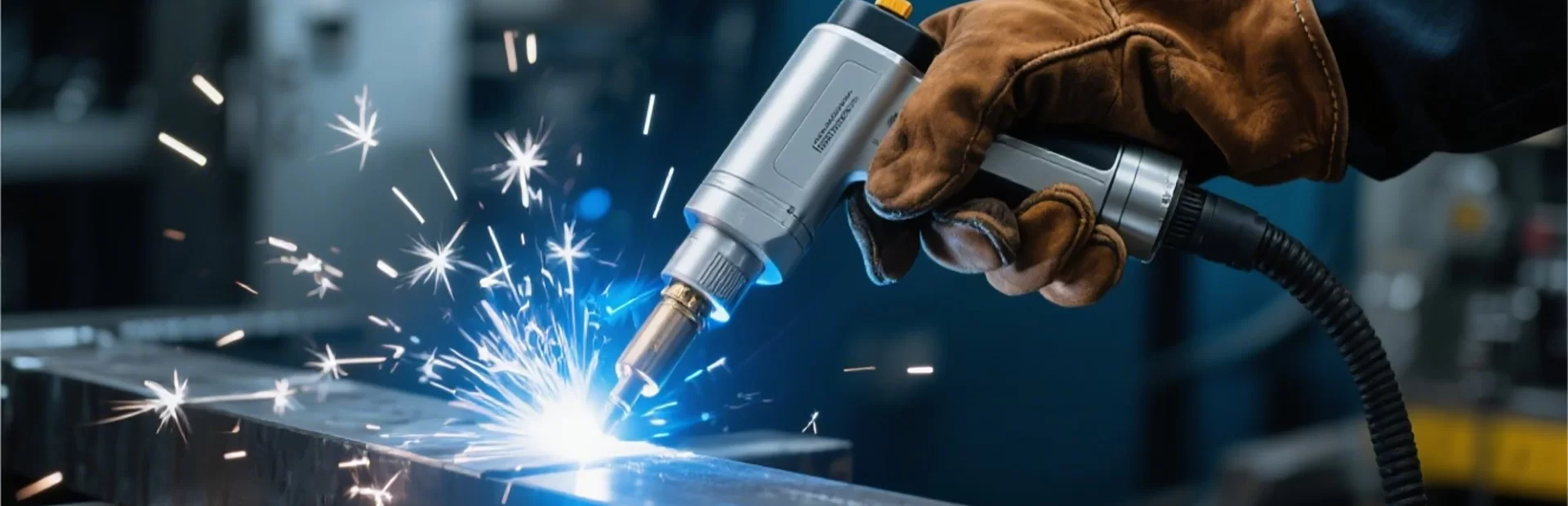
Furthermore, the adoption of handheld laser technology is decentralizing the welding process, allowing for greater flexibility in assembling large or irregularly shaped structures. When combined with a centralized pneumatic system and automated feeding, the factory floor becomes more modular, allowing companies to pivot their production capacity quickly to meet changing market demands.
Future developments are likely to emphasize sustainability through energy-efficient power transmission and the use of recyclable lubricants. As global standards for "green manufacturing" tighten, the ability to demonstrate low-waste production and reduced energy consumption per unit will become a competitive necessity for international suppliers.
Transitioning to advanced machinery often presents a set of operational challenges. The initial cost of high-precision systems can be significant, and the learning curve for PLC/CNC interfaces requires a dedicated training period for the workforce. However, these hurdles are typically offset by the rapid reduction in material waste and labor costs.
Integration is another common pain point. New equipment must be compatible with existing power grids and pneumatic supplies. A comprehensive approach—sourcing the welding system, the air compressor, and the feeding mechanisms from a synchronized provider—minimizes the risk of technical mismatch and simplifies the after-sales support process.
Ultimately, the decision to upgrade should be based on a calculated ROI analysis. By comparing the costs of traditional perforation (high scrap, slower speed) with expanded mesh production (near-zero waste, continuous flow), the financial justification for modernization becomes clear.
| Comparison Factor | Traditional Perforation | Expanded Mesh System | Impact on ROI |
|---|---|---|---|
| Material Waste | High (Metal Scrap) | Near Zero | Significant Saving |
| Production Speed | Moderate/Slow | High (Continuous) | Higher Volume |
| Structural Strength | Standard | Enhanced (3D) | Higher Quality |
| Material Cost | Higher (Scrap loss) | Minimized | Lower OPEX |
| Control Method | Manual/Basic | PLC/CNC | Precision Gain |
| Operational ROI | Standard Return | Rapid ROI | Faster Payback |
The primary difference lies in the production process. Perforation creates holes by removing material, which generates significant waste (scrap). Expanding, however, involves slitting and stretching the metal, resulting in zero waste and higher structural rigidity due to the 3D tilted strands created during the process.
Our machines are designed to handle a wide variety of ductile metals. This includes mild steel, stainless steel, aluminum, galvanized steel, and copper. The versatility allows users to switch between materials depending on the project's requirements for corrosion resistance or weight.
The shape and size are primarily determined by the die design. By changing the dies, you can adjust the Short Pitch (SWD) and Long Pitch (LWD) to achieve specific diamond dimensions. The CNC system then ensures these dimensions remain consistent across the entire length of the production run.
Yes, heavy-duty models are specifically equipped with reinforced frames and high-torque motors. They are capable of processing plates up to 8mm or thicker, which is essential for creating slip-resistant, load-bearing walkways used in industrial plants and transportation hubs.
Absolutely. The entire workflow—from coil loading and automatic decoiling to precision punching and stretching—is managed via PLC/CNC systems. This automation reduces human error and significantly lowers the cycle time required for mass fabrication.
The automatic oil addition and collection system ensures that all moving parts are constantly lubricated without requiring manual intervention. This reduces friction and wear on the spindles and gears, preventing premature failure and extending the overall operational life of the machinery.
Optimizing metal fabrication requires a strategic shift from simple tool acquisition to the integration of a cohesive equipment ecosystem. By prioritizing zero-waste production and CNC-driven precision, manufacturers can significantly lower their operational costs while increasing the structural quality of their output. The transition to automated welding and mesh systems is no longer just an upgrade—it is a necessity for those competing in a global market defined by efficiency and sustainability.
For enterprises seeking to resolve operational challenges through precision engineering, sourcing comprehensive solutions is the most effective path. Whether you need to enhance your welding precision or scale your mesh production, you can find detailed technical support and equipment specifications at www.topstarlasers.com to help turn your production challenges into growth opportunities.