

When evaluating the automatic welding machine price, industrial buyers must look beyond the initial sticker cost to understand the total value proposition. In the specialized sector of gas compression machinery and general equipment manufacturing, the shift toward automation is no longer a luxury but a necessity for maintaining throughput and weld integrity.
The primary challenge for procurement managers is balancing the high upfront investment of automated systems against the long-term reduction in labor costs and scrap rates. Understanding the specific cost drivers—ranging from laser source power to the level of robotic integration—is essential to avoid over-specifying equipment or under-investing in critical precision capabilities.
This analysis provides a structured framework for understanding the economic variables of automated welding, helping you identify the optimal configuration based on your production volume, material requirements, and desired return on investment.

Direct Cost Drivers of Automated Welding Systems

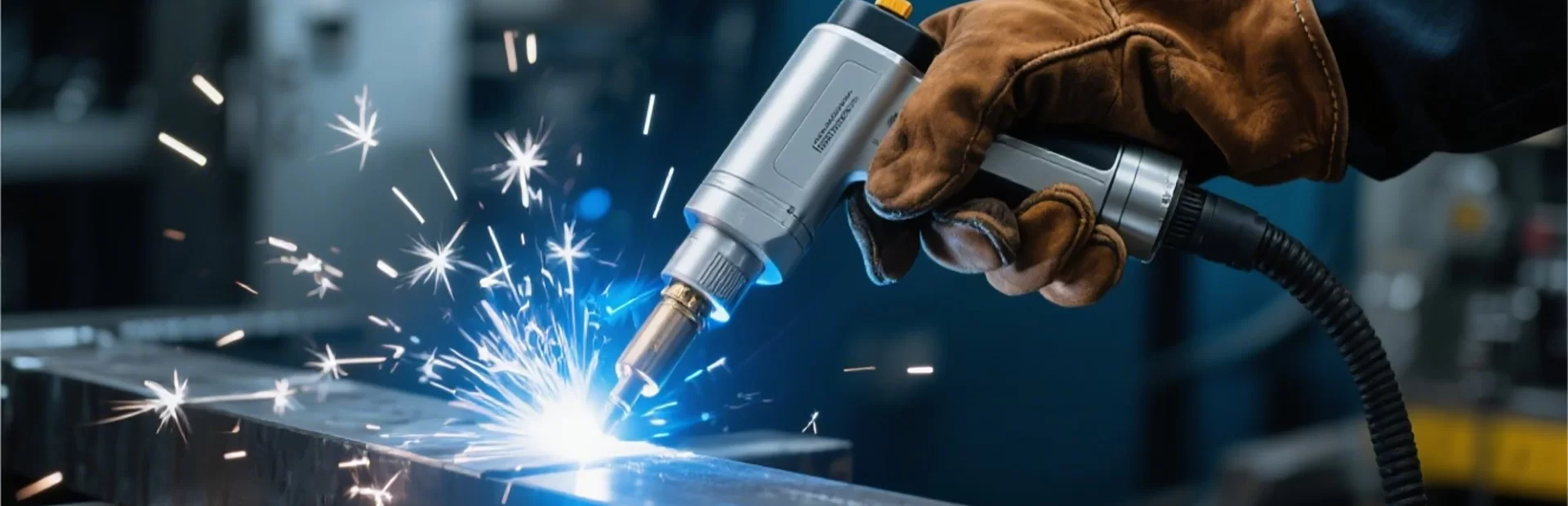
The baseline automatic welding machine price is primarily dictated by the energy source and the degree of motion control. For laser-based systems, the cost is heavily influenced by the wattage of the fiber laser source and the quality of the optical delivery system. Higher power levels allow for deeper penetration and faster travel speeds, which increases the capital expenditure but reduces the cost per part.
Additionally, the precision of the gantry or robotic arm determines the repeatability of the weld. Systems utilizing high-grade steel frames and precision milling—similar to the structural standards found in industrial printing and cutting machinery—offer greater stability, reducing the need for frequent recalibration and minimizing costly rework during mass production.
Comparing Laser Welding vs. Conventional Automation
Conventional automated welding, such as MIG or TIG automation, typically has a lower entry price but carries higher recurring costs in the form of consumables and slower cycle times. These systems are often suitable for thicker materials where extreme precision is less critical than structural volume. However, they require more significant post-weld cleaning and grinding, which adds to the total cost of ownership.
Laser welding automation represents a higher initial investment but offers a drastic reduction in the heat-affected zone (HAZ), which prevents material distortion. For manufacturers in the gas compression and valve industry, this precision means fewer rejected parts and a significant reduction in secondary finishing processes, effectively lowering the real cost per unit over the machine's lifecycle.
Hidden Operating Costs and Integration Expenses
A common mistake in budget planning is focusing solely on the machine's purchase price while ignoring the integration ecosystem. To make an automated welder functional, businesses must invest in precision jigging and fixtures. If the part positioning is inconsistent, the automation will fail, regardless of how expensive the welding source is.
Furthermore, operational costs include specialized shielding gases, electricity consumption, and the requirement for trained operators. While handheld laser welders reduce the need for complex programming, fully automated cells require a technician capable of managing software interfaces and maintaining optical cleanliness, adding a layer of skilled labor cost to the monthly overhead.
ROI Analysis: Cost vs. Productivity Gains
The justification for an automated welding investment is found in the intersection of labor reduction and throughput increase. By analyzing the relative impact of different automation levels, manufacturers can determine the "sweet spot" where the cost of the equipment is offset by the increase in parts produced per hour.
This illustrative framework demonstrates that while fully robotic systems have the highest cost, they provide the most significant reduction in unit cost for high-volume production. Conversely, semi-automated or handheld solutions provide a rapid ROI for low-to-medium volumes by eliminating the need for extensive programming and expensive custom tooling.
Scaling Production: From Handheld to Fully Robotic
Companies often start their automation journey with handheld laser welding equipment. These tools provide a flexible transition, allowing operators to utilize the speed of laser welding without the rigid constraints of a programmed path. This approach minimizes the initial capital risk while the company develops its internal technical expertise.
As production volumes grow, the transition to a fully automatic CNC or robotic system becomes viable. This shift eliminates human variability and allows for 24/7 operation. Shijiazhuang Topstar International Trading Co., Ltd. provides a range of metal-processing equipment support that helps businesses bridge this gap, ensuring that the move toward full automation is supported by the right hardware and technical knowledge.
Common Financial Pitfalls in Equipment Procurement
One of the most frequent errors is purchasing a machine based on the lowest available price without considering the "cost of downtime." Cheaply constructed machines often lack the thermal stability and component quality required for industrial environments. A failure in a critical component can stop an entire production line, costing the company more in lost revenue than the initial savings on the machine.
Another pitfall is ignoring the scalability of the software. Locked-in proprietary systems that require expensive consultant fees for every minor program change can lead to "hidden" costs that exceed the original machine price over three to five years. Open architectures and user-friendly interfaces are critical for long-term financial sustainability.
Selection Framework for Budget Optimization
To optimize the investment, buyers should categorize their needs based on volume, precision, and flexibility. The following framework compares different automation approaches to help determine which solution aligns with specific financial and operational goals.
| Approach | Initial Cost | Flexibility | Best Use Case |
|---|---|---|---|
| Handheld Laser | Low to Mid | Very High | Custom/Small Batch |
| Semi-Auto CNC | Medium | Medium | Repeatable Parts |
| Robotic Cell | High | Low (Fixed Path) | Mass Production |
| Conventional MIG/TIG | Low | High | Heavy Gauge Steel |
| Custom Integrated | Very High | Low | Specialized Industry |
| Hybrid Systems | Medium to High | Medium | Diverse Workloads |
The final decision should be based on a projected three-year TCO (Total Cost of Ownership). While a robotic cell has a daunting price tag, its ability to eliminate multiple manual labor roles and reduce scrap rates often makes it the most economical choice for high-output manufacturers.
Frequently Asked Questions
The price is mainly driven by the power of the laser source (wattage), the precision of the motion control system (CNC vs. Robotic), the build quality of the chassis, and the level of automation in part feeding and clamping.
It is an excellent substitute for low-to-medium volume production or highly customized parts where the cost of programming a robot outweighs the labor savings.
It reduces costs by increasing welding speed, eliminating human error (reducing scrap), decreasing the need for post-weld grinding, and lowering the dependency on highly paid manual welding specialists.
Hidden costs include precision jigging and fixtures, specialized safety housing (especially for lasers), employee training, and regular maintenance of optical components.
Yes, but the machine configuration must match the material. For example, laser welders are highly efficient for stainless steel and aluminum, while conventional automated MIG may be better for thick carbon steel.
Evaluate suppliers based on their technical support capabilities, the quality of their components (e.g., imported laser sources), their experience in your specific industry, and the availability of after-sales maintenance.
Conclusion
Determining the right automatic welding machine price requires a shift in perspective from "lowest cost" to "highest efficiency per unit." By aligning the level of automation—whether handheld, CNC, or robotic—with actual production volumes and precision requirements, manufacturers can avoid the risks of over-investment while securing a competitive edge in throughput and quality.
For businesses seeking precision solutions for industrial challenges, reviewing a broad range of equipment options is the first step toward optimization. You can explore comprehensive metal-processing and welding solutions at www.topstarlasers.com to match your specific operational needs with the right technology.